Craft village
Biên Hòa
- Craft
- Glazed ceramicsGốm
- Where
- Đồng Nai
- Practised since
- 1903The Biên Hòa glaze
- Material
- Clay, ash and copperCarved and glazed
- On LangSoul
- RecordedNot yet carried
01 — The story
A school, a river and a green glaze
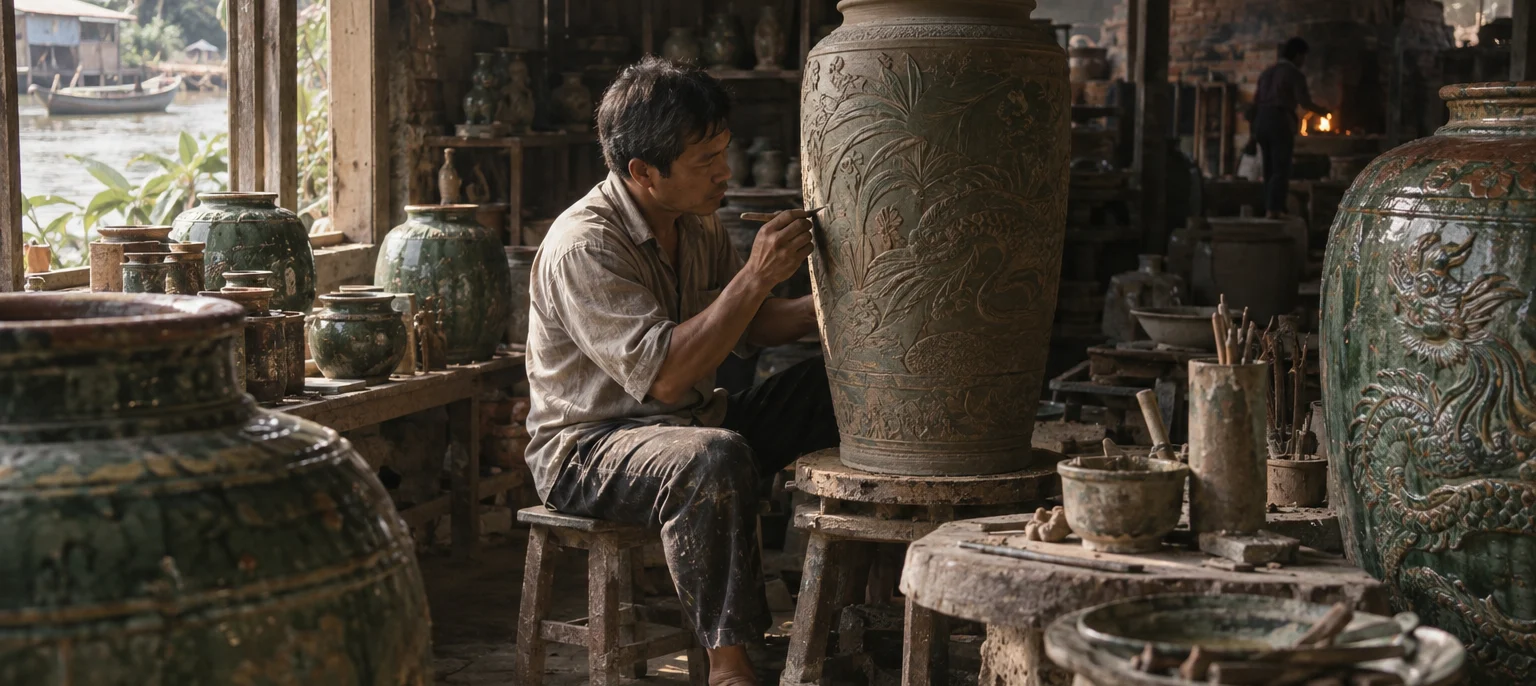
Potters had worked the clay along the Đồng Nai river for a long time before 1903, when the French colonial administration opened a school of applied arts in Biên Hòa. Its teachers, among them French ceramicists, worked alongside local potters and students. Together they developed a body of glazes from wood ash, copper and local minerals, and a style of carved decoration that drew on Vietnamese, Khmer and Cham motifs as much as on Art Deco. The school’s work went to exhibitions in Paris and Hà Nội in the early decades of the century.
The school still exists, now as a college of decorative arts, and Đồng Nai province still has many ceramic workshops, though most now make garden pots and large jars for export. Older Biên Hòa pieces from the first half of the twentieth century are collected seriously in Vietnam and abroad. A handful of studios continue to carve and glaze in the school’s manner, and the museum in the town keeps good examples.
Look first at the glaze. The famous Biên Hòa green, a copper colour that runs from sea-green to deep bronze, should be thick and slightly broken where it pools in the carving. Then look at the line. Good pieces are carved deeply and cleanly, with figures, lotus or dragons outlined and filled with separate colours that stay within their borders. The white ash glaze, used alongside the green, should look soft, almost like milk.
02 — The technique
What makes Biên Hòa ceramics
Biên Hòa work is carved before it is glazed, and the glaze then settles into the carving to draw the image.
I
Carved in the leather-hard clay
Designs are cut into the half-dry body with knives and gouges, often in deep relief or openwork.
II
Ash and copper glazes
Glazes are mixed from wood ash, copper oxide and local minerals, giving the green and bronze the town is known for.
III
Colours kept in line
Separate glazes are laid into each carved area, the raised outline holding them apart in the kiln.
IV
A high firing
Pieces are fired hot enough that the glaze melts, pools in the hollows and thins over the high points.
Words you will meet
Gốm Biên Hòa
Biên Hòa ceramics, the carved and glazed ware of the school's tradition.
Men xanh đồng
Copper-green glaze, the signature Biên Hòa colour.
Men tro
Ash glaze, made from wood or rice-straw ash.
Khắc
To carve or incise.
03 — Visiting
Visiting Biên Hòa
Biên Hòa is a large city, so plan your visit around the Đồng Nai museum and the college's display rather than expecting a craft village. Some workshops on the outskirts will show their kilns if you ask; weekday mornings are best. Write to us if you would like an introduction.
- From Hồ Chí Minh City
- About an hour by car
- Best season
- December to April, the dry season
- Look for
- Copper-green glaze pooled in deep carving
The other villages
The full atlas






