Craft village · Lụa và thêu tay · Silk & hand embroidery
Quất Động
Làng thêu Quất Động — the embroidery village of Thường Tín
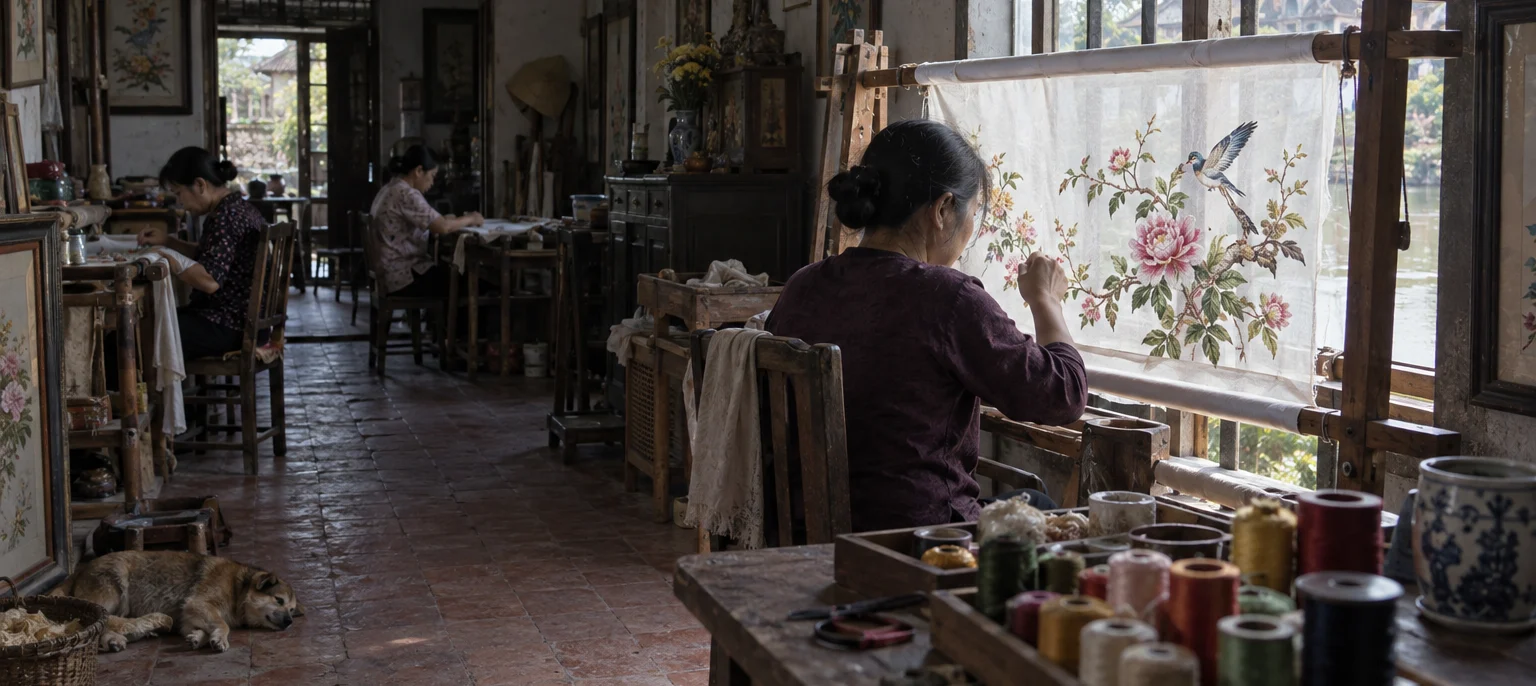
“Before ten the light is flat and the needle tells the truth.”
- Craft
- Hand embroideryThêu tay
- Where
- Thường Tín, Hà Nội25 km from Hà Nội
- Practised since
- c. 17th centuryThe first embroidery village of the north
- Material
- Silk threadOn Vạn Phúc silk
- On LangSoul
- 1 artisan3 works
01 — The story
A season of mornings, for four hundred years
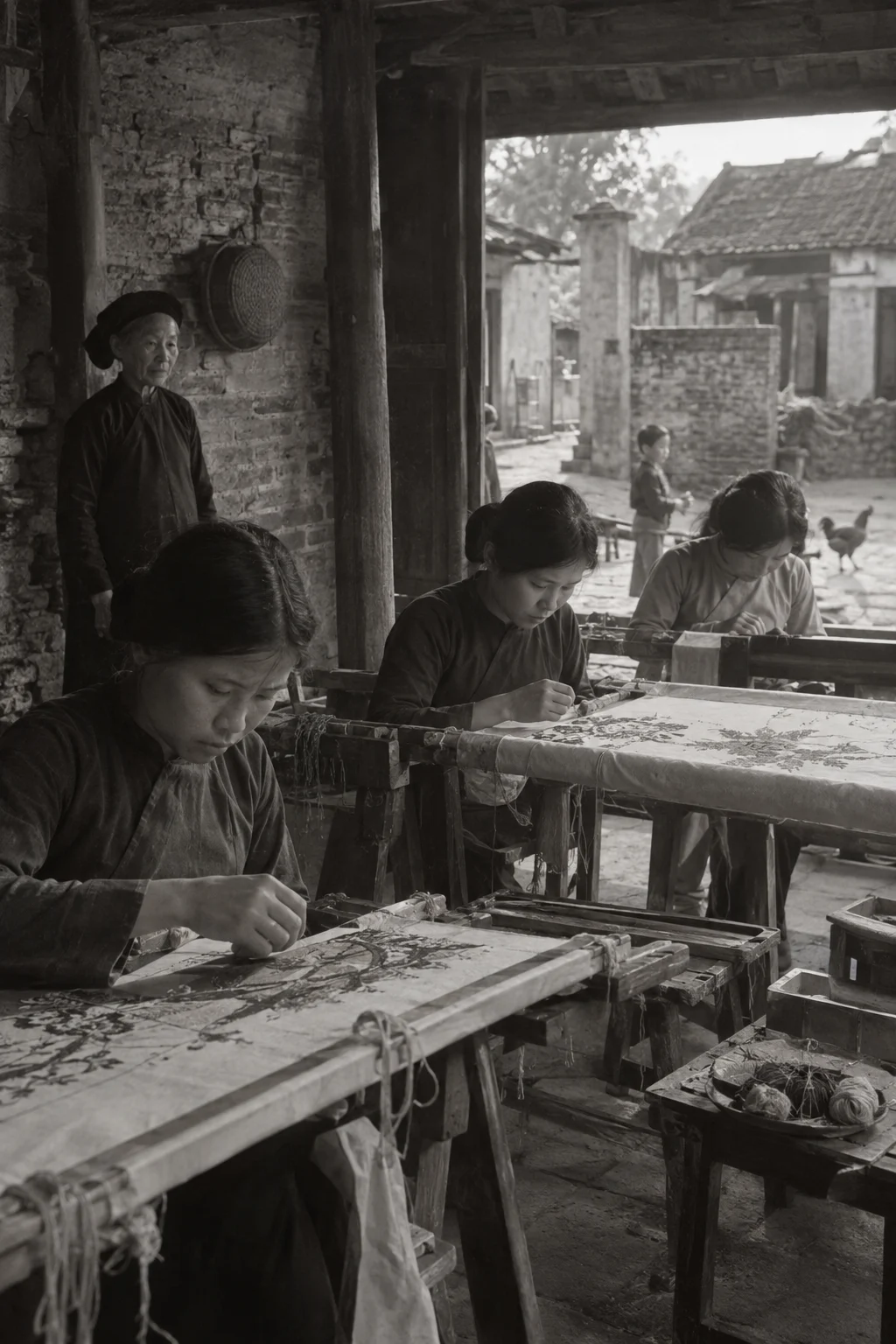
The ancestor the village honours, Lê Công Hành, is said to have brought the craft back from a seventeenth-century mission to the Ming court. For three centuries Quất Động made for the altars and the aristocracy: banners, robes, the panels that hung in the great houses.
The trade spread through the district and then the country; much embroidery sold as Vietnamese is now done fast and far away. In Quất Động a few households still work the old way — on hand-loomed silk, with threads split finer than a hair, one panel taking a season of mornings. Those are the works we carry.
02 — The technique
What makes Quất Động embroidery
The thread is finer than the eye expects, and the work slower than anyone believes until they have watched it.
I
Thread split by hand
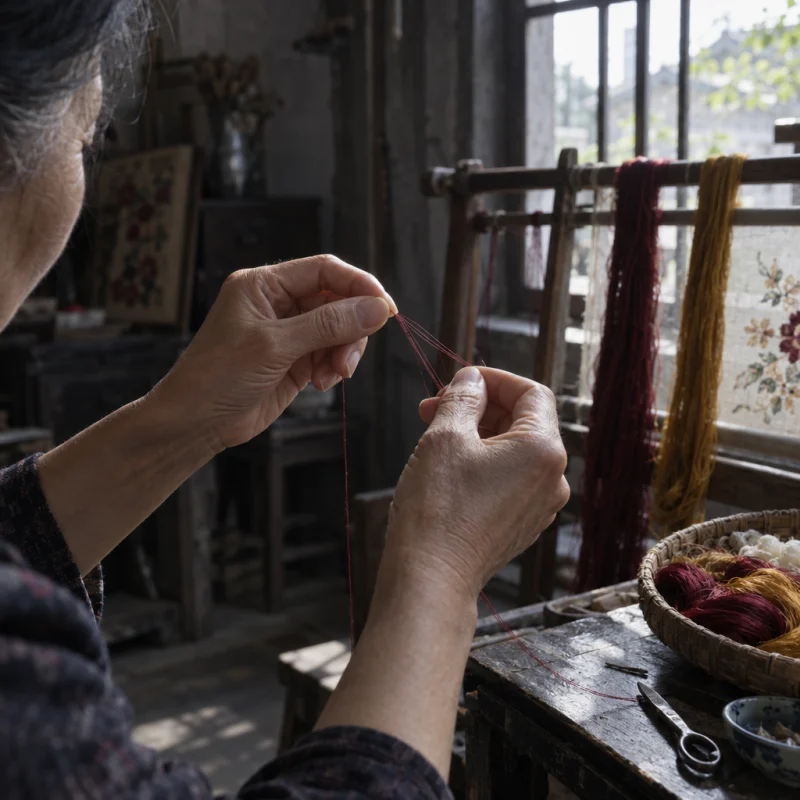
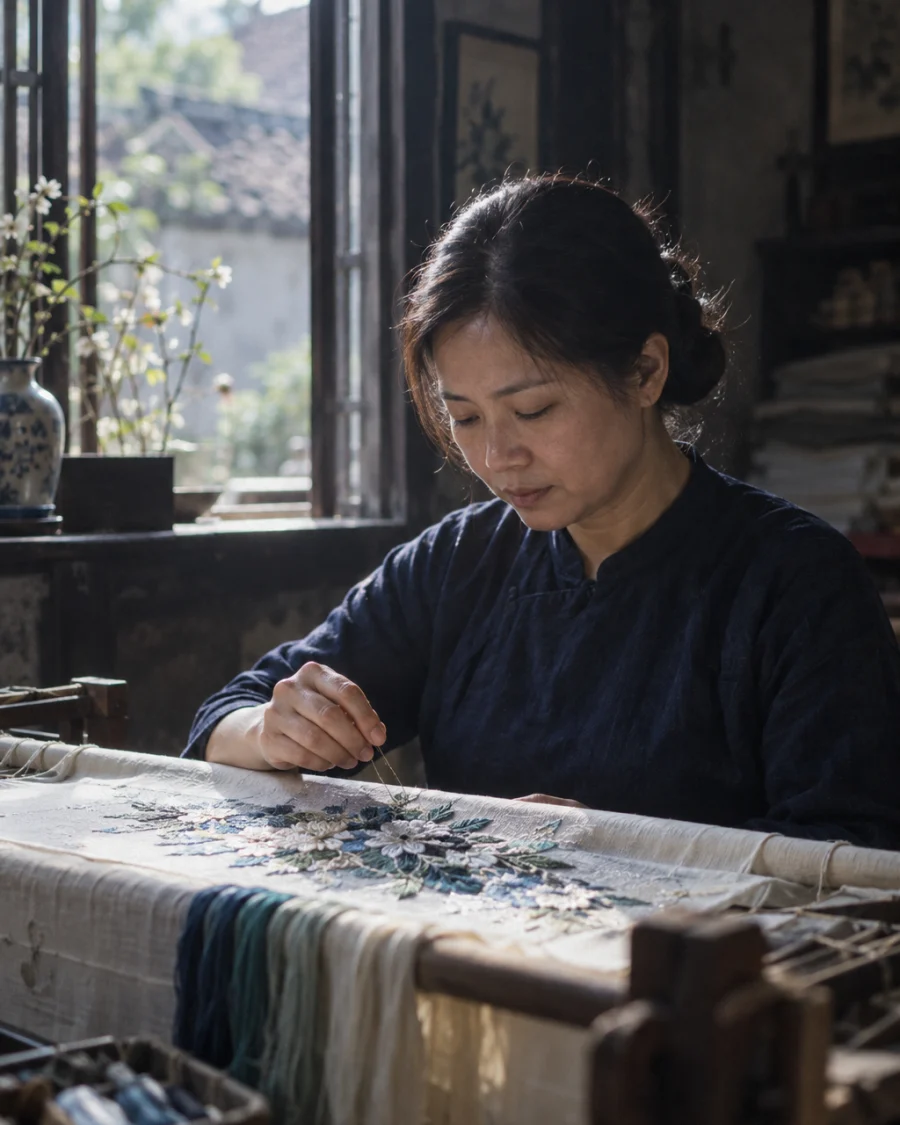
A single strand of silk is split into four or six before it is threaded.
II
Morning light only
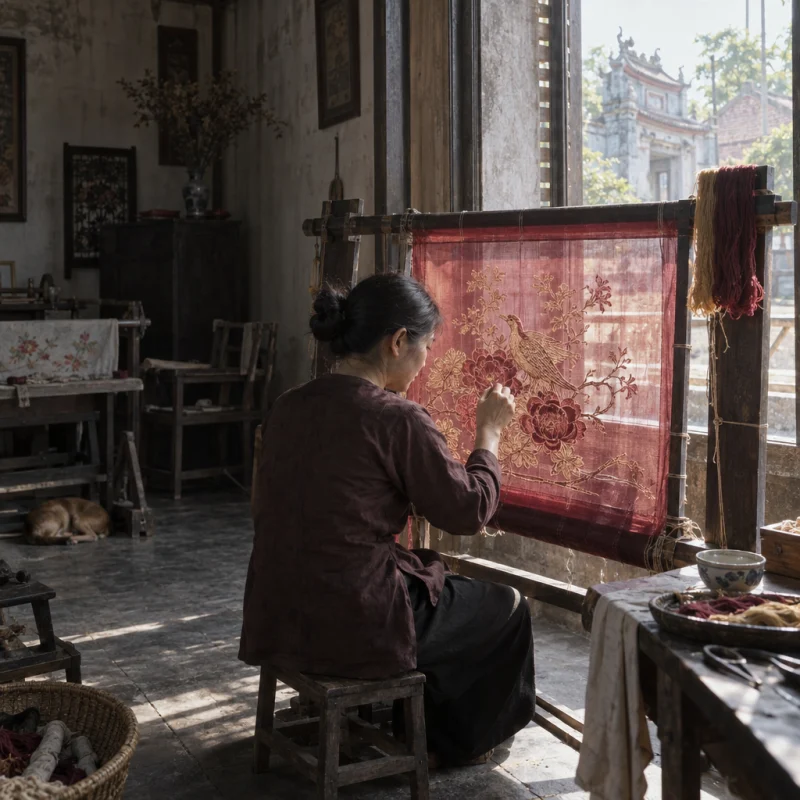
The fine work is done before ten, when the light is flat and the colours read truly.
III
Shading by stitch
Colour is blended by laying stitches of different shades side by side, not by dyeing the thread.
IV
On Vạn Phúc silk
The ground is hand-loomed silk from the next village; it takes the needle and holds the tension.
Words you will meet
Thêu
To embroider.
Thêu tay
Hand embroidery, as opposed to machine.
Chỉ tơ
Silk thread.
03 — The artisans of Quất Động
One workshop we return to
04 — Works from Quất Động
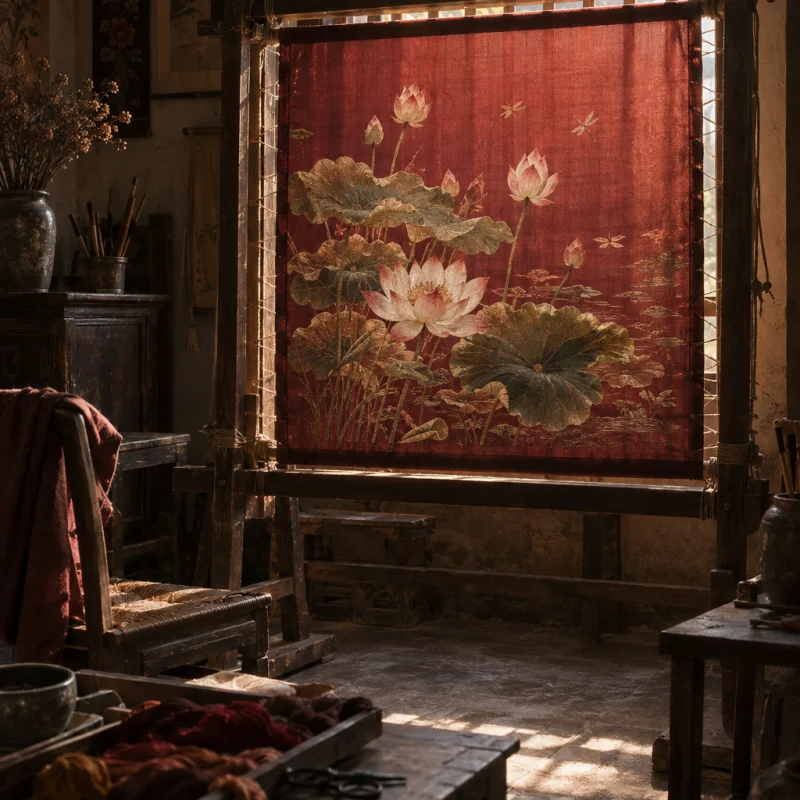
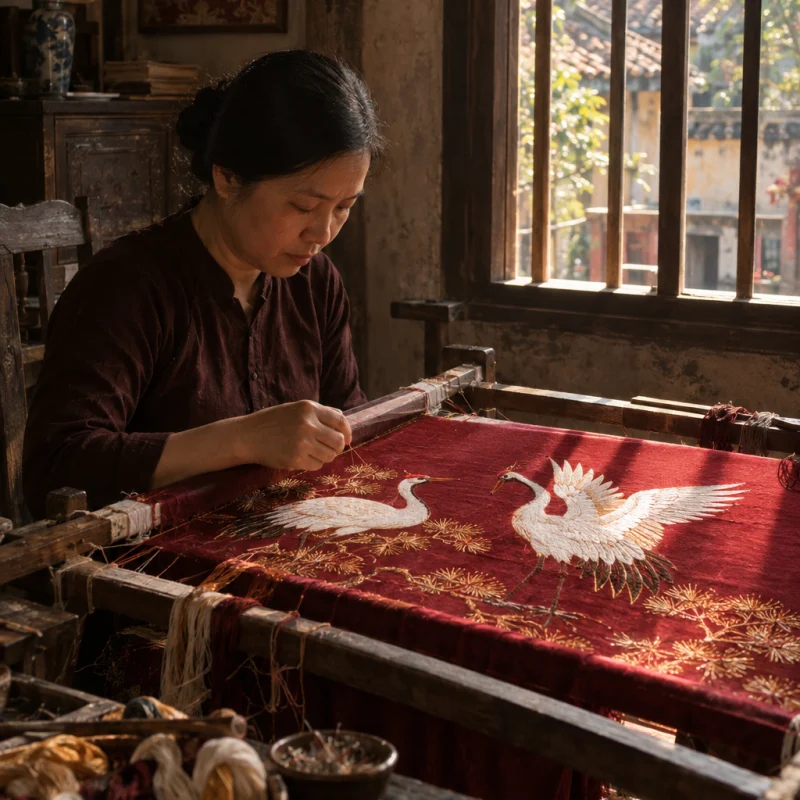
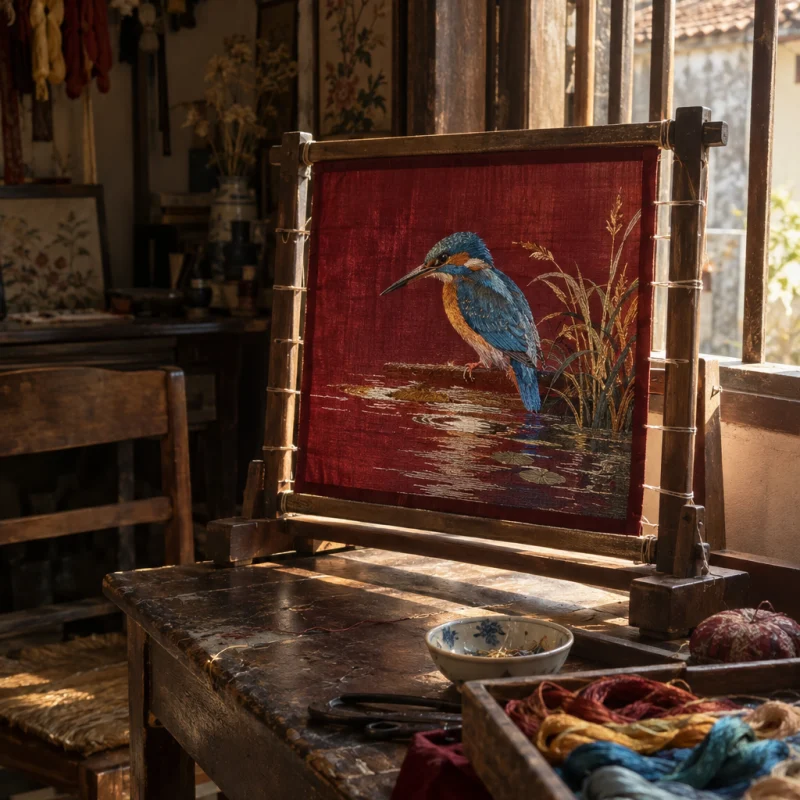
Three works from the village
05 — Visiting
Come and watch a morning's stitching
We pair a visit to Quất Động with Hạ Thái, a few lanes away: an embroidery household in the morning, lacquer after lunch. Collectors who have acquired a work from the village visit as our guests.
- From Hà Nội
- About 50 minutes by car
- Best season
- October to April
- Group size
- Six people at most
The other villages
The full atlas





