Craft village · Gốm sứ mỹ nghệ · Fine ceramics
Bát Tràng
Làng gốm Bát Tràng — the kiln village on the Red River

“The kiln opens at dawn because the glaze was decided at dusk.”
- Craft
- Ceramics & porcelainGốm sứ
- Where
- Gia Lâm, Hà Nội15 km from Hà Nội
- Practised since
- c. 14th centurySeven centuries of firing
- Material
- River clayFrom the banks of the Hồng
- On LangSoul
- 1 artisan5 works
01 — The story
Seven centuries at the mouth of the kiln
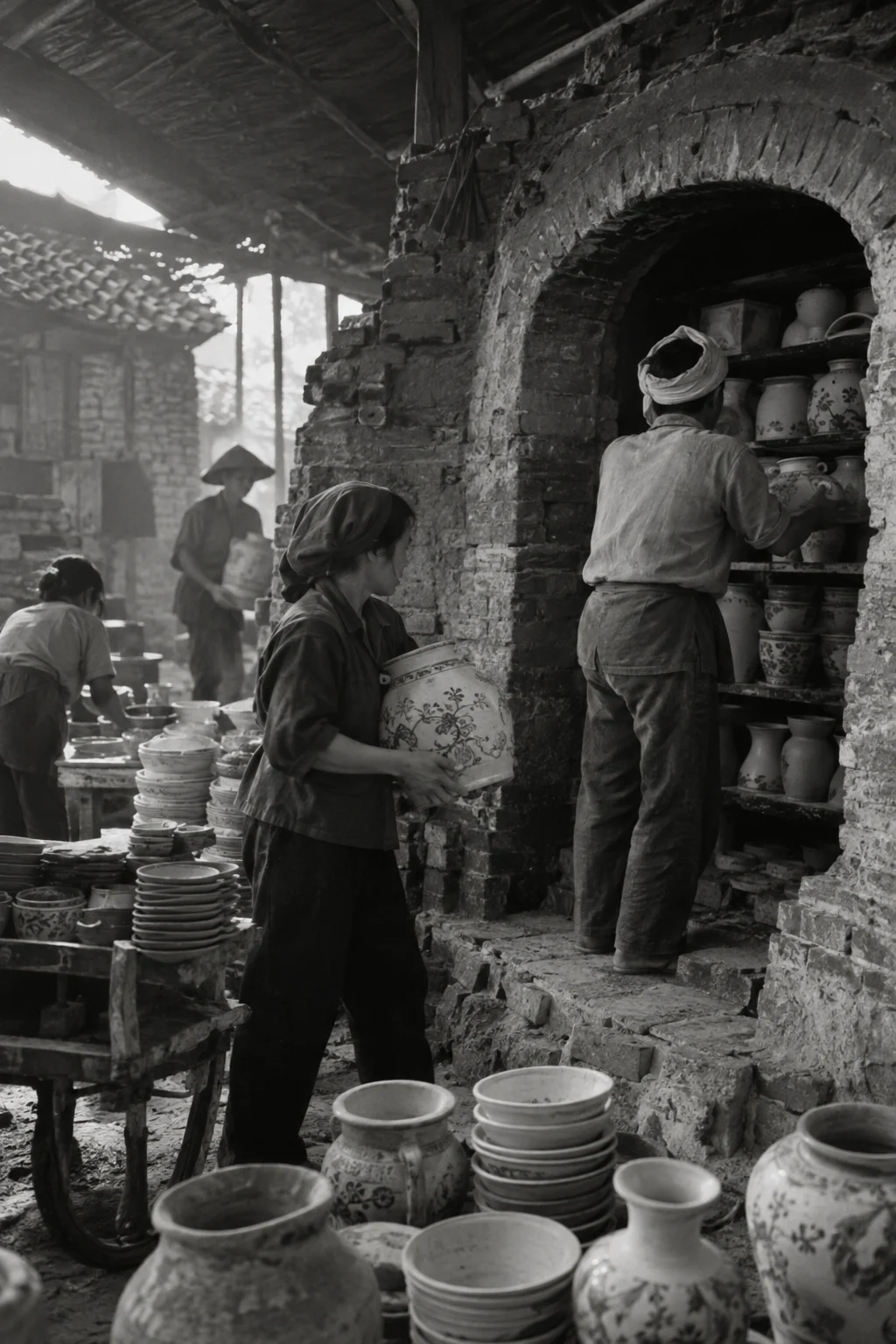
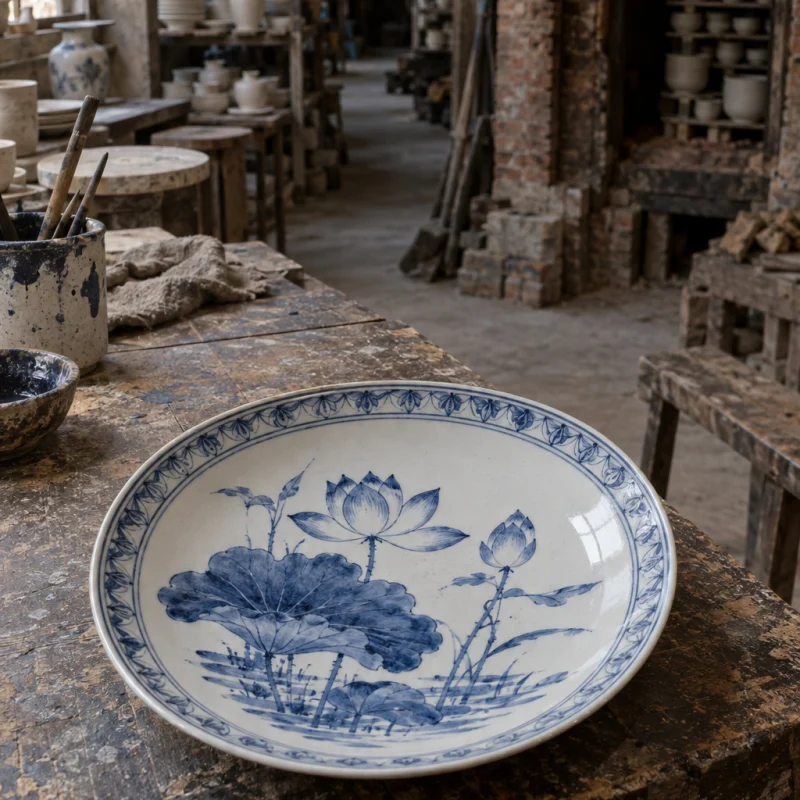
The first record of the village is from the fifteenth century, when its white clay was already being carted to the capital. Chinese merchants bought Bát Tràng blue-and-white for Japan and the Philippines; the Lê court ordered altar vessels; and by the nineteenth century the village was firing for half the delta.
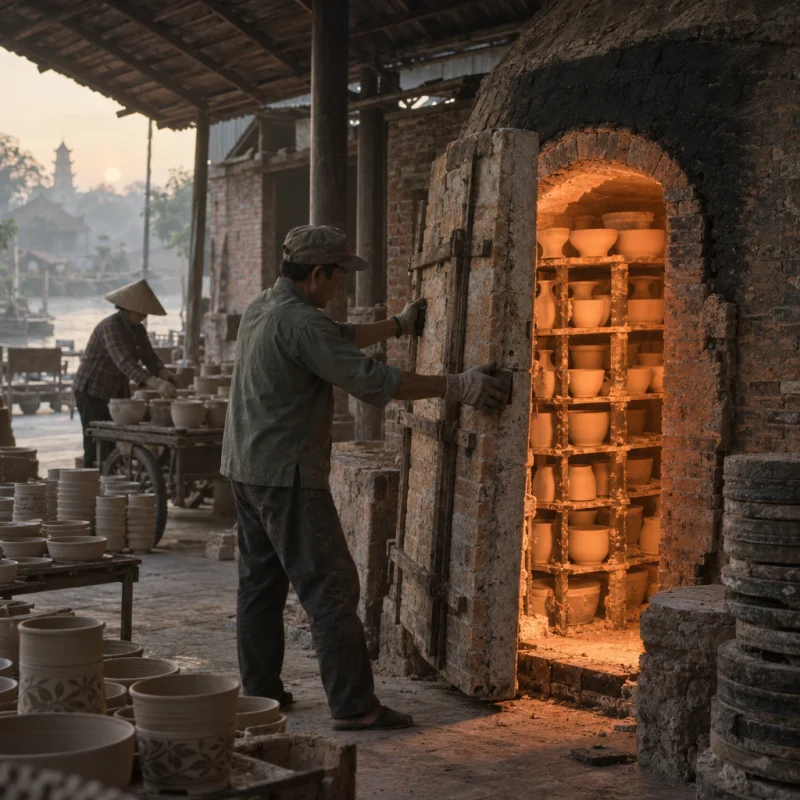
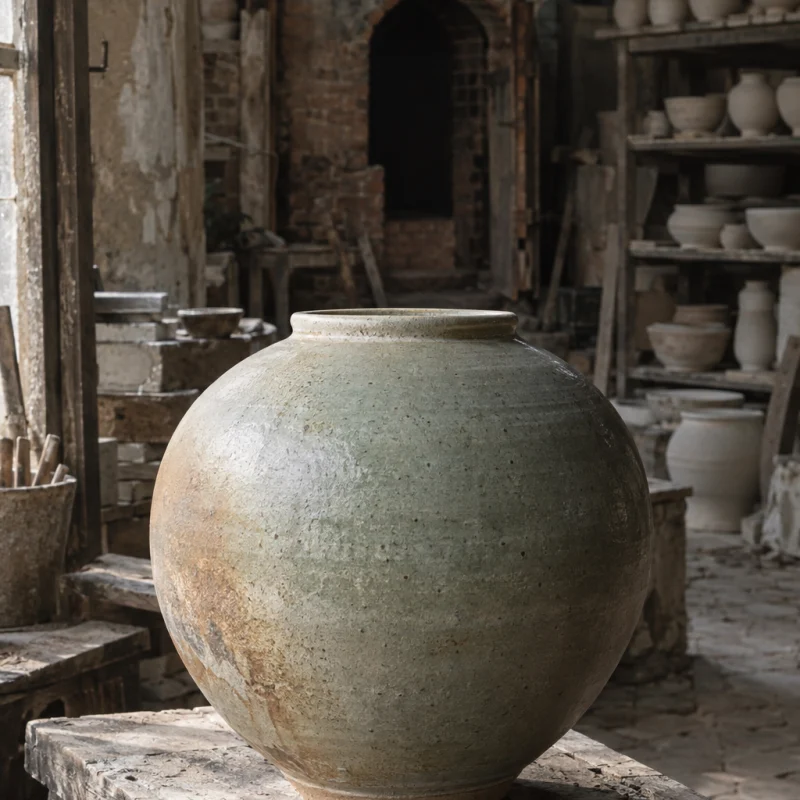
Today most of Bát Tràng produces for the trade: quick, bright, and the same. A few families keep the slow glazes — celadon that needs a long reduction fire, ash glaze that varies with the wood — and open their kilns at dawn, the old way, to see what the night has done. We work with those families.

02 — The technique
What makes Bát Tràng ceramics
Clay, glaze and fire: each of the three is decided in the village, and each is where the difference lies.
I
White river clay
Dug from the bank, washed and aged for months in pits until it throws thin and fires pale.
II
Glazes from ash
The village's grey-green ash glaze is made from rice-straw ash and clay; no two kiln loads come out the same.
III
Celadon in reduction
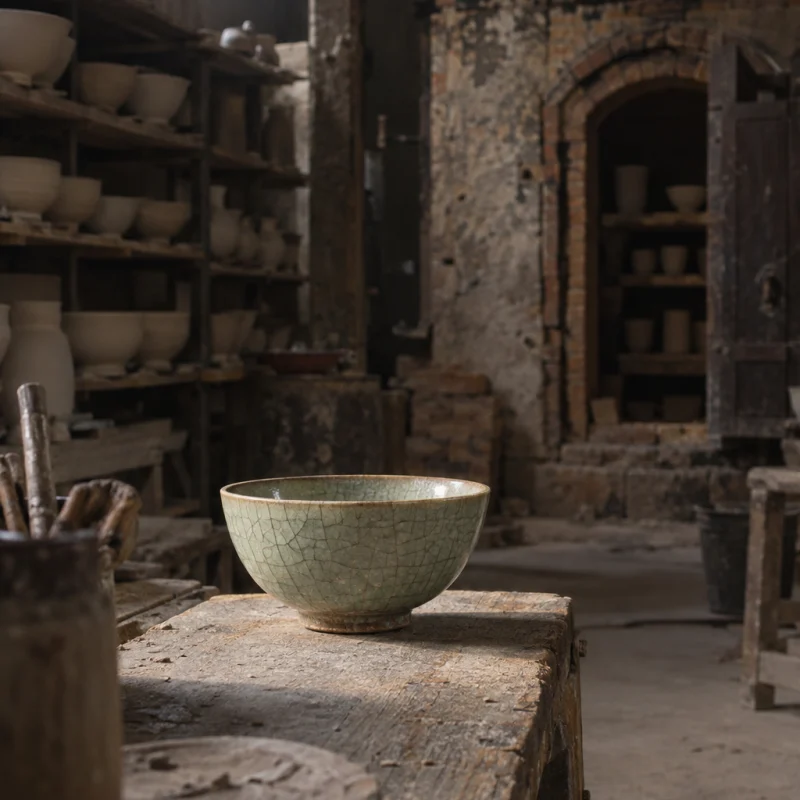
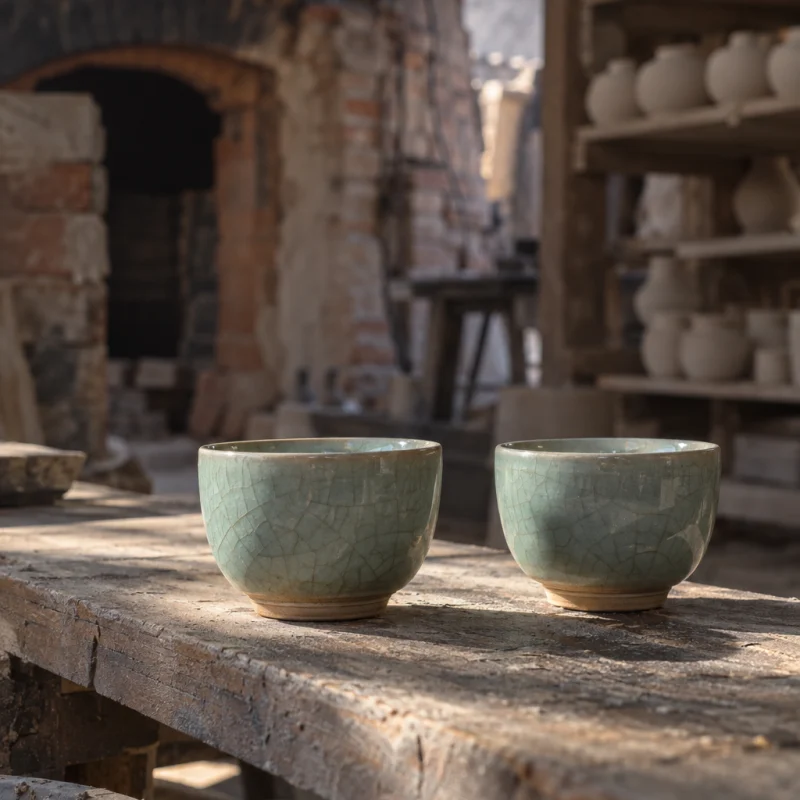
The celadon needs a fire starved of oxygen for a day. Too much air and the green turns to yellow.
IV
Opened at dawn
The kiln is left to cool through the night and opened in the first light, when the glaze colours can be read truly.
Words you will meet
Gốm
Pottery, stoneware — fired clay in general.
Sứ
Porcelain: the finer, whiter, higher-fired clay.
Men tro
Ash glaze, made from rice-straw ash.
Men ngọc
“Jade glaze”: celadon, the grey-green the village is known for.
03 — The artisans of Bát Tràng
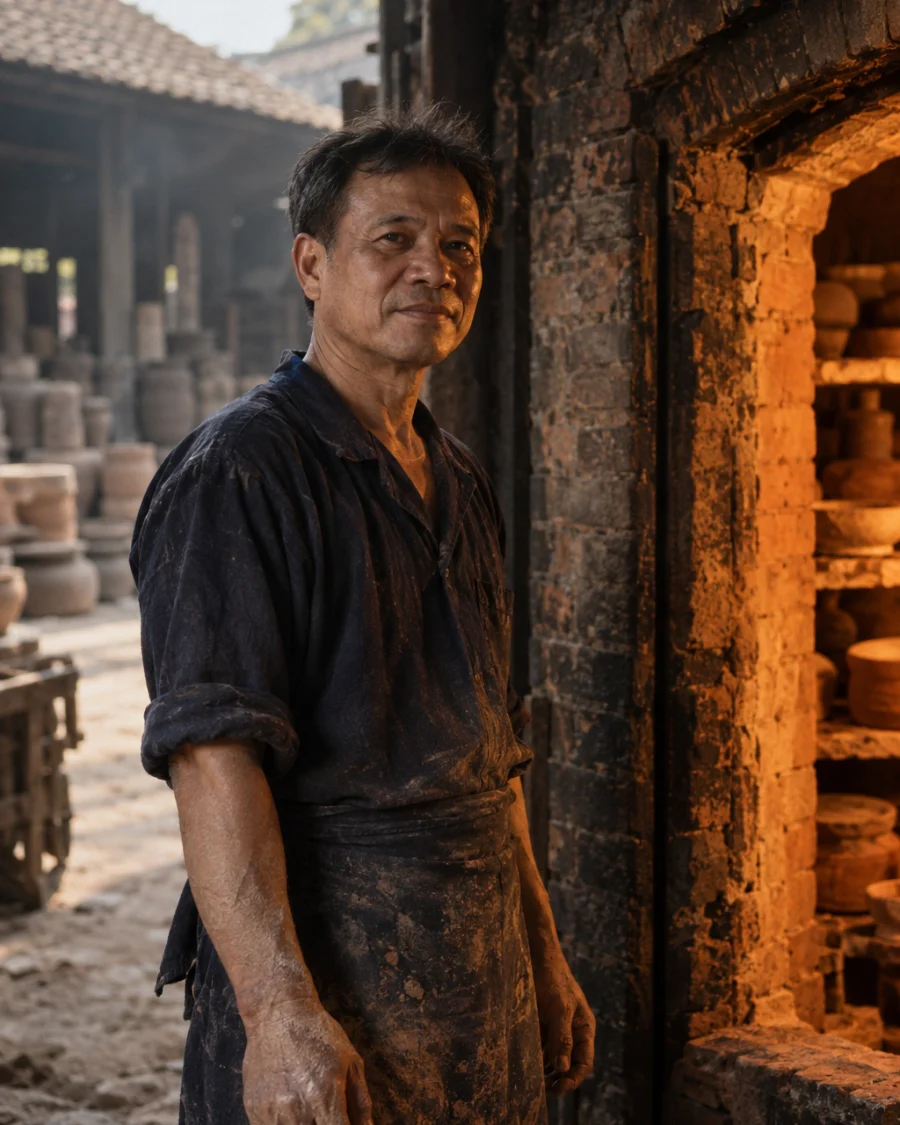
One workshop we return to
04 — Works from Bát Tràng
Five works from the village
05 — Visiting
Come and open a kiln
We take small groups to Bát Tràng once a month, timed to a kiln opening: a dawn start, a morning at the wheel, and lunch with the potter's family. Collectors who have acquired a work from the village visit as our guests.
- From Hà Nội
- About 30 minutes by car
- Best season
- All year; the dry months for a kiln opening
- Group size
- Six people at most
The other villages
The full atlas





