Craft village
Cát Cát
- Craft
- H’Mông textilesThổ cẩm
- Where
- Sa Pa, Lào Cai
- Practised since
- GenerationsHemp and indigo
- Material
- Hemp, indigoHand embroidery
- On LangSoul
- RecordedNot yet carried
01 — The story
Indigo hands below Sa Pa
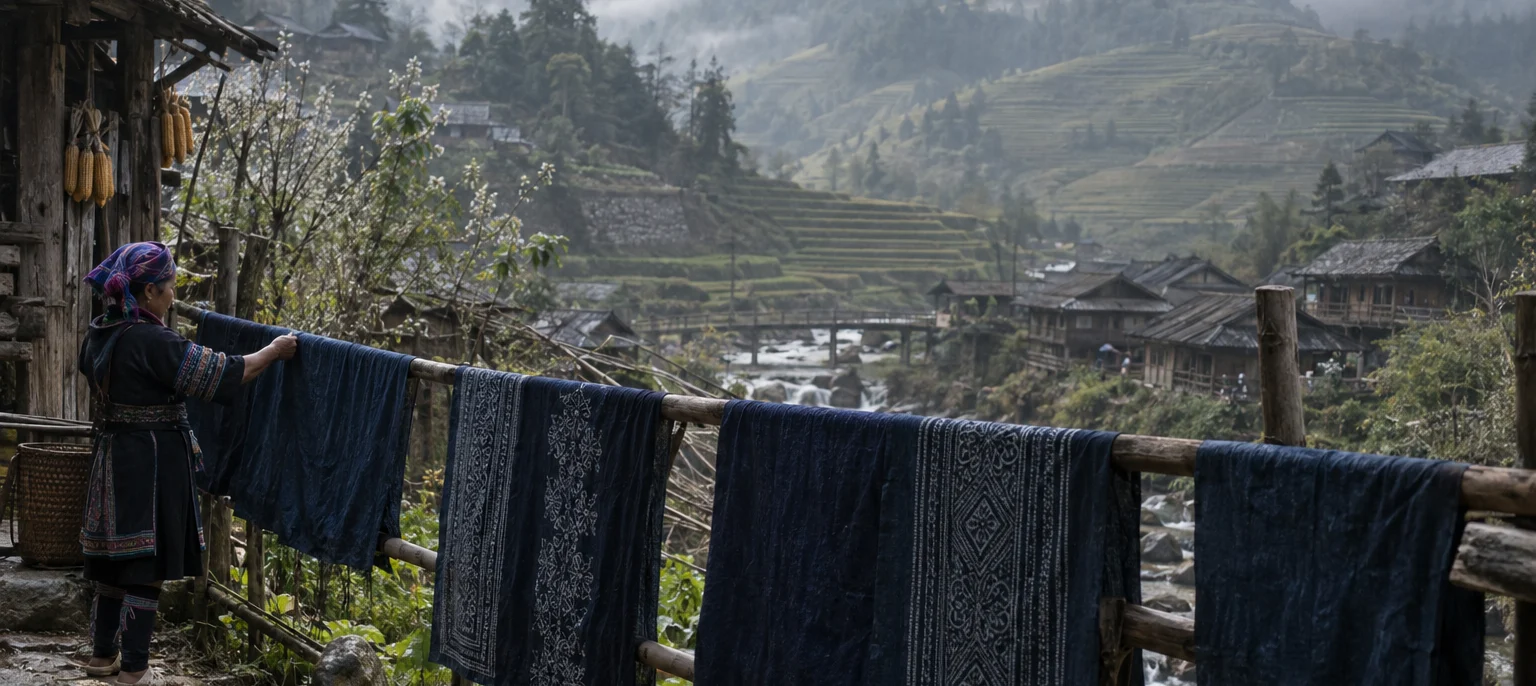
Cát Cát lies in a steep valley a short walk below Sa Pa, beside a stream and a waterfall. It is a Black H’Mông village, and the women here have made the family’s clothes from hemp for generations, growing the plant, spinning, weaving, dyeing and embroidering. The indigo-dyed jackets, pleated skirts and embroidered collars are the dress of the community and of its festivals and ceremonies. The village’s water-powered wheels, still turning by the stream, once pounded rice and other grain.
Because it is so close to Sa Pa, Cát Cát has become one of the most visited villages in the north. There is an entrance fee, a paved path, craft stalls and performances, and much of the clothing on sale is now factory-made or from elsewhere. The craft continues in households away from the main path, where women still spin hemp while they walk and sit embroidering between other work. It is worth taking time to see it. Women from other villages around Sa Pa also come down to sell their own work, so the stalls give a broad picture of the region’s cloth.
Good H’Mông hemp cloth is firm and uneven to the touch, and the indigo is deep and slightly glossy where it has been beaten. Embroidery should be dense and fine, often in cross-stitch and reverse appliqué, with small geometric motifs. Batik lines should be crisp. Bright colours and slick surfaces suggest machine-made cloth. Older pieces, worn soft and faded unevenly, are often more interesting than new ones.
02 — The technique
What makes Cát Cát textiles
Hemp, indigo and needle: the three skills a H'Mông woman learns from childhood.
I
Hemp spun by hand
Hemp is stripped, split and joined by hand into thread, often while walking or doing other work.
II
Woven at home
The thread is woven into narrow lengths of cloth on a simple loom in the house.
III
Dyed in the yard
The cloth is dyed in indigo, dipped and dried many times, and sometimes beaten to give it a sheen.
IV
Embroidery and batik
Patterns are worked in embroidery and appliqué, or drawn in beeswax before dyeing.
Words you will meet
Lanh
Hemp.
Chàm
Indigo.
Thêu
To embroider; embroidery.
Sáp ong
Beeswax, for batik.
03 — Visiting
Visiting Cát Cát
Cát Cát is a walk from Sa Pa town and is busy at midday; go early, and continue past the main path to quieter households. Ask before photographing anyone and buy directly from makers. Write to us if you would like an introduction.
- From Sa Pa
- About 20 minutes on foot
- Best season
- September to November, clear and dry
- Look for
- Firm hand-spun hemp, deep indigo and fine embroidery
The other villages
The full atlas






