Craft village
Chàng Sơn
- Craft
- Paper fans & carpentryQuạt giấy
- Where
- Thạch Thất, Hà Nội
- Practised since
- c. 200 yearsFans and joinery
- Material
- Bamboo, dó paperPleated and glued by hand
- On LangSoul
- RecordedNot yet carried
01 — The story
Bamboo ribs and a carpenter's patience
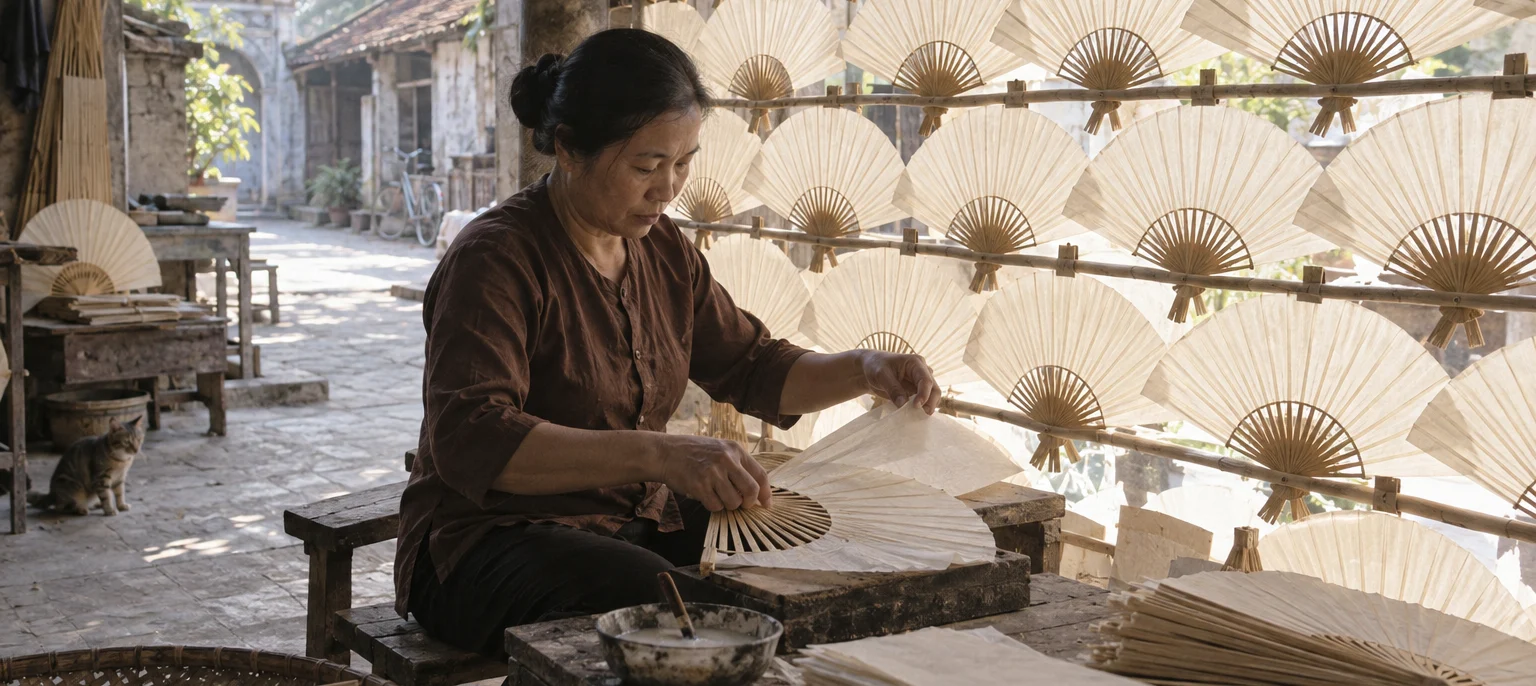
Chàng Sơn lies in Thạch Thất, west of Hà Nội, in a district known for its woodworkers and close to the old Tây Phương pagoda with its celebrated carved figures. The village has two trades. Its carpenters built houses and furniture for the surrounding countryside, and its fan makers, for around two centuries, have made folding fans of bamboo and paper for summer, for festivals and for the stage. Fans were sold at markets and to Hà Nội shops, and the village’s carpenters were hired far beyond the district.
Both trades are still alive. The furniture workshops are larger and more mechanised now, while fan making has stayed largely a household craft, with each house often specialising in one stage: ribs, paper, painting or assembly. Fans are made for dancers and theatres, for weddings and for visitors, from plain paper to painted silk. The two trades still borrow from each other. Fan makers judge bamboo with a carpenter’s eye for grain and seasoning.
A good Chàng Sơn fan opens with a clean, even sound and closes flat without the ribs splaying. The ribs should be matched in colour and thickness, smoothed on every edge, and the pleats sharp and regular. The paper should be glued firmly along each rib with no bubbling. Painted fans are best when the painting follows the folds instead of fighting them. The pin at the base should be tight, so that the fan neither wobbles nor sticks. Carpentry from the village is judged as joinery anywhere is: by tight joints, sound timber and careful finishing.
02 — The technique
What makes Chàng Sơn fans
A folding fan is mostly bamboo work; the paper is the last thing to arrive.
I
Seasoned bamboo
Bamboo is cut, split and dried, sometimes smoked, so the ribs will not warp or attract insects.
II
Ribs by hand
Each rib is shaved, thinned and smoothed by hand, then pierced so the set can turn on a single pin.
III
Paper pleated
Paper is folded into even pleats on a template before it is joined to the ribs, so that it opens and closes the same way every time.
IV
Glued and pressed
The paper is glued to the ribs with a rice paste and pressed flat until the fan holds its shape.
Words you will meet
Quạt giấy
Paper fan.
Nan quạt
A fan rib, split from bamboo.
Giấy dó
Paper from the bark of the dó tree.
Nghề mộc
Carpentry, the village's other trade.
03 — Visiting
Visiting Chàng Sơn
You will see fan work in the doorways and courtyards of the older lanes, and furniture workshops along the main road. Combine it with a visit to Tây Phương pagoda nearby. Write to us if you would like an introduction to a fan-making household.
- From Hà Nội
- About an hour by car
- Best season
- Late spring and summer, when fans are most in demand
- Look for
- Matched, smooth ribs and sharp, even pleats
The other villages
The full atlas






