Craft village
Kim Bồng
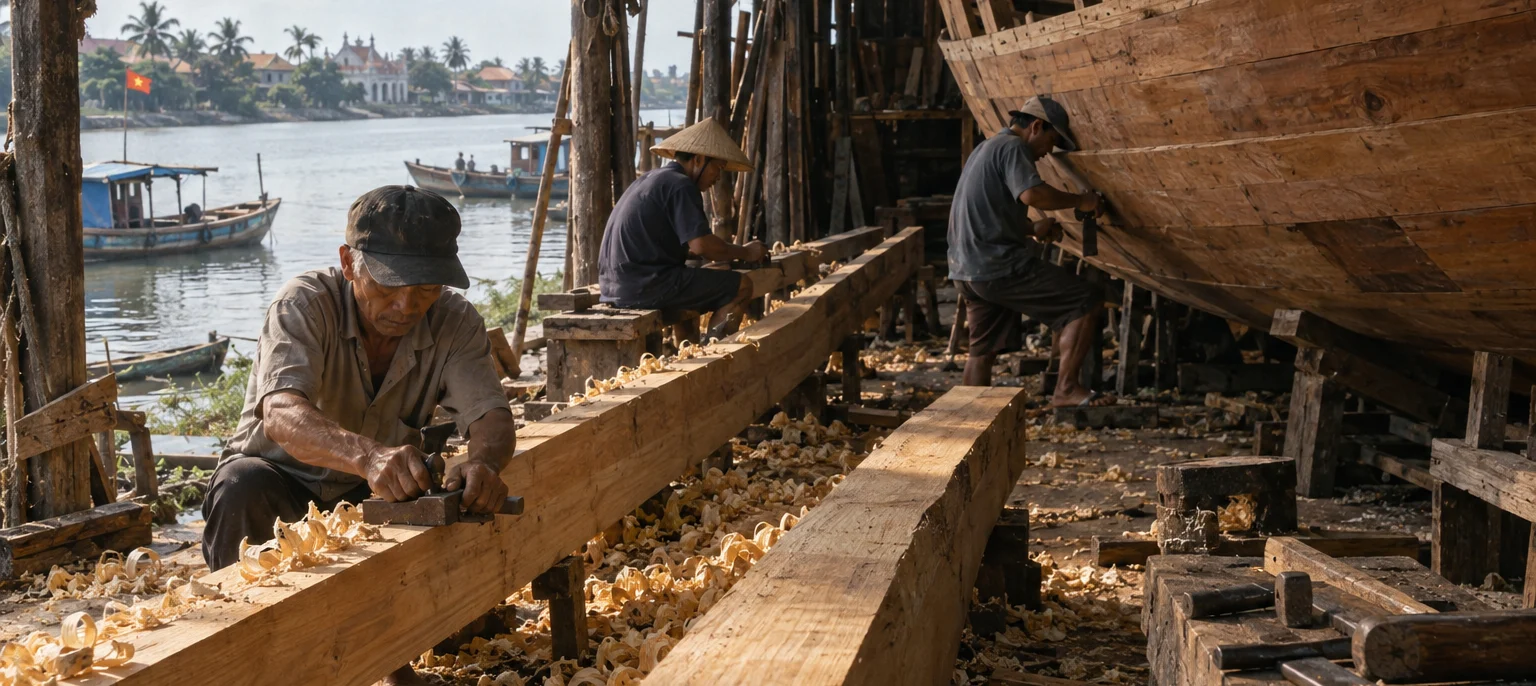
- Craft
- Carpentry & boat buildingMộc
- Where
- Hội An, Quảng Nam
- Practised since
- c. 15th centuryHouses and boats of Hội An
- Material
- Jackfruit and ironwoodJoined, carved, caulked
- On LangSoul
- RecordedNot yet carried
01 — The story
The carpenters across the river
Kim Bồng is on Cẩm Kim island, across the Thu Bồn river from Hội An’s old town. Its carpenters are recorded from around the fifteenth century, and as Hội An grew into a trading port they built its houses, assembly halls and temples, and the boats that worked its harbour and river. Their skill was in demand elsewhere too, and Kim Bồng carpenters are said to have worked on buildings in the capital at Huế. The carved beams, doors and timber frames of the old town are largely their work.
The village still does both of its trades. Workshops build and repair timber houses, often for restoration of heritage buildings, and carve doors, panels and furniture. Down by the river, boatwrights build wooden boats on the bank in the traditional way, shaping the hull plank by plank. There is also a stream of smaller carved pieces made for visitors, of varying quality. The boatyards are the clearest link to the past: the methods are the same that built the river craft of the old port.
In good Kim Bồng work the joints matter more than the carving. A traditional frame is held together with mortise and tenon and wooden pegs, not nails or glue, and it can be taken apart and rebuilt. In carving, look for depth and clean undercutting, so that leaves and figures stand free of the ground. Jackfruit wood should show its warm yellow-orange colour mellowing to brown.
02 — The technique
What makes Kim Bồng carpentry
Kim Bồng builds with joints and pegs, so a house or a boat can be repaired one part at a time.
I
Choosing timber
Jackfruit is used for carving and interiors, ironwood and other hardwoods for posts, beams and hulls.
II
Joined, not nailed
Frames are cut with mortise and tenon joints and pegged, so they flex in storms and can be dismantled.
III
Carved in relief
Doors, beams and panels are carved with chisels in layered relief, often with motifs of flowers, fish and clouds.
IV
Caulked hulls
Boat planks are fitted edge to edge, and the seams are caulked so the hull stays watertight.
Words you will meet
Thợ mộc
Carpenter.
Mộng
A mortise-and-tenon joint.
Gỗ mít
Jackfruit wood, warm-coloured and easy to carve.
Ghe
A traditional wooden boat of the central coast.
03 — Visiting
Visiting Kim Bồng
Kim Bồng is a short trip from Hội An and pleasant by bicycle; the boat-building yards along the river are the most memorable part. Workshops are working places, so keep clear of tools and ask before photographing. LangSoul does not run trips here, but readers can write to us for an introduction.
- From Hội An
- About 15 minutes by boat or across the river by road
- Best season
- February to August, outside the flood months
- Look for
- Pegged joints and deep, clean undercutting in the carving
The other villages
The full atlas






