Craft village
Mang Thít
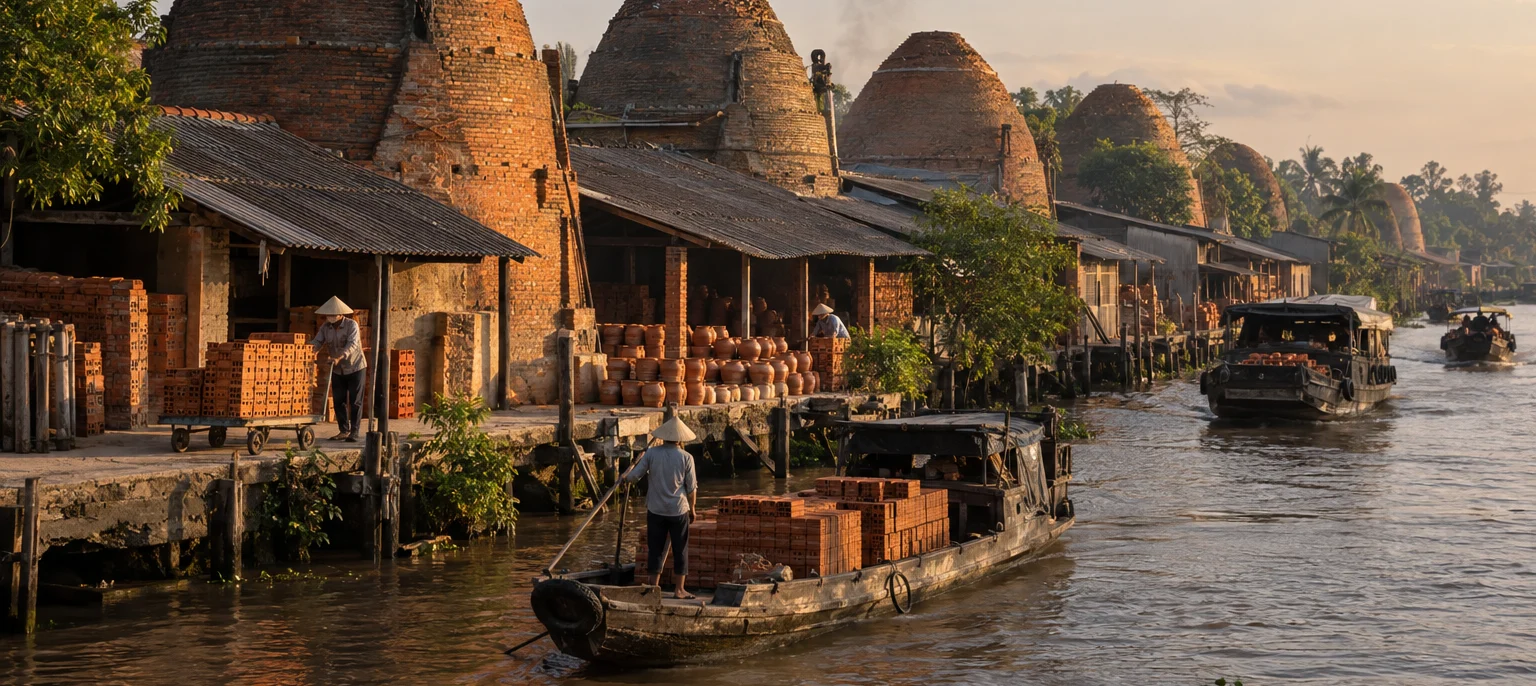
- Craft
- Brick & pottery kilnsGạch gốm
- Where
- Vĩnh Long
- Practised since
- c. 1900Hundreds of beehive kilns
- Material
- Riverbank clayFired with rice husk
- On LangSoul
- RecordedNot yet carried
01 — The story
Beehive kilns on the Cổ Chiên
Mang Thít, in Vĩnh Long, lies where canals meet the Cổ Chiên river, a branch of the Mekong that deposits fine clay along its banks. From around the early twentieth century families began to build kilns here to fire bricks and roof tiles for the growing towns of the delta. Boats could bring clay in and carry fired brick out along the same waterways. The kilns multiplied until they stretched for kilometres along the water, and the area became known as the kingdom of kilns.
Times have been hard for the kilns. Factory brick and tighter rules on smoke have closed many of them, and some now stand empty with plants growing on their domes. Others have turned from building brick to red pottery: flowerpots, jars, and decorative pieces sold through the delta and abroad. Where a kiln is working, the stokers still feed it with rice husk, the cheap and plentiful waste of the paddy, and a firing can take weeks.
With Mang Thít red pottery, look for an even, warm terracotta colour without black scorch patches unless they are deliberate. Tap a piece: well-fired clay rings clearly; a dull thud suggests it was underfired and will crumble in frost or rain. Walls should be fairly even in thickness. Hand-thrown or hand-built pieces show the slight irregularities of the maker, and the best have a fine, smooth skin from the river clay.
02 — The technique
What makes Mang Thít pottery
Everything here depends on the river: its clay, its boats and the rice fields that supply the fuel.
I
Clay from the riverbank
Fine alluvial clay is dug, soaked and trodden or milled until it is smooth and free of grit.
II
Shaped and dried
Bricks are pressed in moulds and pots thrown or moulded, then dried in the shade for many days.
III
Stacked in the beehive
Pieces are stacked inside the domed kiln so the heat can circulate between them.
IV
Fired with rice husk
Rice husk is fed into the firebox day and night, the heat rising slowly and falling slowly over weeks.
Words you will meet
Lò
Kiln.
Trấu
Rice husk, the fuel of the Mang Thít kilns.
Gốm đỏ
Red pottery, the unglazed terracotta of the delta.
Gạch
Brick.
03 — Visiting
Visiting Mang Thít
The kilns are best seen from the water, so consider hiring a small boat locally along the canals. Working kilns are hot and busy; ask before going near, and do not climb on the domes, active or cold. Write to us if you would like an introduction.
- From Cần Thơ
- About an hour and a half by car
- Best season
- December to April, the dry season
- Look for
- Even terracotta that rings when tapped
The other villages
The full atlas






