Craft village
Phù Lãng
- Craft
- Brown-glazed stonewareGốm
- Where
- Quế Võ, Bắc Ninh
- Practised since
- c. 13th centuryTrần-dynasty kilns
- Material
- Red clay, ash glazeWood-fired
- On LangSoul
- RecordedNot yet carried
01 — The story
Eel-skin glaze on the Cầu river
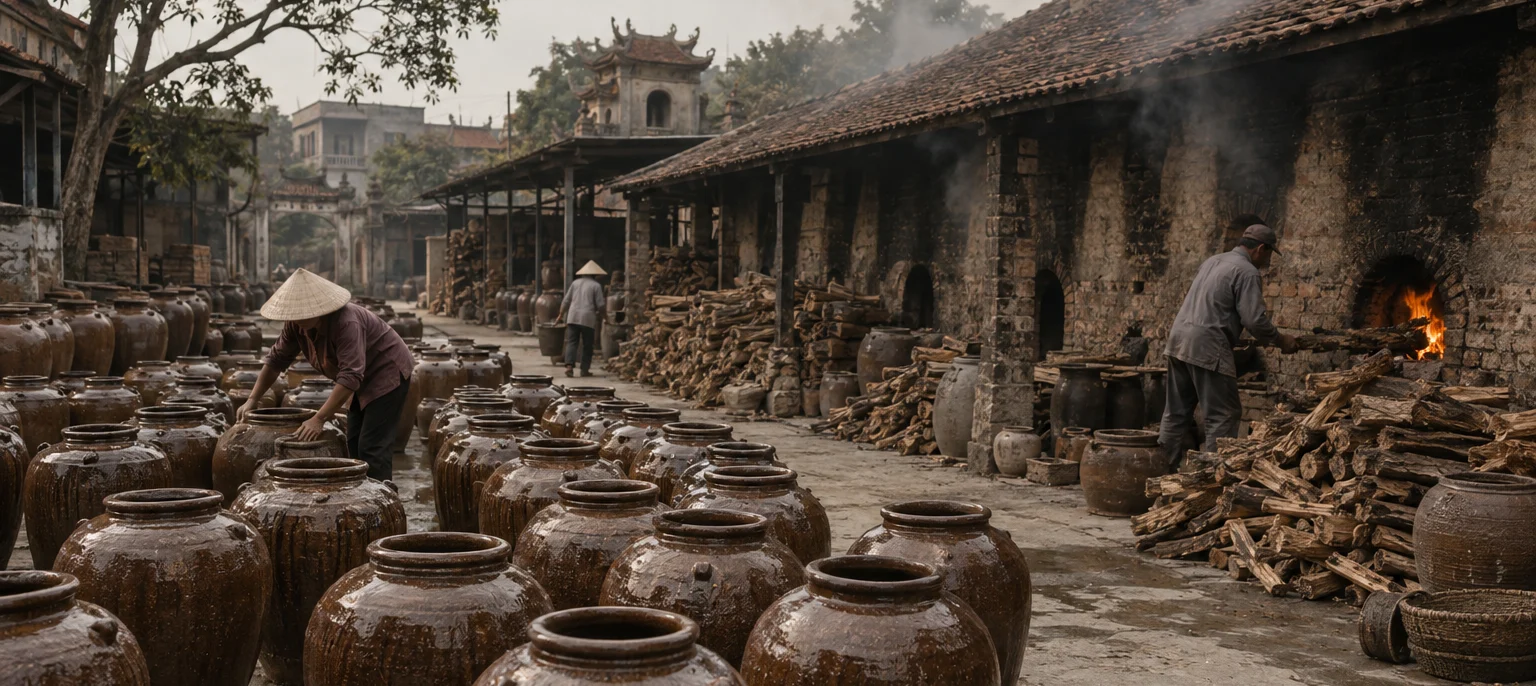
Phù Lãng sits on the bank of the Cầu river, in Bắc Ninh, where the delta meets the first low hills. The village has fired pottery since the Trần period, and for most of that time it made the plain, strong wares that a farming household needed: jars for fish sauce and rice wine, water vats, pots for pickles, urns and the tiles and bricks of the countryside. The river carried the clay in and the finished pieces out by boat.
The glaze is what people remember. Fired with wood, the ash glaze runs from honey to deep chestnut and settles in a mottled brown the village calls eel skin. In recent decades a number of potters, several of them trained at art schools, have turned that glaze to new work: relief panels, vases, figures and wall pieces, built on the same clay and fired in the same kind of kiln. The utilitarian trade has shrunk, and fewer kilns are lit than a generation ago, but the village has found a second life in sculpture.
In good Phù Lãng work the glaze is never even. It pools darker in the hollows and thins to reddish clay on the high points, so relief decoration reads clearly. The body is dense and heavy for its size. Look for the marks of wood firing, ash speckles and a slight variation from one side of a piece to the other, which show where the flame passed. A piece that is uniformly brown and glossy has probably been fired with gas.
02 — The technique
What makes Phù Lãng pottery
The colour comes from very few things: red clay, an ash glaze and a long fire of wood.
I
Red clay of the river
The clay is a coarse, iron-rich red earth, aged and trodden before it is worked, which fires to a hard stoneware body.
II
Built by hand
Large jars are built up in coils and smoothed by hand, the potter working around the piece rather than relying on a fast wheel.
III
Relief, not painting
Decoration is modelled in clay and pressed onto the surface, so the glaze can pool and thin across it.
IV
Ash glaze, wood fire
The glaze is made with plant ash and fired for days in a wood kiln. The fire, not the brush, decides the final colour.
Words you will meet
Gốm sành
Stoneware, fired hard enough to be almost waterproof.
Men da lươn
Eel-skin glaze, the mottled brown of Phù Lãng.
Đắp nổi
Relief decoration modelled and applied in clay.
Lò củi
A wood-fired kiln.
03 — Visiting
Visiting Phù Lãng
Phù Lãng is quiet and spread out along the river, and several potters keep workshops or small galleries that are open to visitors. Kiln firings are irregular, so you may see shaping and glazing rather than a firing; ask before entering a workshop and handle pieces carefully. Write to us if you would like an introduction.
- From Hà Nội
- About an hour and a half by car
- Best season
- October to April, dry and mild
- Look for
- Glaze that pools dark and thins to red clay on the high points
The other villages
The full atlas






