Craft village
Phước Tích
- Craft
- PotteryGốm
- Where
- Phong Điền, Huế
- Practised since
- 1470Kitchen ware for the court
- Material
- Red clayUnglazed, wood-fired
- On LangSoul
- RecordedNot yet carried
01 — The story
Red clay on a bend of the Ô Lâu
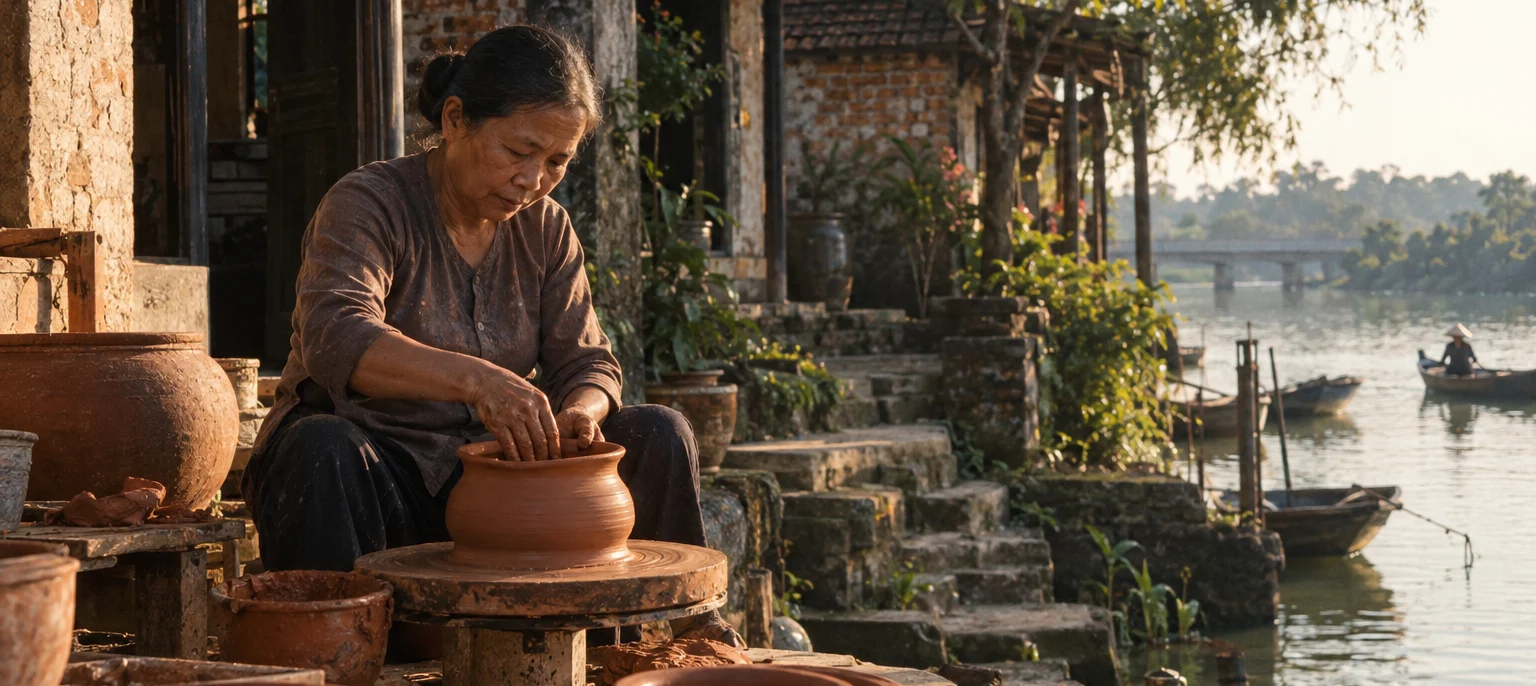
The village was settled in the fifteenth century on a loop of the Ô Lâu river, north of what would become Huế. The river brought clay and carried the finished pots away by boat. Phước Tích ware was never glazed or painted. It was kitchen work — rice pots, water jars, braziers, pots for slow-cooked fish — and under the Nguyễn it was good enough to be ordered for the palace kitchens. The prosperity of those centuries is visible in the village itself: lanes of old timber houses under fruit trees, family temples and shrines, many of them more than a hundred years old.
Through the twentieth century the craft nearly stopped. Aluminium and enamel replaced clay in most kitchens, and the young left for Huế. Since the village was protected for its houses, a few households and a small workshop have taken up the wheel again, and the old dragon kiln on the riverbank has been fired on occasion. Today pottery here is quiet and small in scale. What you find is a handful of potters, a museum of sorts in the lanes, and a village that remembers clearly what it used to make.
Good Phước Tích work is light for its size and rings when tapped. The red-brown body should be even, with the faint shadow of wood ash and flame on one side rather than a uniform colour. The pots are meant for use. A rice pot that has been seasoned on a fire is not damaged; it is finished.
02 — The technique
What makes Phước Tích pottery
Everything about this ware comes from the river and the kitchen: plain clay, a quick wheel and a wood fire.
I
River clay, aged
Clay is dug near the river, soaked and trodden, then left to rest so it throws smoothly and does not crack in the fire.
II
Thin walls
Pots are thrown thin so they heat fast and evenly over a cooking fire; a heavy pot is the sign of a hurried hand.
III
No glaze
The surface is burnished or left plain. Unglazed clay breathes, which is why cooks still prefer it for rice and braised fish.
IV
Wood firing
The kilns are fired with wood, and the flame leaves warm patches of colour that differ from one side of a pot to the other.
Words you will meet
Gốm
Pottery, ceramics in general.
Nồi đất
Clay cooking pot, the everyday work of the village.
Nhà rường
The traditional timber-framed house of the Huế region, assembled with joints rather than nails.
Lò
Kiln.
03 — Visiting
Visiting Phước Tích
Phước Tích is a protected village and an easy half day from Huế; come for the houses as much as the pottery, and expect only a few potters at work. Ask before entering a courtyard, and buy something if you have watched someone throw. LangSoul does not run trips here, but readers can write to us for an introduction.
- From Huế
- About an hour by car, 40 km north
- Best season
- February to August, before the autumn rains and floods
- Look for
- Thin red pots with uneven flame colour and a clear ring
The other villages
The full atlas






