Craft village
Sơn Đồng
- Craft
- Carved & gilded statuaryTượng gỗ
- Where
- Hoài Đức, Hà Nội
- Practised since
- c. 11th centuryBy the village's account
- Material
- Jackfruit wood, lacquerGold and silver leaf
- On LangSoul
- RecordedNot yet carried
01 — The story
Where the pagodas get their Buddhas
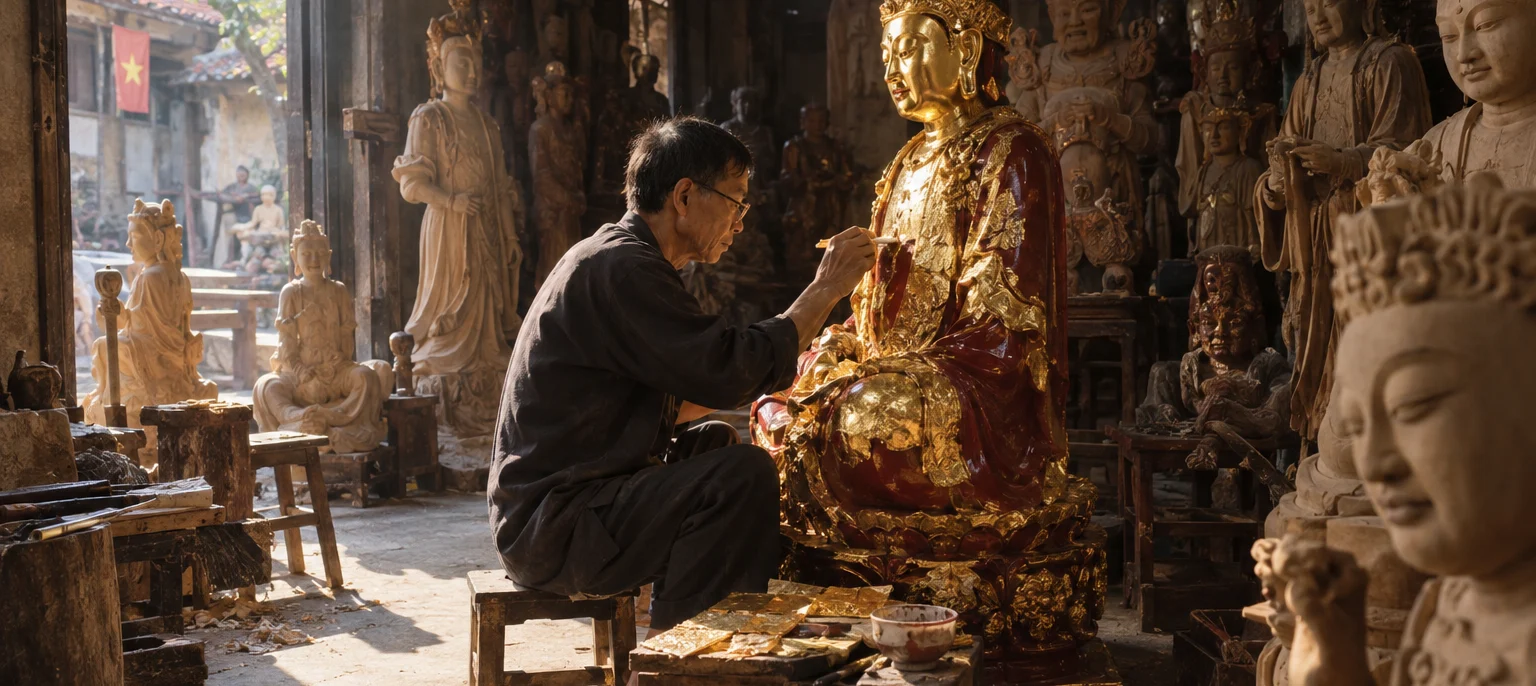
Sơn Đồng lies west of Hà Nội, in a district of old craft villages. For many centuries its carvers have made the statuary of the north’s pagodas, temples and communal houses: Buddhas, bodhisattvas, guardian figures, the gods of village shrines, and the altars, boards and parallel sentences that surround them. The work was done on commission, and statues from the village travelled across the delta to be installed and consecrated.
The craft lives on in workshops that line the lanes, many of them run by families who have carved for generations. Demand from temples and households is steady, and the village also restores old statues, which means its carvers know how the earlier work was made. Carving and lacquering are often done by different hands, sometimes in different houses, and a large commission may pass through several workshops. Some workshops now use machines for roughing out, then carve the detail by hand.
A good Sơn Đồng figure is judged on its face and hands first, which must be calm and alive at once, and on the fall of the robe. Under the gilding, the lacquer should be smooth and deep, with no cracks at the joints. Gold leaf laid by hand shows faint overlaps and a warmer tone than gold paint. On older pieces, wear through to red or black lacquer at the high points is natural and should not be hidden.
02 — The technique
What makes Sơn Đồng statuary
A statue is carved in days but finished over months, as layer after layer of lacquer goes on and dries.
I
Jackfruit wood
Jackfruit is preferred for its fine, even grain and its resistance to insects. The figure is roughed out from the block and then carved in detail.
II
Cloth and paste
Joints and cracks are bound with cloth and filled with a paste of lacquer and fine powder, so the wood cannot move under the surface.
III
Layers of lacquer
Natural lacquer is laid on in many thin coats, each dried and rubbed back, until the surface is smooth and hard.
IV
Leaf, not paint
Gold or silver leaf is pressed onto a final tacky coat of lacquer, sheet by sheet, and burnished.
Words you will meet
Tượng gỗ
Wooden statue.
Sơn ta
Natural Vietnamese lacquer, the sap of the lacquer tree.
Sơn thếp
Lacquering and gilding, the finishing trade of the village.
Đồ thờ
Objects for worship: altars, statues, boards and furniture.
03 — Visiting
Visiting Sơn Đồng
Workshops are open-fronted and you can see carving, lacquering and gilding from the lane on most days. These are sacred objects to the people who make and buy them; do not touch or pose with finished statues, and ask before photographing. Write to us if you would like an introduction.
- From Hà Nội
- About 45 minutes by car
- Best season
- Year round; the dry months are easiest for lacquer work
- Look for
- Calm faces, carved hands and leaf gilding with faint overlaps
The other villages
The full atlas






