Craft village
Thủy Xuân
- Craft
- Incense makingHương
- Where
- Huế
- Practised since
- c. 100 yearsOn the road to the tombs
- Material
- Bamboo, agarwood powderDyed stems, sun-dried
- On LangSoul
- RecordedNot yet carried
01 — The story
Incense on the road to the tombs
Thủy Xuân lies in the hills south of Huế, along the road that leads to the tombs of the Nguyễn emperors. The city has always burned a great deal of incense, in pagodas, at household altars and at the many shrines of a former capital, and this village became one of its suppliers over the last century or so. Pine forest and the pilgrimage traffic to the tombs and pagodas nearby gave it both materials and customers.
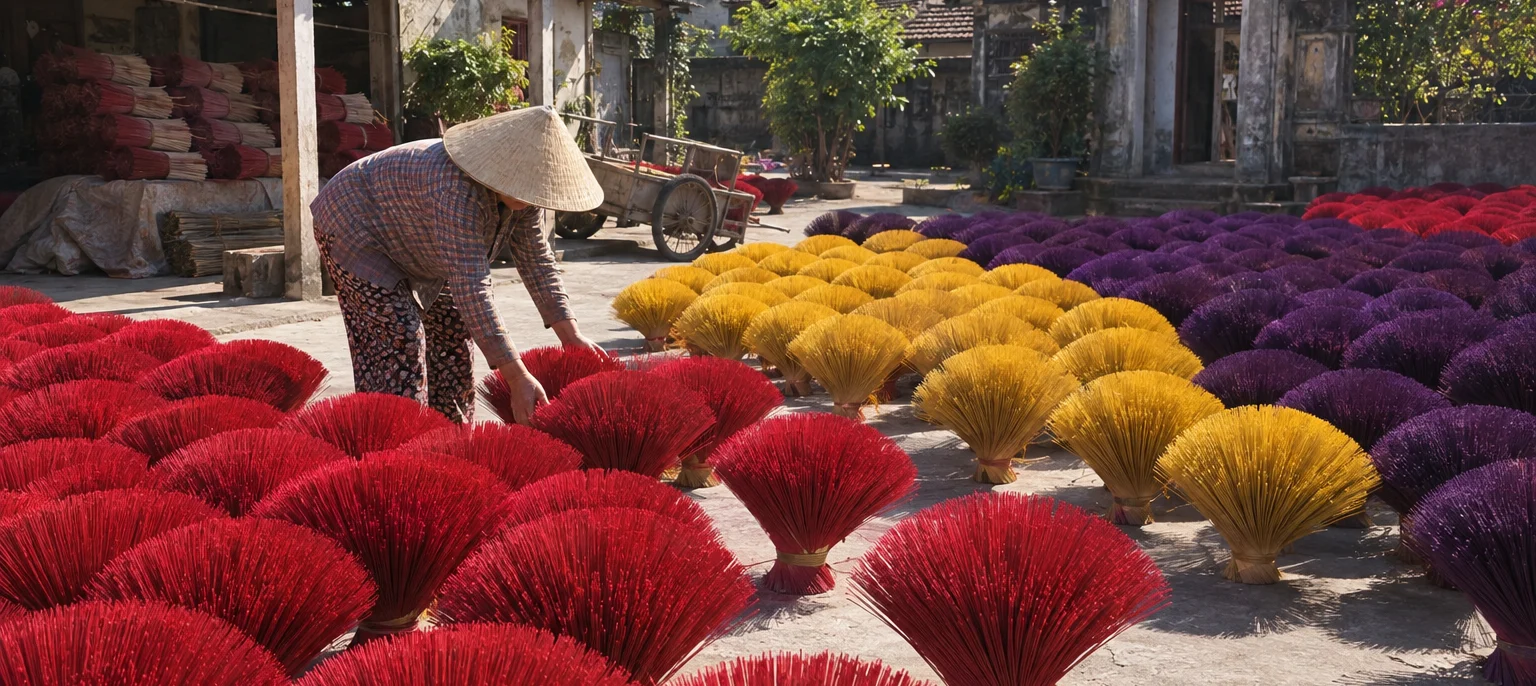
Today the roadside is lined with bundles of incense fanned open into bright circles to dry, and many visitors stop for photographs. Some of this display is now arranged for them, and you will be asked to pay or buy. Behind it, though, the work is real: households split bamboo for the cores, mix the paste, roll the sticks by hand and dry them on racks. Some of the same families make conical hats, as much of the Huế countryside does. The scent is what the household is known for, and recipes are kept within the family; the colour of the stems is the same everywhere.
Good incense is judged by the nose rather than the eye. The paste should be dense and evenly rolled, without bare patches on the stick, and the scent should be woody and warm when burned, not sharp or chemical. The agarwood blends cost more and smell quieter. The dyed stems are traditional colour, not a sign of quality.
02 — The technique
What makes Thủy Xuân incense
A stick of incense is three materials and a great deal of hand rolling.
I
Bamboo cores
Bamboo is split into thin sticks, and the lower part that will be held is dyed red, yellow or other colours.
II
Scented paste
Powdered wood, cinnamon, clove and agarwood are mixed with a natural binder into a damp paste.
III
Rolled by hand
Each stick is coated and rolled on a board in several thin layers until the coat is even.
IV
Dried in the sun
The finished sticks are fanned out in bundles to dry, which is the colourful sight on the roadside.
Words you will meet
Hương / nhang
Incense; hương is the usual word in Huế.
Trầm
Agarwood, the resinous heartwood prized for its scent.
Quế
Cinnamon bark, a common ingredient in the paste.
Tăm nhang
The thin bamboo stick at the centre of each incense stick.
03 — Visiting
Visiting Thủy Xuân
Thủy Xuân is easy to combine with the tombs of Tự Đức and Khải Định. Stop at a household where people are actually rolling rather than at a photo stand, and if you photograph someone's work, buy a bundle. LangSoul does not run trips here, but readers can write to us for an introduction.
- From Huế
- About 15 minutes by car or bicycle
- Best season
- February to August; the months before Tết are the busiest
- Look for
- Evenly rolled sticks and a warm, woody scent
The other villages
The full atlas






