Craft village · Sơn mài · Lacquer
Hạ Thái
Làng sơn mài Hạ Thái — the lacquer village on the road south of Hà Nội
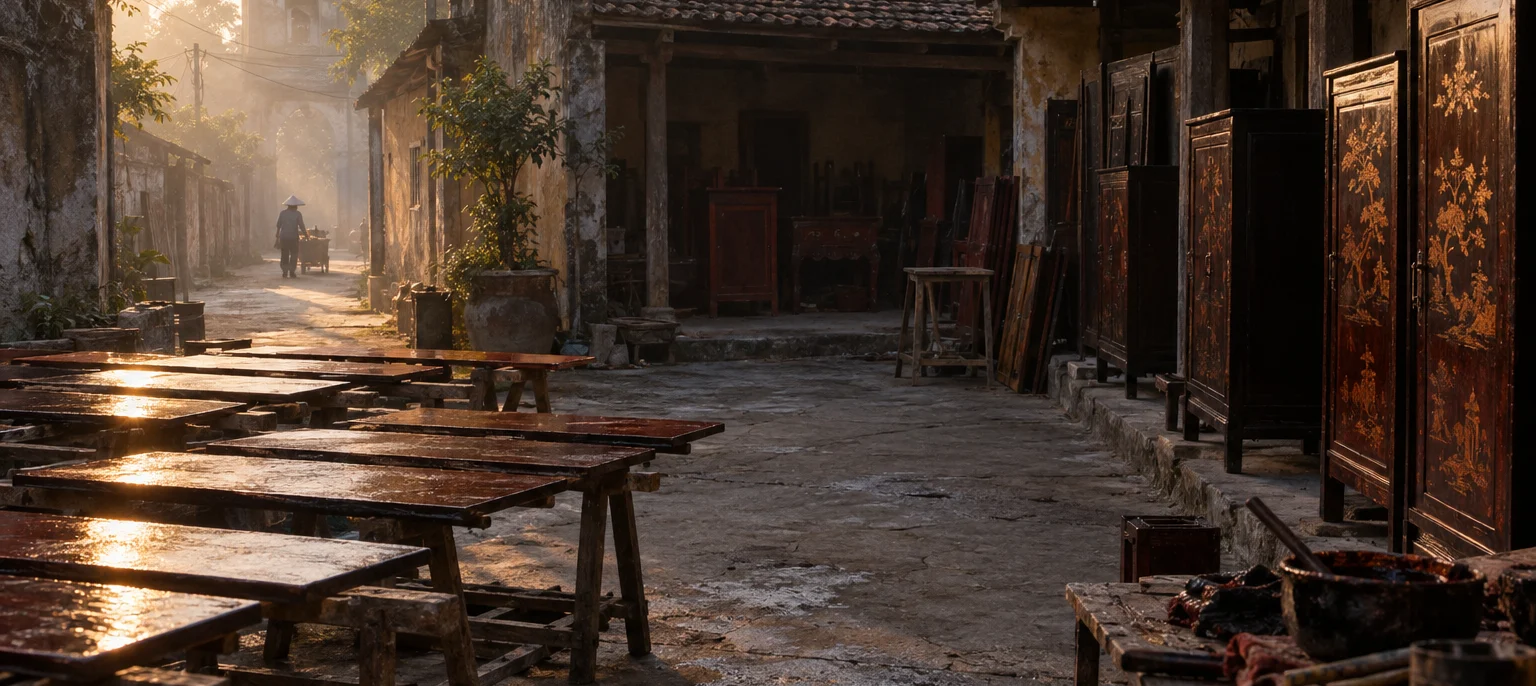
“A lacquer board is finished when it stops drinking light.”
- Craft
- Natural lacquerSơn mài
- Where
- Thường Tín, Hà Nội20 km from Hà Nội
- Practised since
- c. 17th centurySome ten generations
- Material
- Sơn ta resinTapped in Phú Thọ
- On LangSoul
- 3 artisans7 works
01 — The story
Three hundred years of the same slow trade
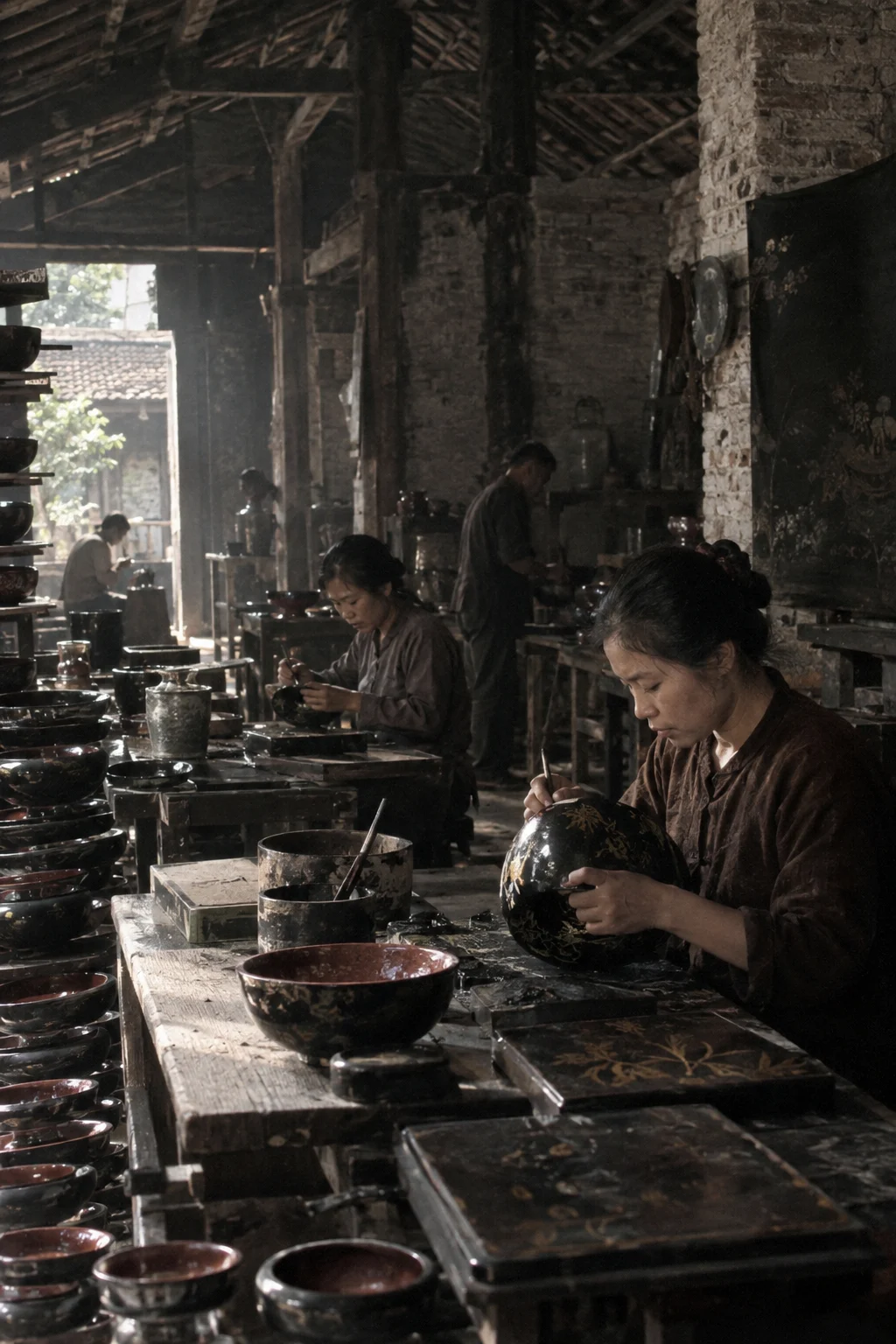
Hạ Thái’s craftsmen first worked for the temples and communal houses of the region, gilding altars and painting the red-and-gold doors that still stand in Thường Tín. In the early twentieth century, teachers from the Indochina College of Fine Arts carried the technique from decoration into painting, and villagers found themselves grinding colour for the artists who would make sơn mài a national art.
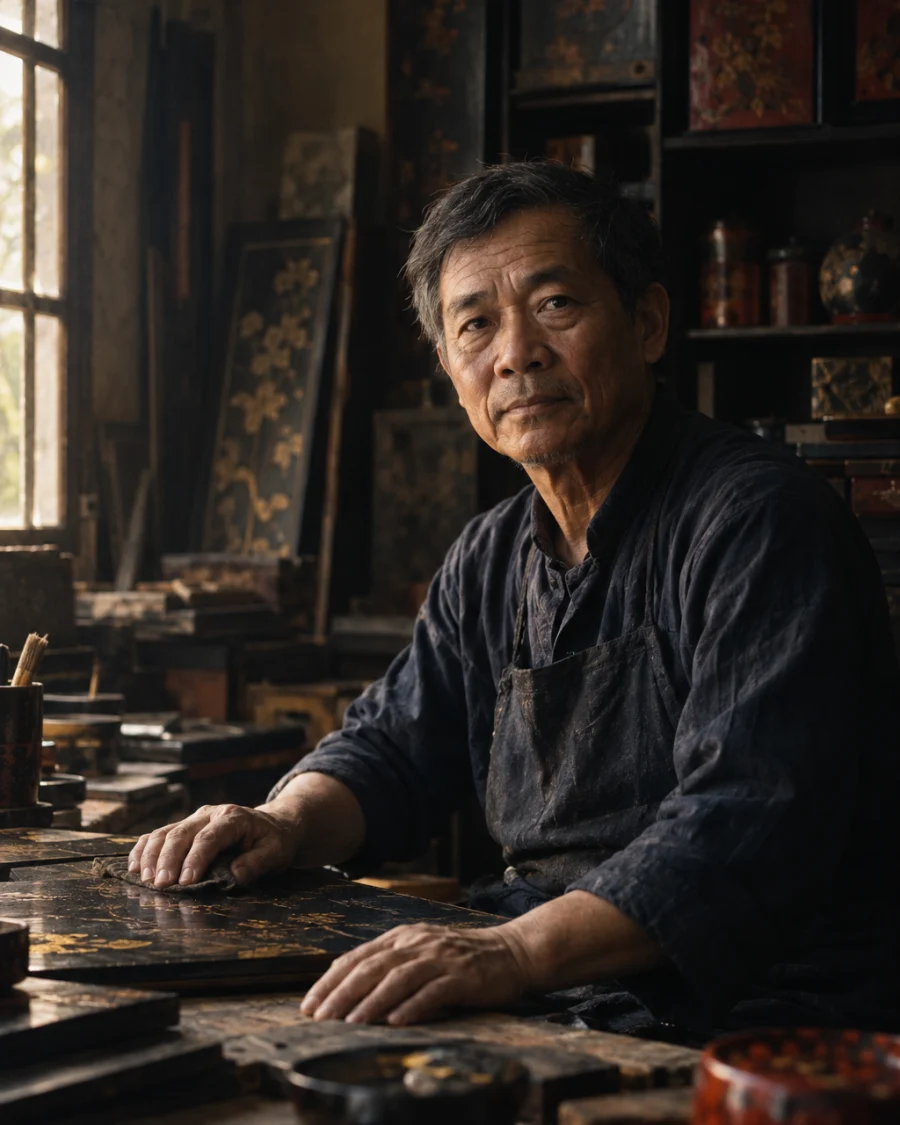
Today the lane is lined with family workshops. Some produce for export in quantity; a few, like the three we work with, keep to the original recipe: natural resin rather than synthetic, dozens of coats rather than a few, and polishing by hand rather than machine. These are the makers whose works carry the LangSoul seal.
02 — The technique
What makes Hạ Thái lacquer
Four things set the village's work apart, and all four are a matter of time rather than tools.
I
Natural resin only
Sơn ta, tapped from the lacquer tree in the hills of Phú Thọ, filtered and aged. It cures in humidity, not heat, and darkens beautifully for decades.
II
Twelve coats and more
Each coat cures for about a week before it can be sanded back. A panel is never fewer than twelve layers; some are twenty.
III
Eggshell and gold
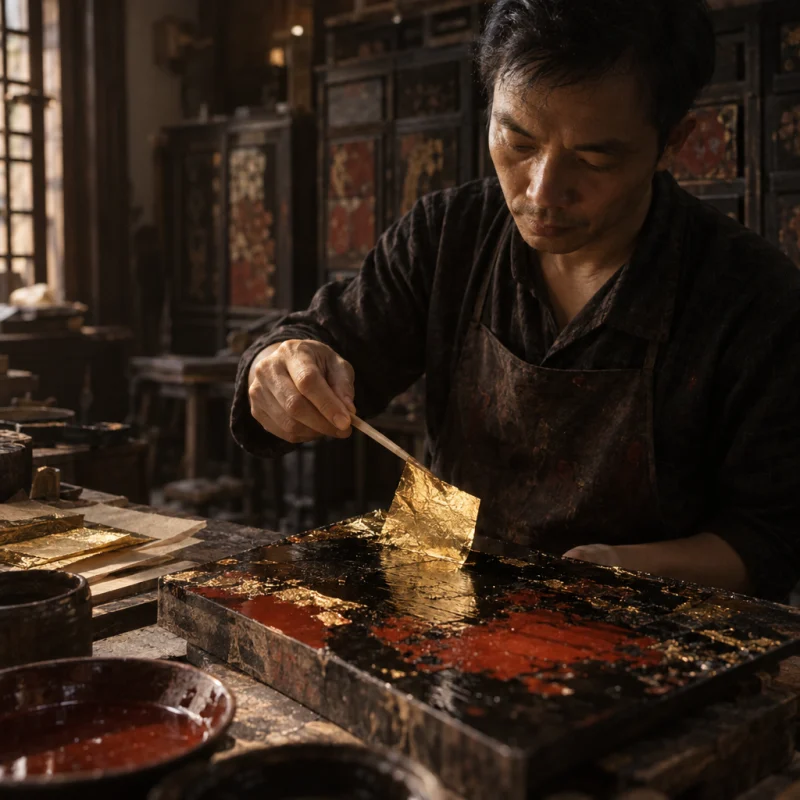
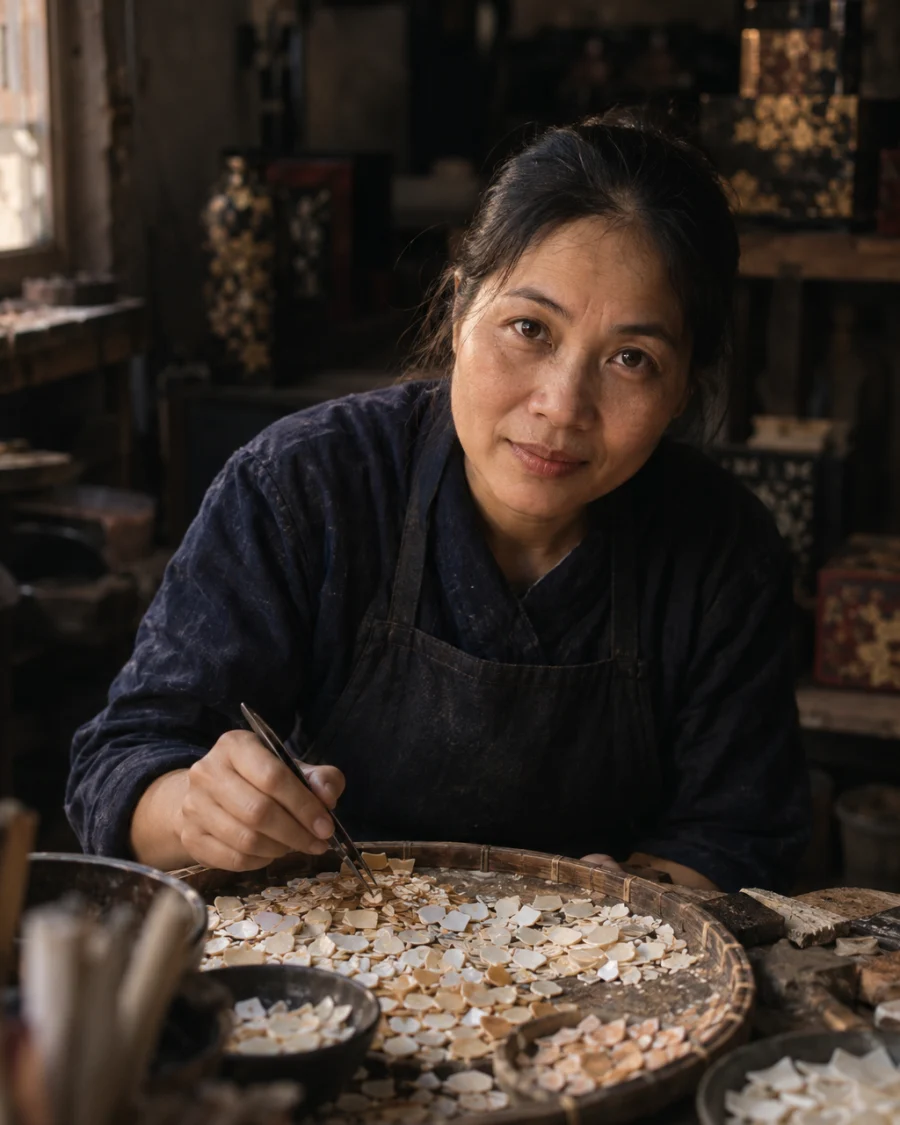
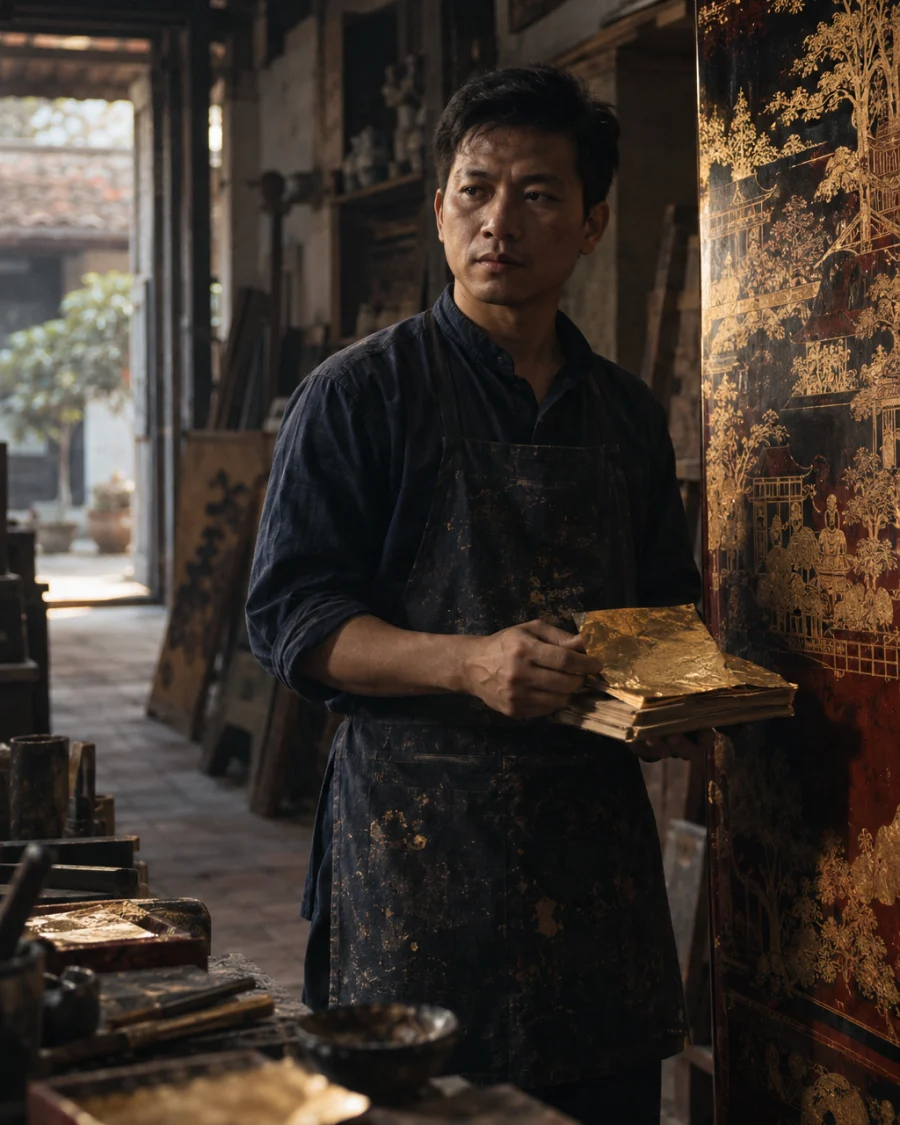
Duck eggshell gives the whites lacquer cannot; gold and silver leaf, buried and polished back, give the light. Both are laid piece by piece.
IV
Polished under water
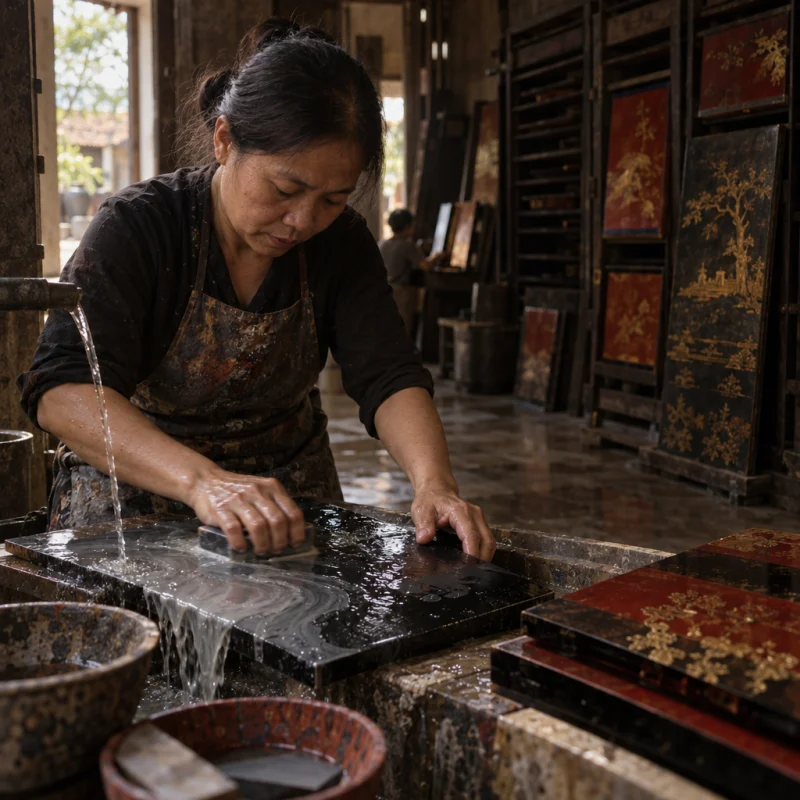
Sanded wet with charcoal and stone, then polished by palm until the buried layers surface. The depth you see is real: it is the layers below.
Words you will meet
Sơn mài
Literally “polished lacquer”: the craft of building up layers and sanding them back.
Sơn ta
“Our lacquer”: the natural resin of the Vietnamese lacquer tree, as opposed to synthetic coatings.
Vỏ trứng
Eggshell inlay. Lacquer has no true white, so duck eggshell is pressed in to make one.
Thếp vàng
Gilding with gold or silver leaf, laid under lacquer and polished back into the light.
03 — The artisans of Hạ Thái
Three workshops we return to
04 — Works from Hạ Thái
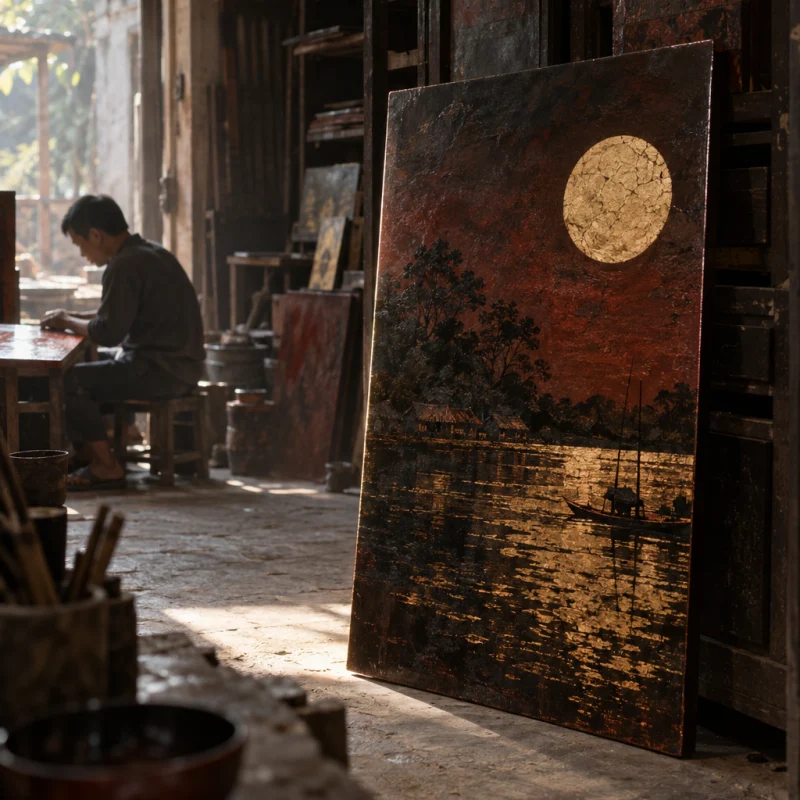
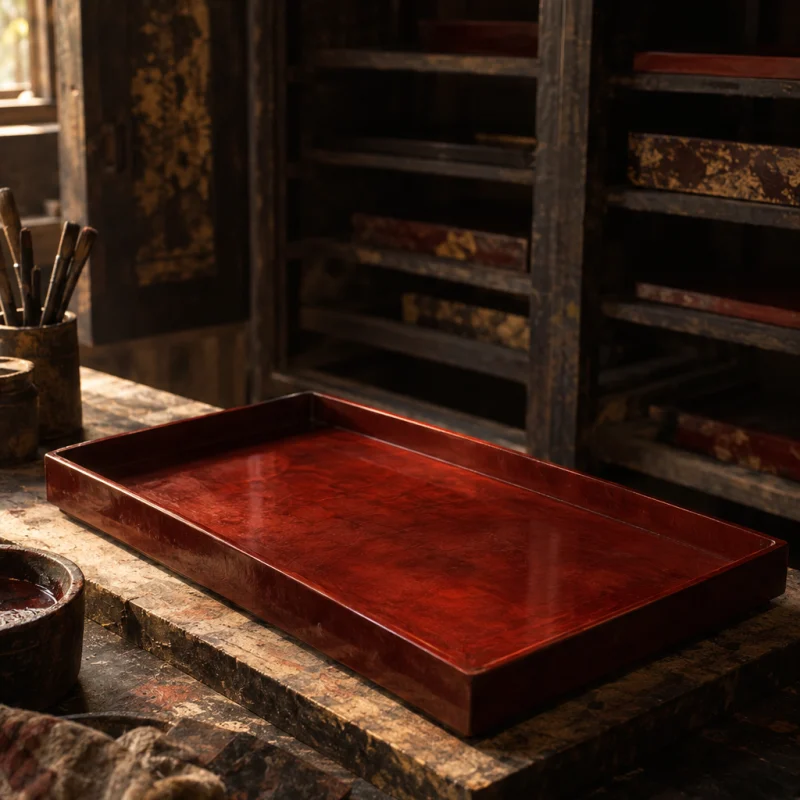
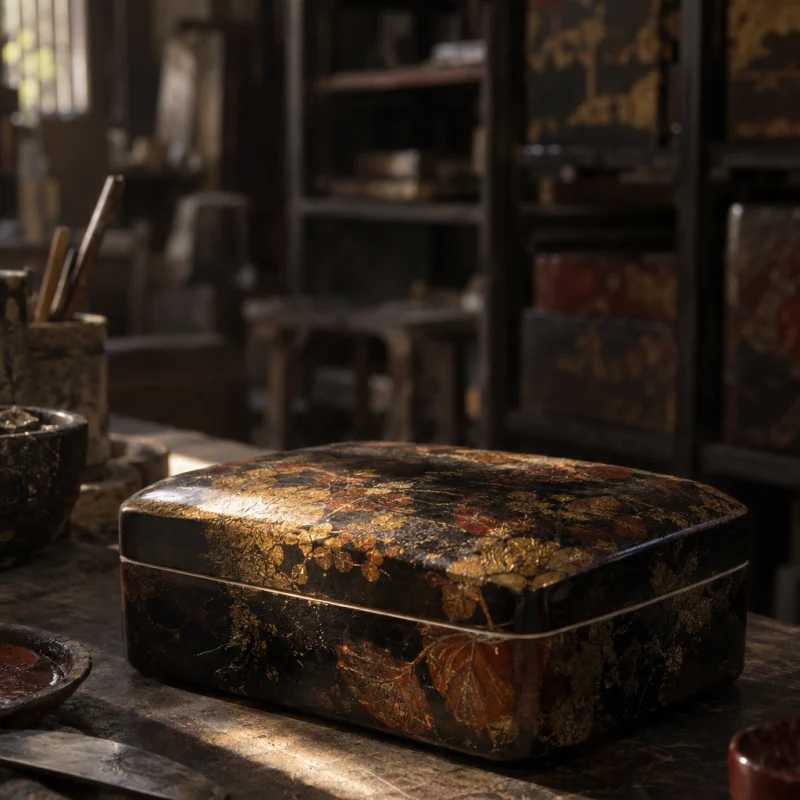
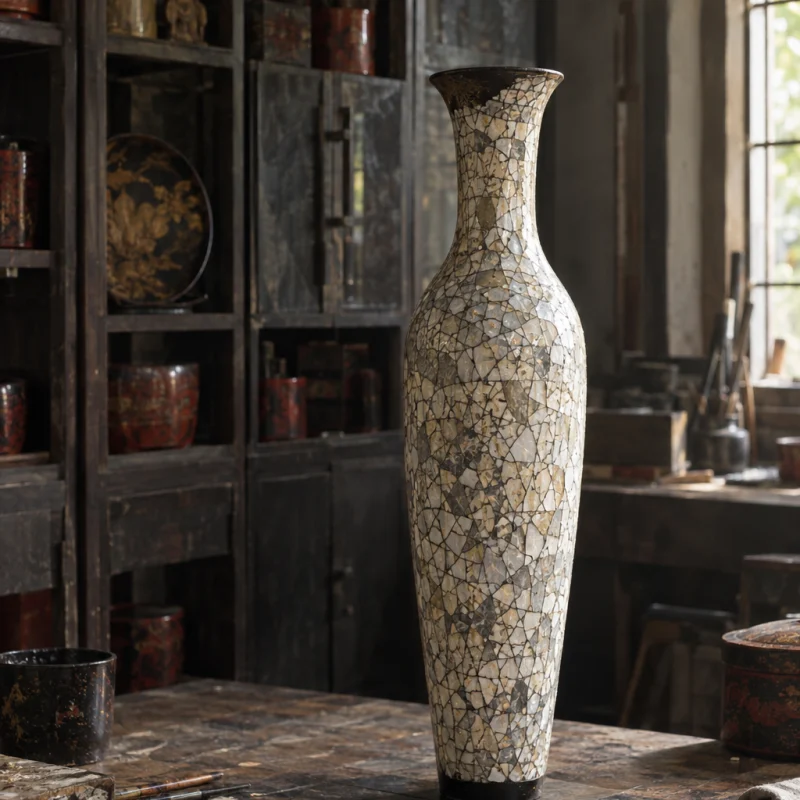
Seven works from the village
05 — Visiting
Come and watch a board being born
We take small groups to Hạ Thái on the first Saturday of each month: a morning in two workshops, lunch with the family, and the chance to commission a piece in person. Collectors who have acquired a work from the village visit as our guests.
- From Hà Nội
- About 45 minutes by car
- Best season
- October to April, the dry months when lacquer cures evenly
- Group size
- Six people at most
The other villages
The full atlas





