Craft village · Đồ đồng trang trí · Decorative bronze
Đại Bái
Làng đúc đồng Đại Bái — the bronze village east of the river
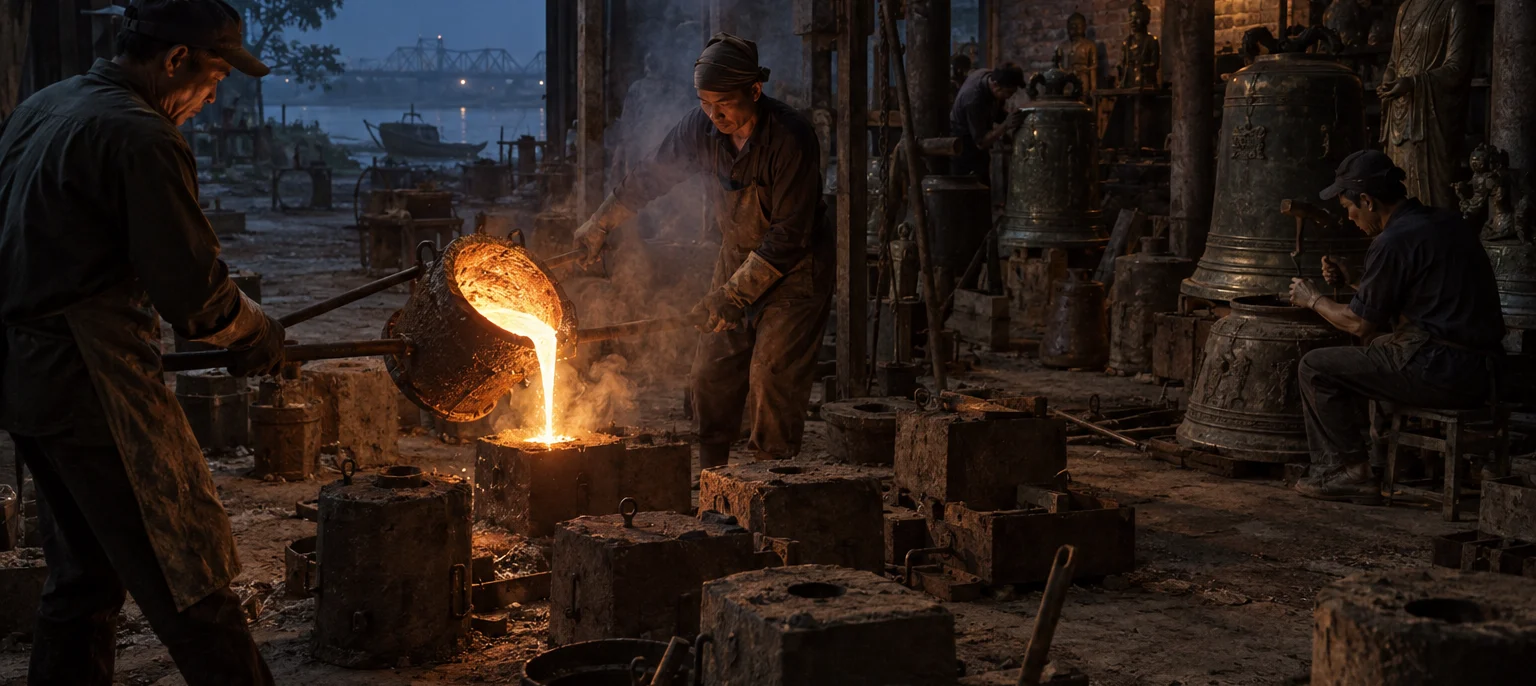
“The mould is broken to free the work. Every bell is cast once.”
- Craft
- Bronze casting & chasingĐúc đồng
- Where
- Gia Bình, Bắc Ninh35 km from Hà Nội
- Practised since
- c. 11th centuryA thousand years of casting
- Material
- BronzeCast in sand, chased by hand
- On LangSoul
- 1 artisan5 works
01 — The story
A thousand years of pouring before dawn
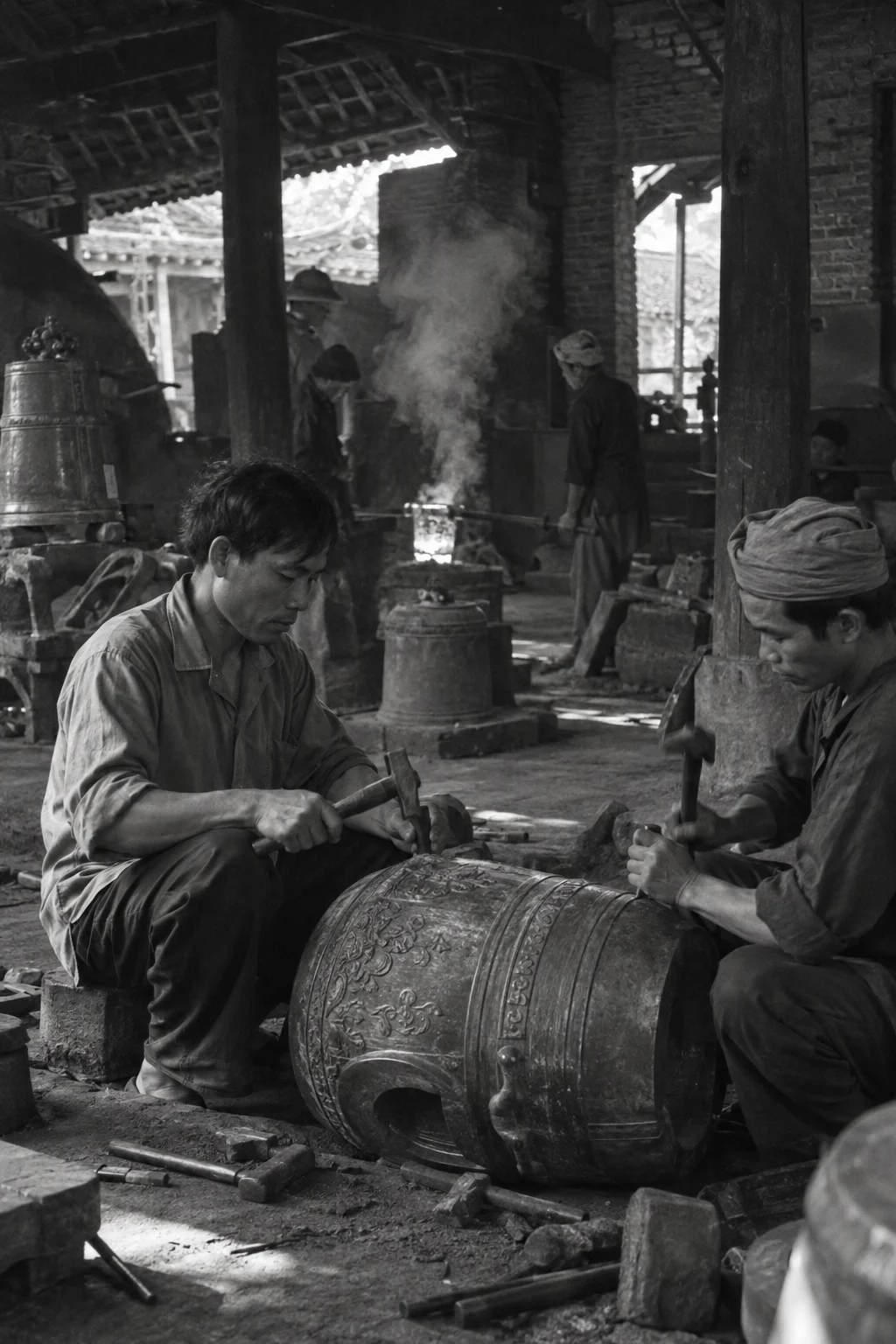
The village’s founder, by tradition a craftsman named Nguyễn Công Truyền, taught the trade in the eleventh century, and the lane has not stopped since. The temples of the north ordered their bells and censers here; the court ordered drums.
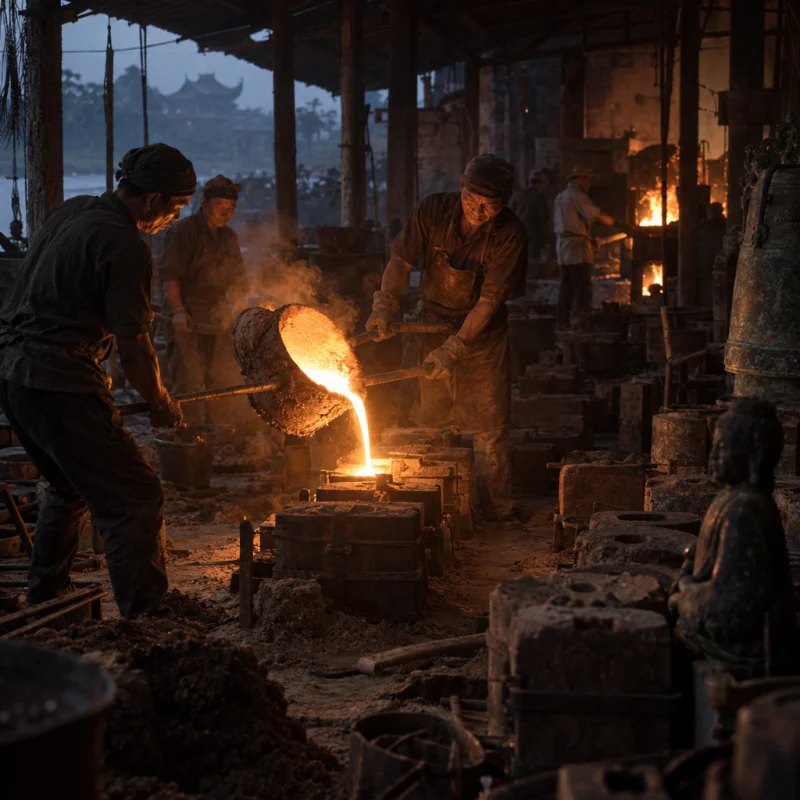
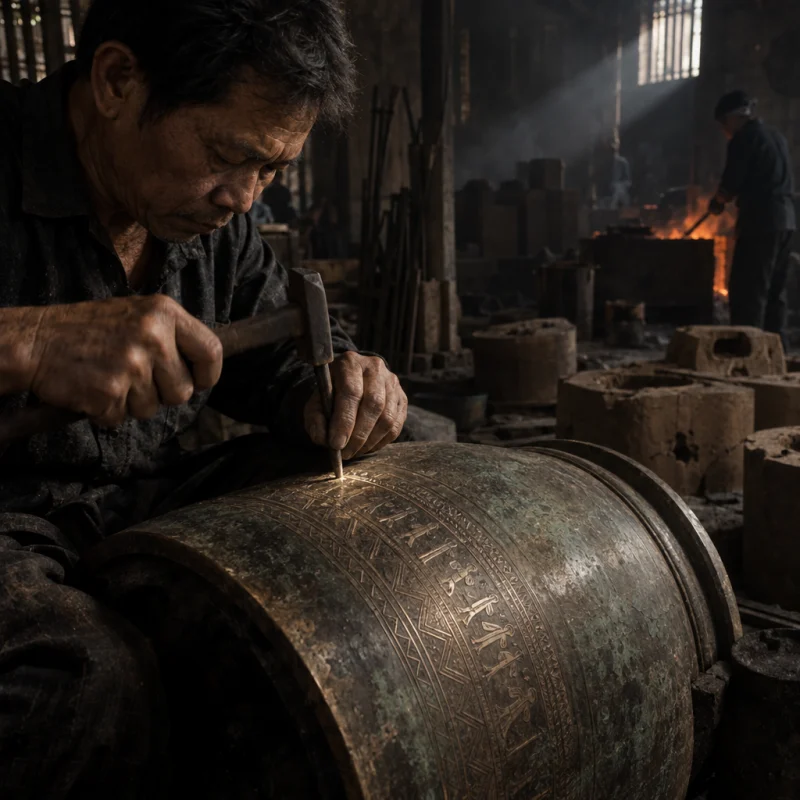
Casting is a morning’s work and a season’s preparation. The mould is built of sand and clay around a wax or clay form, dried for weeks, and broken after the pour: each large piece is cast once. What follows — the chasing of the surface, the patina — takes longer than the casting, and it is where the hand shows.
02 — The technique
What makes Đại Bái bronze
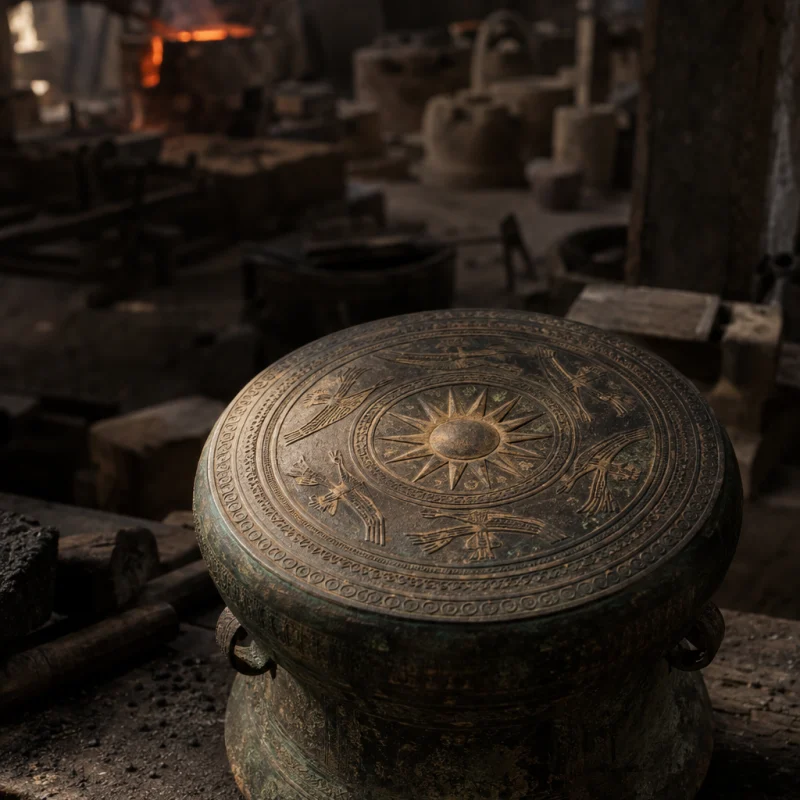
The village casts the way the Đông Sơn bronzes were cast: sand mould, one pour, the surface finished by hand.
I
Sand and clay moulds
Built by hand around the form, dried slowly, broken after the pour.
II
One pour
The bronze is poured before the day warms, in one continuous movement. There is no second chance.
III
Chased by hand
The pattern is cut into the cooled surface with small chisels, not cast in.
IV
Patina, not polish
The surface is darkened with the village's own mixture and left to deepen. Polishing would remove the work.
Words you will meet
Đồng
Bronze; also copper, the metal the village is named for.
Đúc
To cast.
Chạm
To chase, to engrave by hand.
Trống đồng
The bronze drum, the delta's oldest art and the motif the village still cuts.
03 — The artisans of Đại Bái
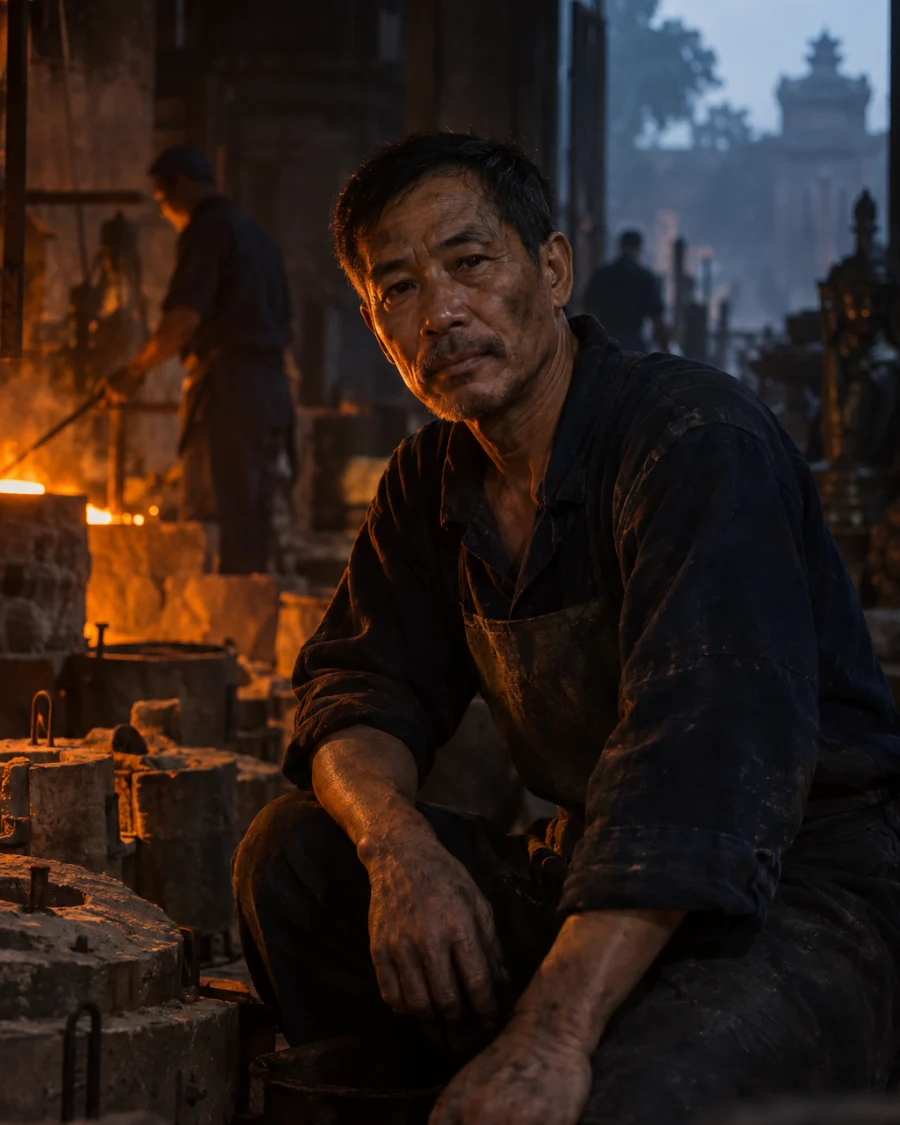
One workshop we return to
04 — Works from Đại Bái
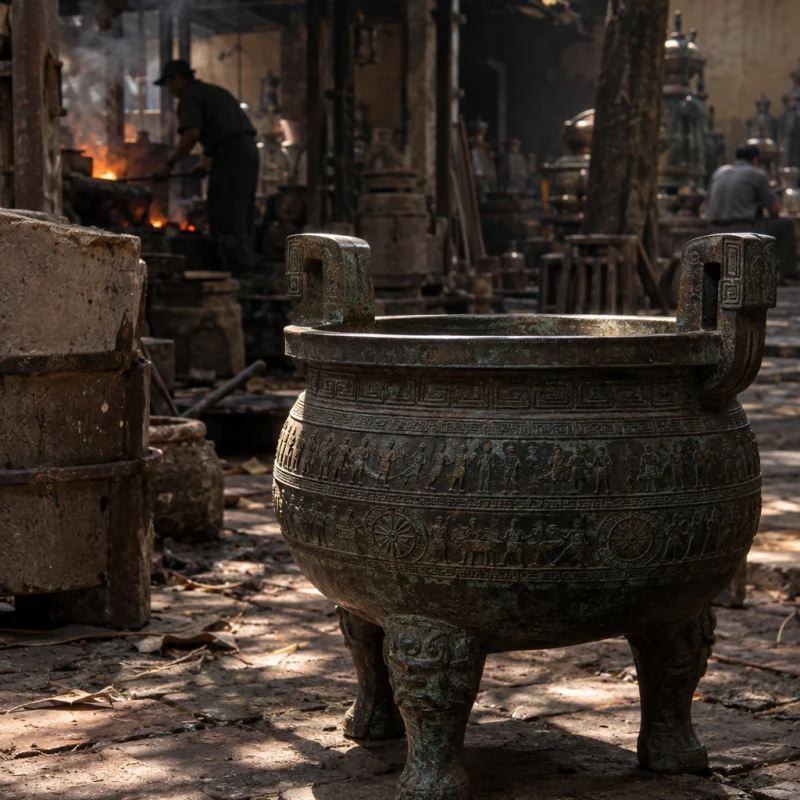
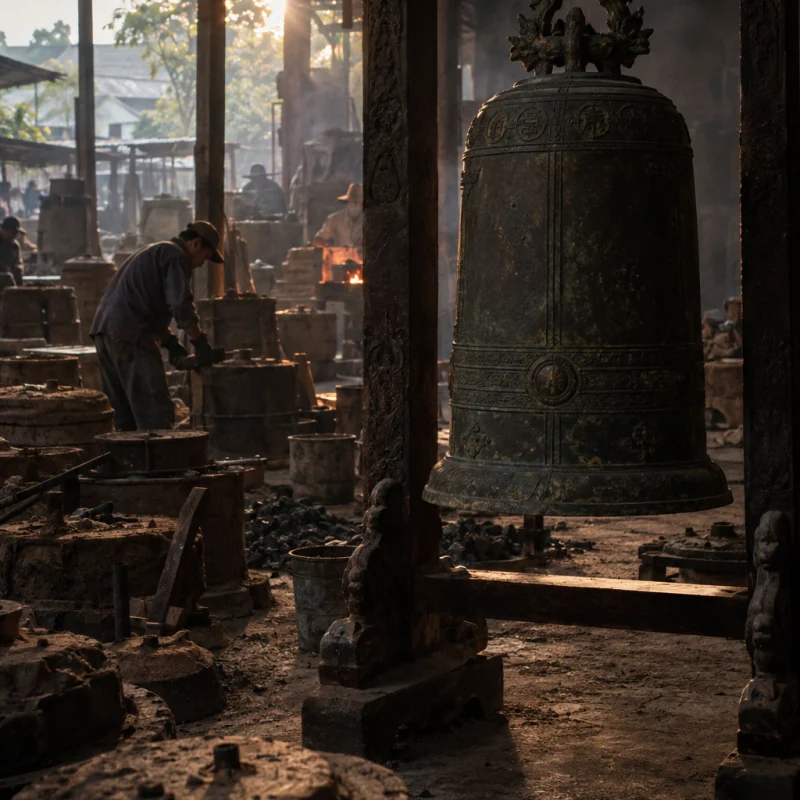
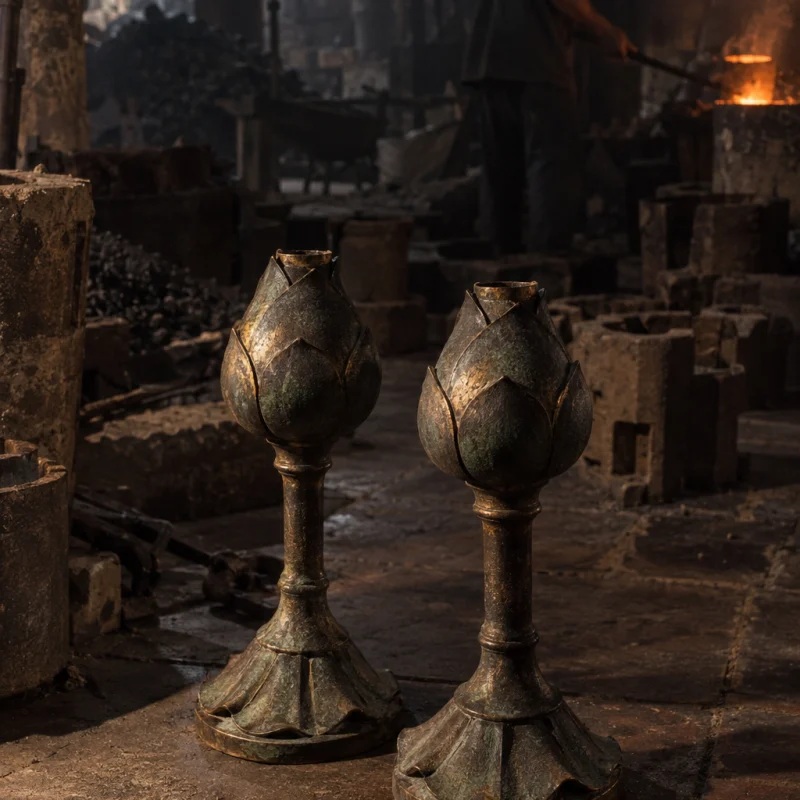
Five works from the village
05 — Visiting
Come on a pouring day
We take small groups to Đại Bái on pouring days, a few times a season: an early start, the pour, and a morning in the chasing workshop. Collectors who have acquired a work from the village visit as our guests.
- From Hà Nội
- About an hour by car
- Best season
- October to March, when the foundry pours most often
- Group size
- Six people at most
The other villages
The full atlas





