We asked three collectors to photograph their works where they live, and to tell us what they had not expected. The answers were about light, mostly, and about touch.
We asked because the question comes up in almost every letter we receive before a first acquisition: will this look right in my room? A lacquer tray made in a courtyard in Thường Tín, a bowl fired on the bank of the Red River, a vessel woven in a doorway west of Hà Nội — none of them were made with a Copenhagen flat or a Los Angeles kitchen in mind. They were made for use. It turns out that is what lets them travel.
I · Copenhagen
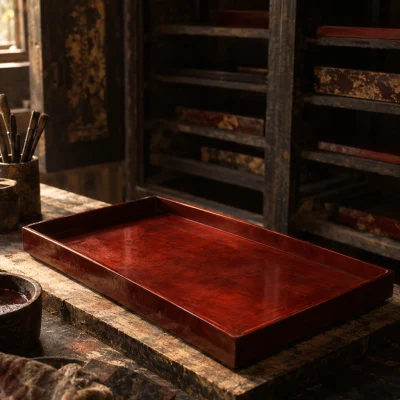
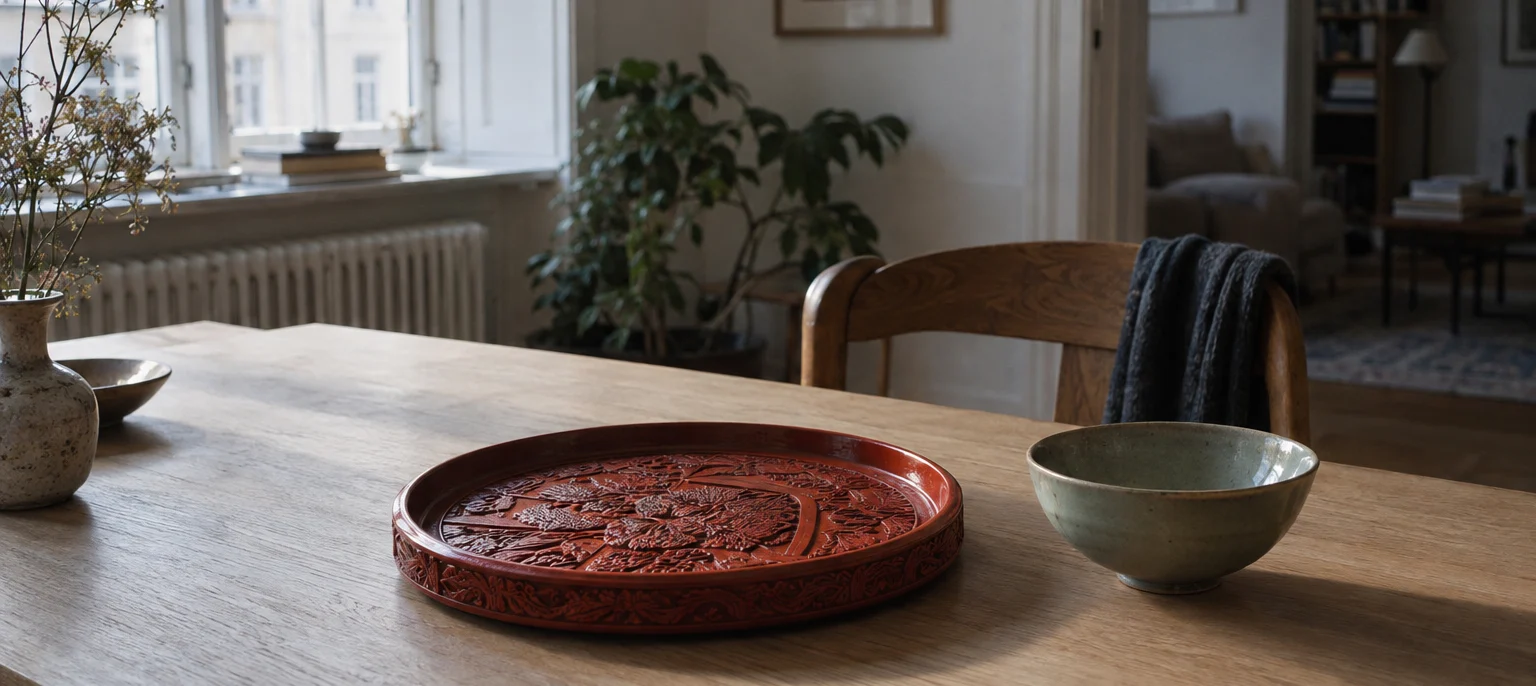
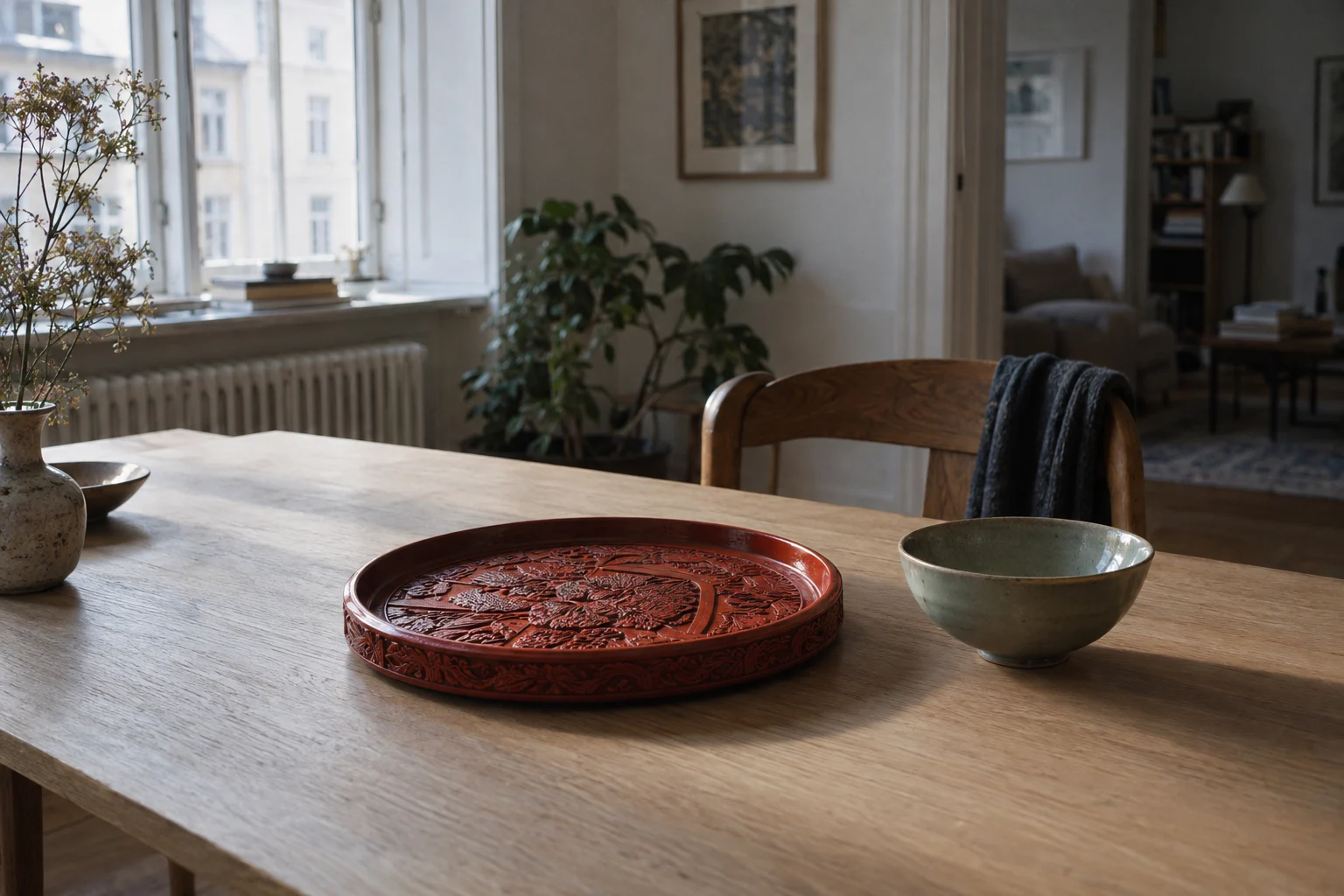
A red lacquer tray from Hạ Thái on a pale oak table by a north window. “I thought red would be loud,” she wrote. “It isn’t; it’s the colour of the room at four o’clock in winter. And it changes. Thái told us it would go deeper and we didn’t believe him.” She polishes it with her palm, once a year, as told.
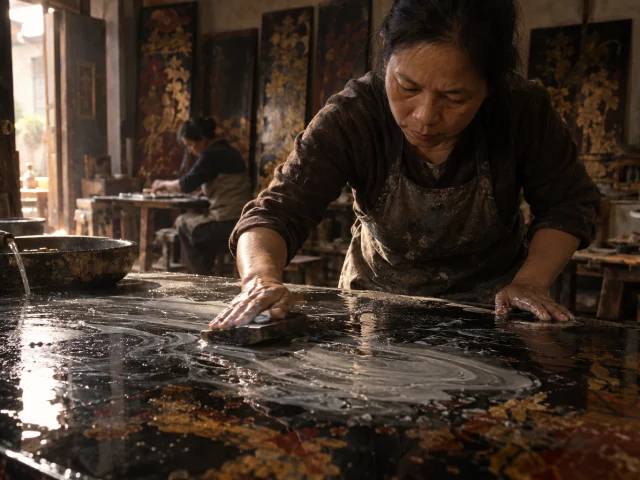
The tray is Nguyễn Văn Thái’s low tray in red lacquer: ten layers of natural lacquer coloured with cinnabar, on a jackfruit-wood board, wet-sanded and polished by hand. The red does deepen. Natural lacquer keeps curing slowly for years, and the colour moves from a bright vermilion towards something nearer garnet. Northern light, which is cool and low, flatters it.
The one thing a Scandinavian winter asks of lacquer is humidity. Central heating dries the air, and lacquer was cured in damp. A bowl of water on a nearby shelf in the heated months is enough. Thái’s other trays, bowls and panels are on his maker’s page, and the wider tradition on our page about Vietnamese lacquerware.
II · Los Angeles
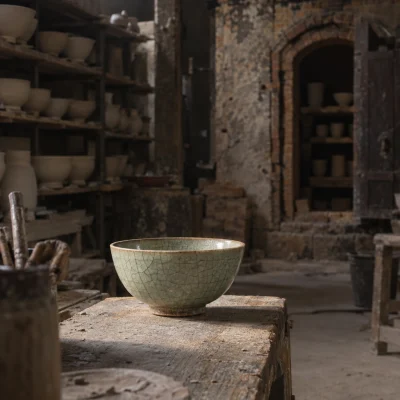
Six celadon bowls from Bát Tràng, in daily use. “The crackle has gone the colour of tea after a year, which the maker said would happen and which I now think of as the bowls becoming ours. We warm them before pouring, which is the one rule.”
These were Phạm Văn Đức’s celadon tea bowls with crackle glaze, reduction-fired for a day in the family kiln at Bát Tràng. The rule about warming is real: a cold bowl and boiling water make a sudden shock, and a crackle glaze is a glaze already under tension. Warm water first, then the tea. Otherwise the bowls ask for nothing but use and hand-washing. California sun on a windowsill does them no harm; it is the one material in this letter that light cannot fade.
III · Tokyo
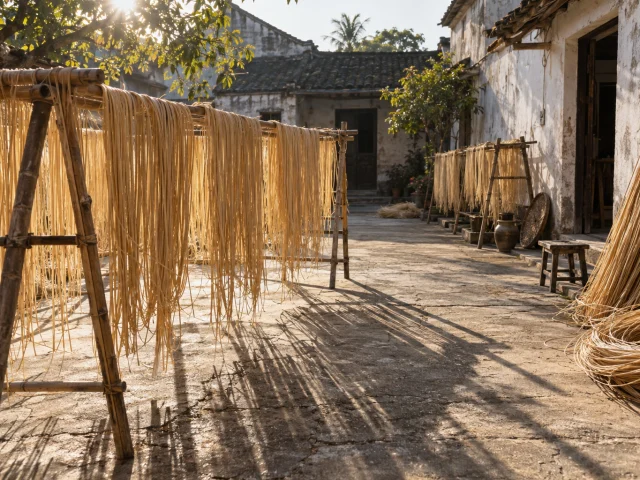
A rattan vessel from Phú Vinh on a tatami floor. “It is the quietest object in the apartment. It has darkened from honey to something nearer amber, and it holds letters.” He asked us to pass on to Mai that the lid still closes with the small sound.
We did. Trần Thị Mai weaves the rain pattern, a diagonal counted stitch by stitch, and makes the lid first because the lid decides everything; the current edition of her rain-pattern lidded vessel is made the same way. Hand-split, unbleached rattan darkens with light and handling, which is what he noticed. Tokyo’s humid summers suit it well. In a drier climate, a light mist of water once a season keeps the cane supple.
IV · What the three rooms have in common
Looking at the photographs side by side, a few things stood out.
- They are not displayed behind glass. The tray holds keys and fruit, the bowls hold tea, the vessel holds letters. None of the collectors treats their work as too precious to touch, and each has changed because of it.
- They sit in plain rooms. Pale wood, white walls, a tatami floor. A single handmade object in a quiet room reads more clearly than several in a busy one.
- They are near a window. Lacquer, celadon and rattan all change with daylight. Not in direct sun, which bleaches lacquer, but where the light moves across the surface through the day.
None of this needs a particular style of room. The same tray would sit as easily on dark walnut as on pale oak, and celadon looks as much at home on a steel counter as on a lacquered table. What matters more is scale. A small work on a large empty surface tends to look lost; a tray, a bowl or a vessel reads best where it can be reached, at the height of a hand rather than the height of the eye. The collectors found this without being told. Each of them put the work where they would pass it every day.
V · How the works travel
Every work leaves the studio in Hà Nội in a crate built around it by hand, insured from our door to yours, with duties paid in advance so nothing is waiting at customs. The crate carries a care sheet written for that material and a provenance card naming the maker, the village and the months in which it was made. Transit times, returns and the full care notes for each craft are on our shipping, duties and care page.
A few practical notes of our own, in case they help:
- Unpack lacquer and rattan in the room where they will live, and let them sit a day before handling much; both adjust to a new climate.
- Keep the crate’s care sheet with the work. It is the first thing anyone will ask for in twenty years.
- If you are unsure where something should go, try it in three places for a week each. The right one is usually obvious by the end of the second.
What travels well, then: everything, as long as it is used. The works were made to be touched, and the villages would say the same.