Craft village · Kim hoàn thủ công · Hand-wrought jewellery
Định Công
Làng kim hoàn Định Công — the goldsmiths' village inside the city
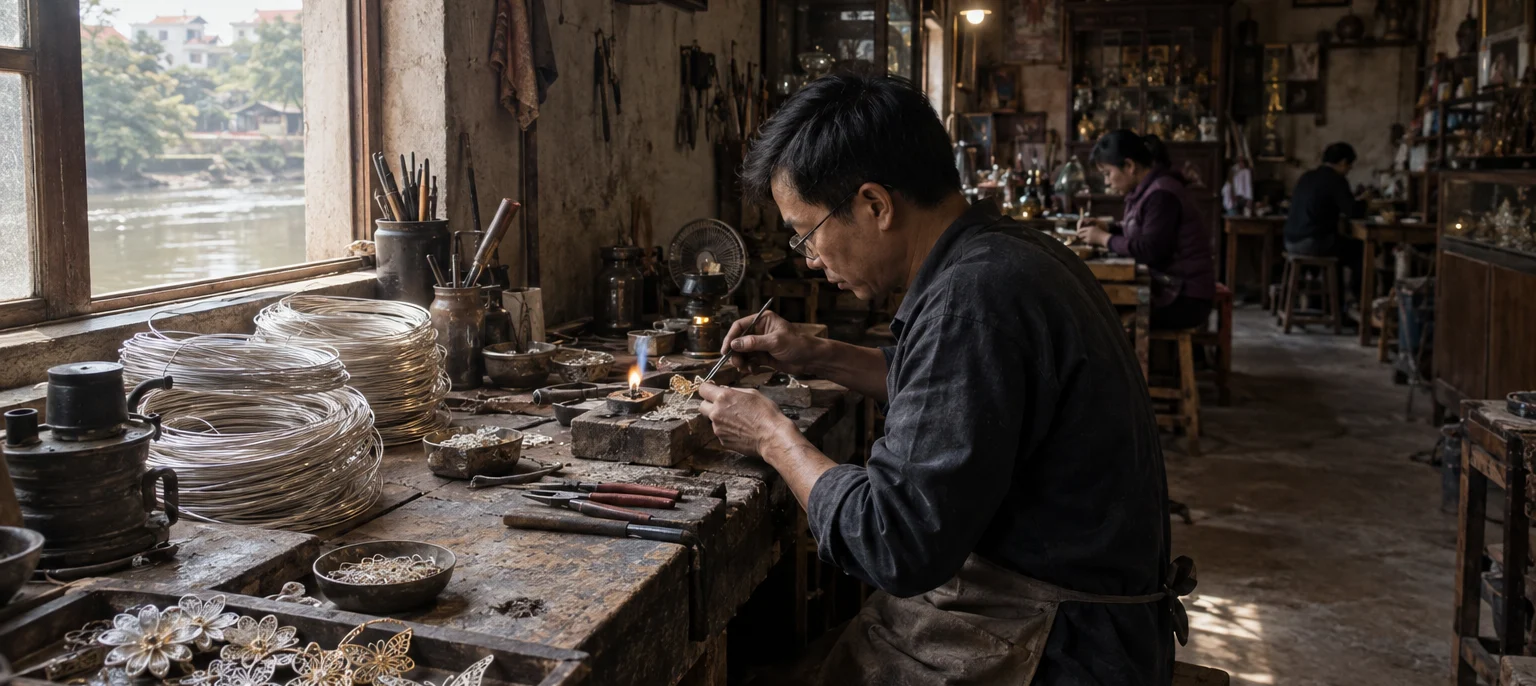
“A thread of silver should be as fine as a hair and as patient as one.”
- Craft
- Silver & gold filigreeKim hoàn
- Where
- Hoàng Mai, Hà Nội8 km from Hà Nội
- Practised since
- c. 6th centuryThe oldest craft on this list
- Material
- Silver & goldDrawn into thread
- On LangSoul
- 1 artisan5 works
01 — The story
Fifteen centuries of thread
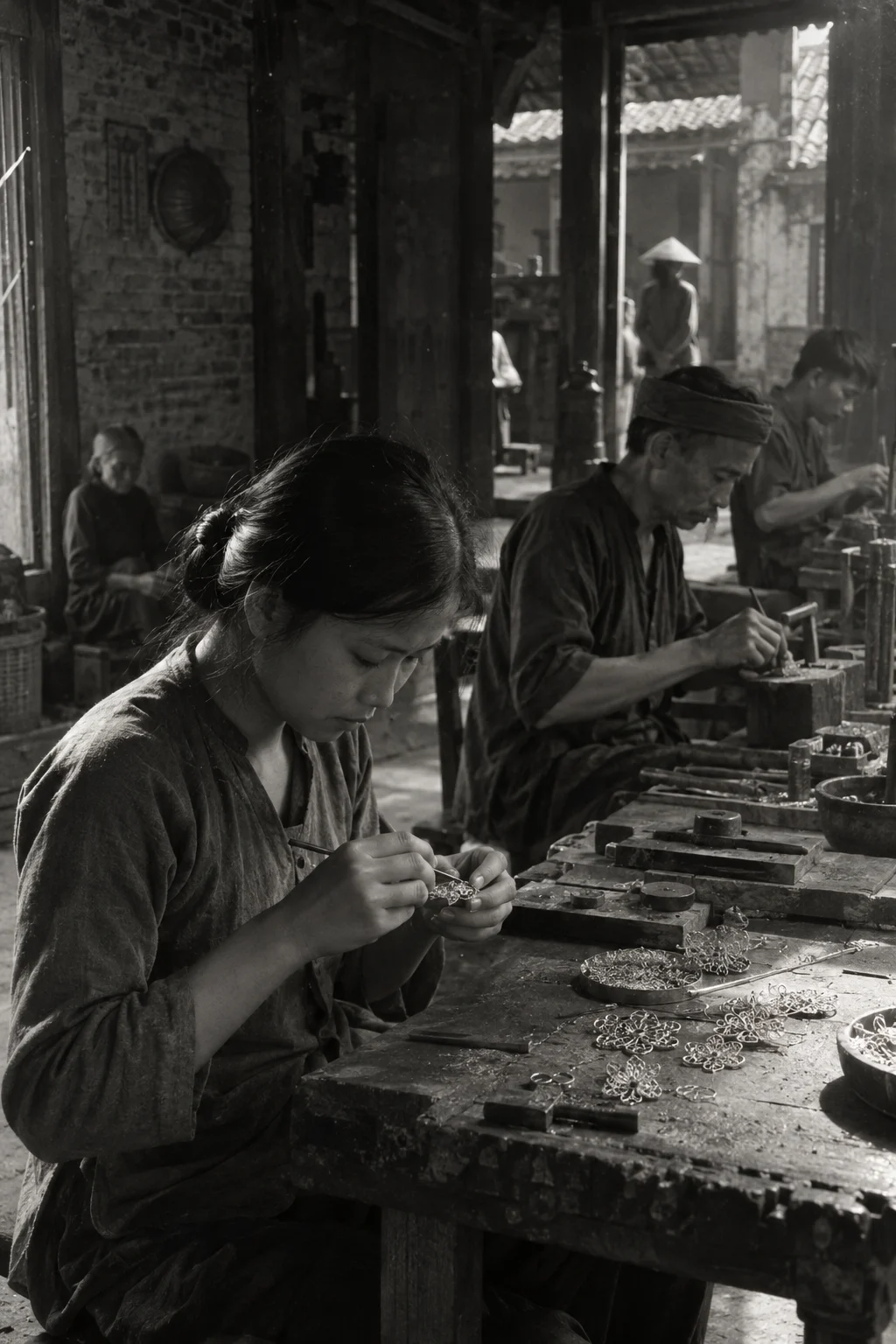
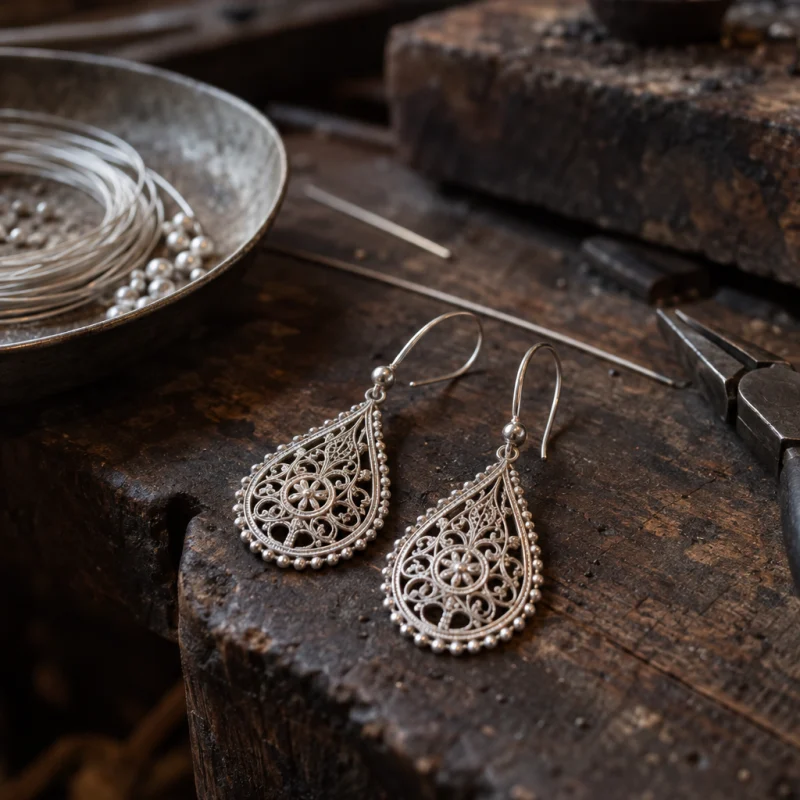
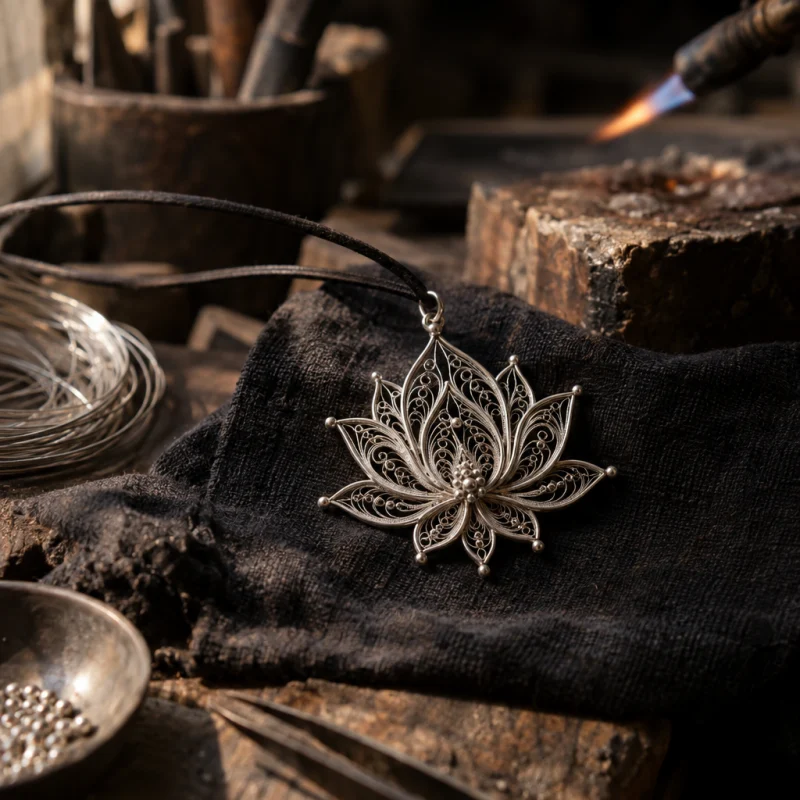
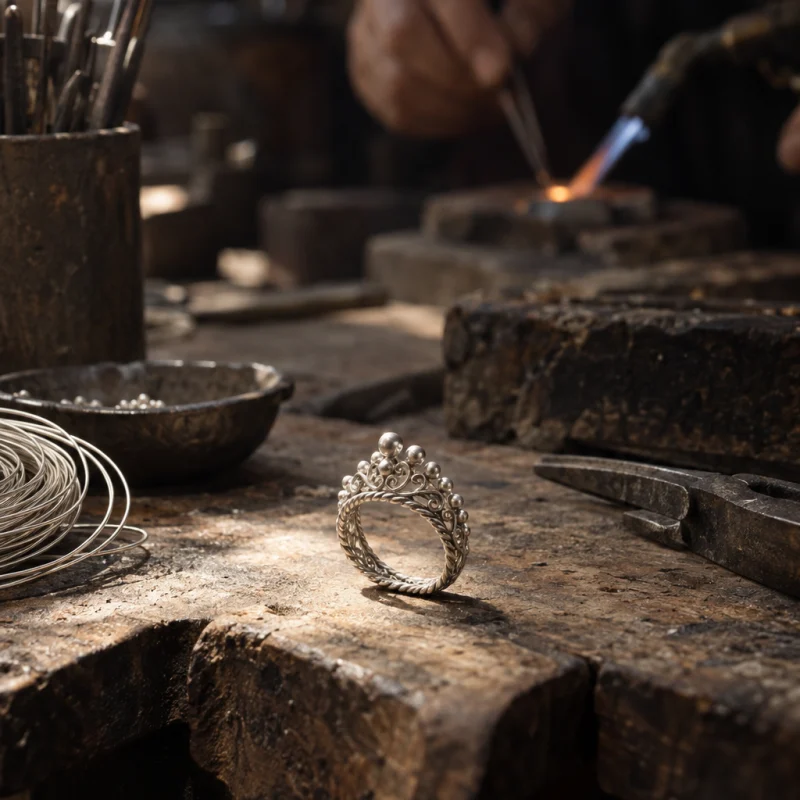
Định Công was the goldsmiths’ village of the capital for most of the city’s history; its masters made for the court and taught the other jewellers’ quarters of the Old Quarter. Filigree — đậu bạc, “silver beans”, for the tiny granules that finish the work — was its signature.
The trade nearly disappeared in the late twentieth century. It survives in a handful of families who teach it now to apprentices from across the city, and whose work has moved from altar ornaments to forms for the wrist and the ear.
02 — The technique
What makes Định Công filigree
Everything is done with wire, by hand, at a scale the eye can barely follow.
I
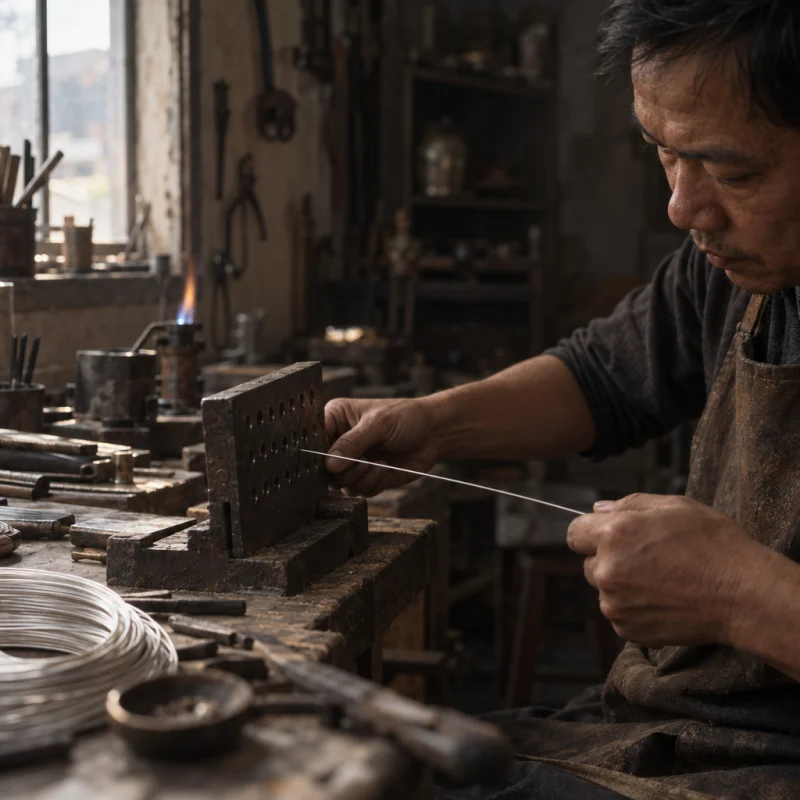
Drawn wire
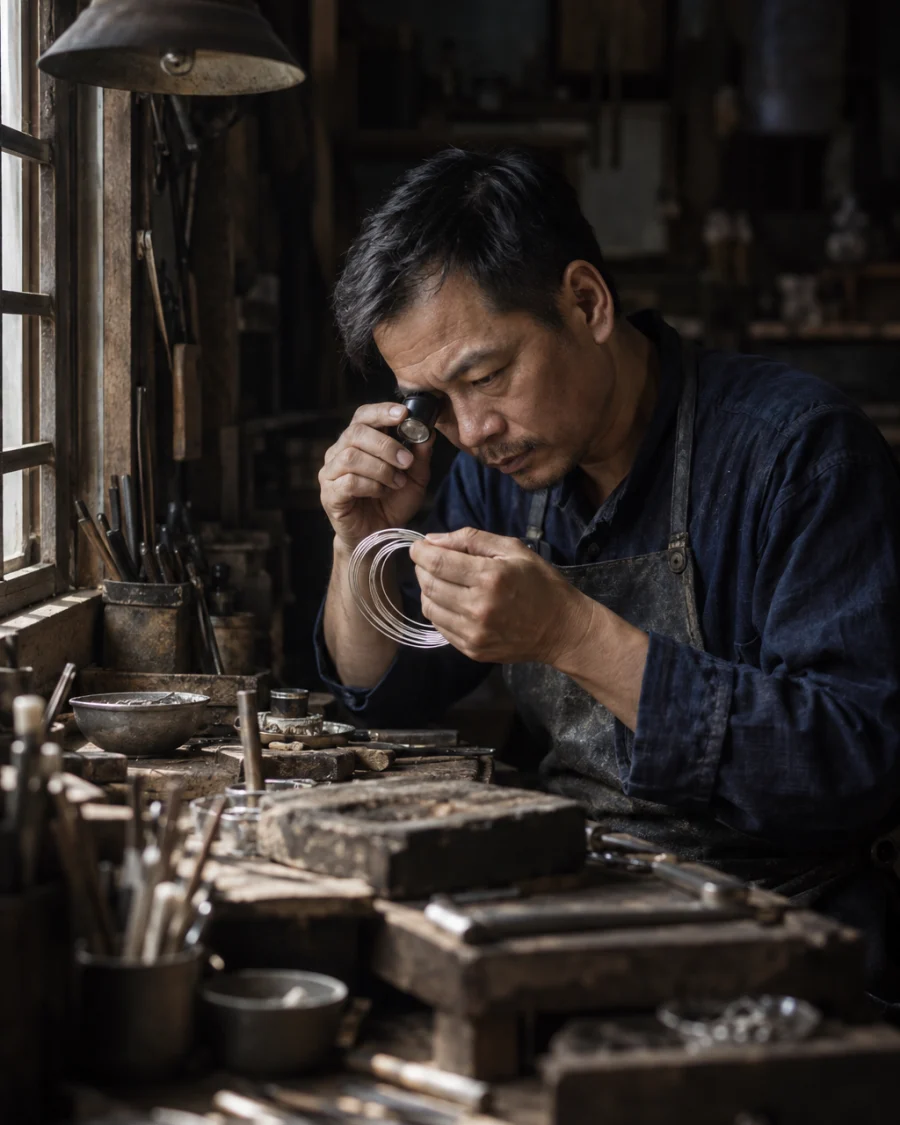
Silver is pulled through a plate of ever-smaller holes until it is a thread.
II
Twisted and flattened
Two threads are twisted together and rolled flat, giving filigree its rope-like edge.
III
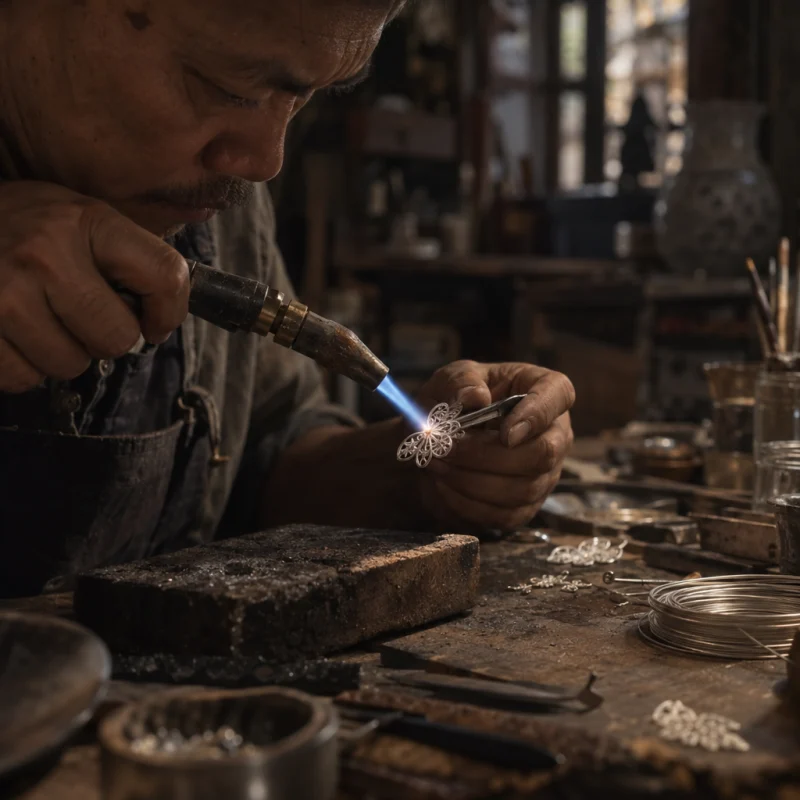
Built, not cast
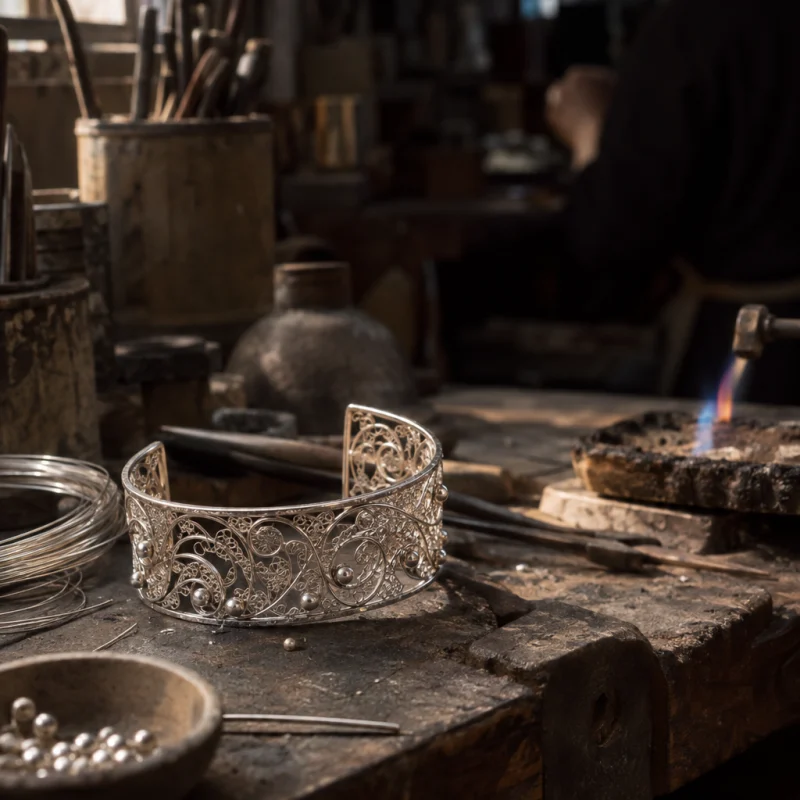
The pattern is assembled thread by thread inside a frame, then soldered with a mouth-blown flame.
IV
Finished with beans
Tiny granules — the “silver beans” — are set at the joins; they are the village's signature.
Words you will meet
Kim hoàn
Goldsmithing, jewellery.
Đậu bạc
“Silver beans”: granulation, and by extension the village's filigree.
Kéo sợi
Drawing wire.
03 — The artisans of Định Công
One workshop we return to
04 — Works from Định Công
Five works from the village
05 — Visiting
Come and watch a thread being drawn
Định Công is inside the city, so a visit is an afternoon rather than a day: two workshops, tea, and the chance to commission a piece in person. Collectors who have acquired a work from the village visit as our guests.
- From Hà Nội
- About 20 minutes by car
- Best season
- All year
- Group size
- Four people at most
The other villages
The full atlas





