Craft village · Lụa và thêu tay · Silk & hand embroidery
Vạn Phúc
Làng lụa Vạn Phúc — the silk village of Hà Đông
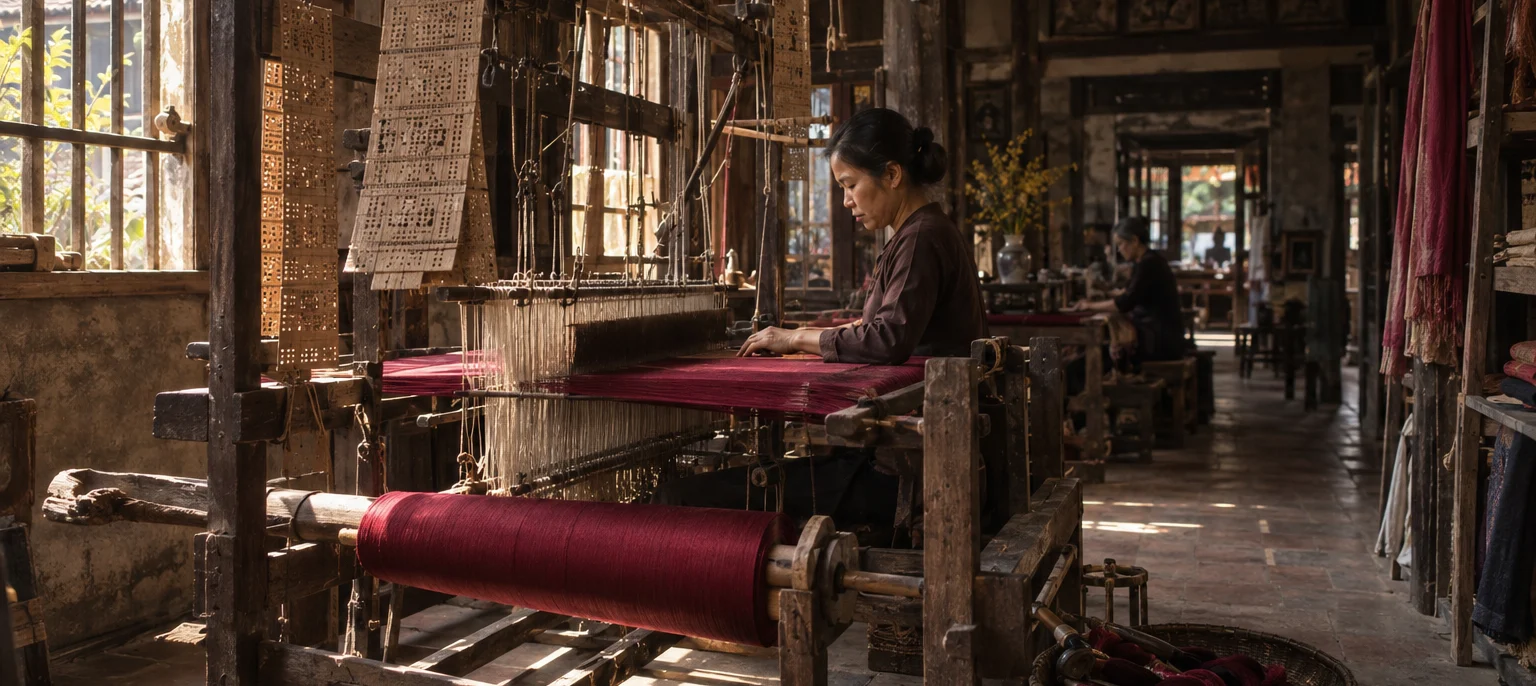
“The loom is the loudest thing in the house and the gentlest.”
- Craft
- Hand-loomed silkLụa
- Where
- Hà Đông, Hà Nội12 km from Hà Nội
- Practised since
- c. 11th centurySilk for the court since the Lý
- Material
- Mulberry silkLoomed by hand
- On LangSoul
- 1 artisan2 works
01 — The story
A thousand years at the loom
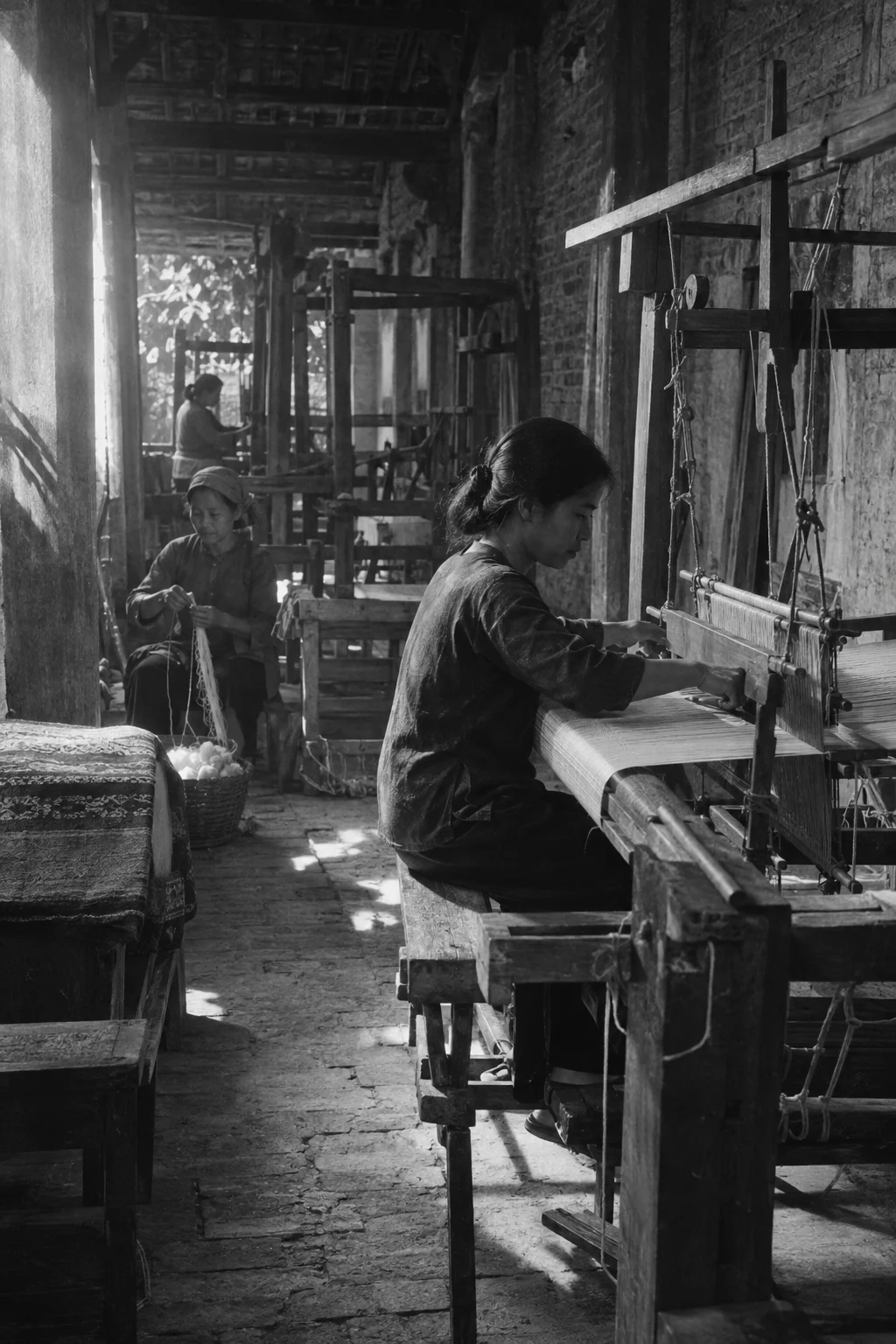
By tradition the craft was brought by a woman from the north, honoured now as the village’s patron. By the Nguyễn court it was supplying the palace; in the twentieth century it dressed Hà Nội’s long tunics, and the phrase áo lụa Hà Đông became a way to say elegance.
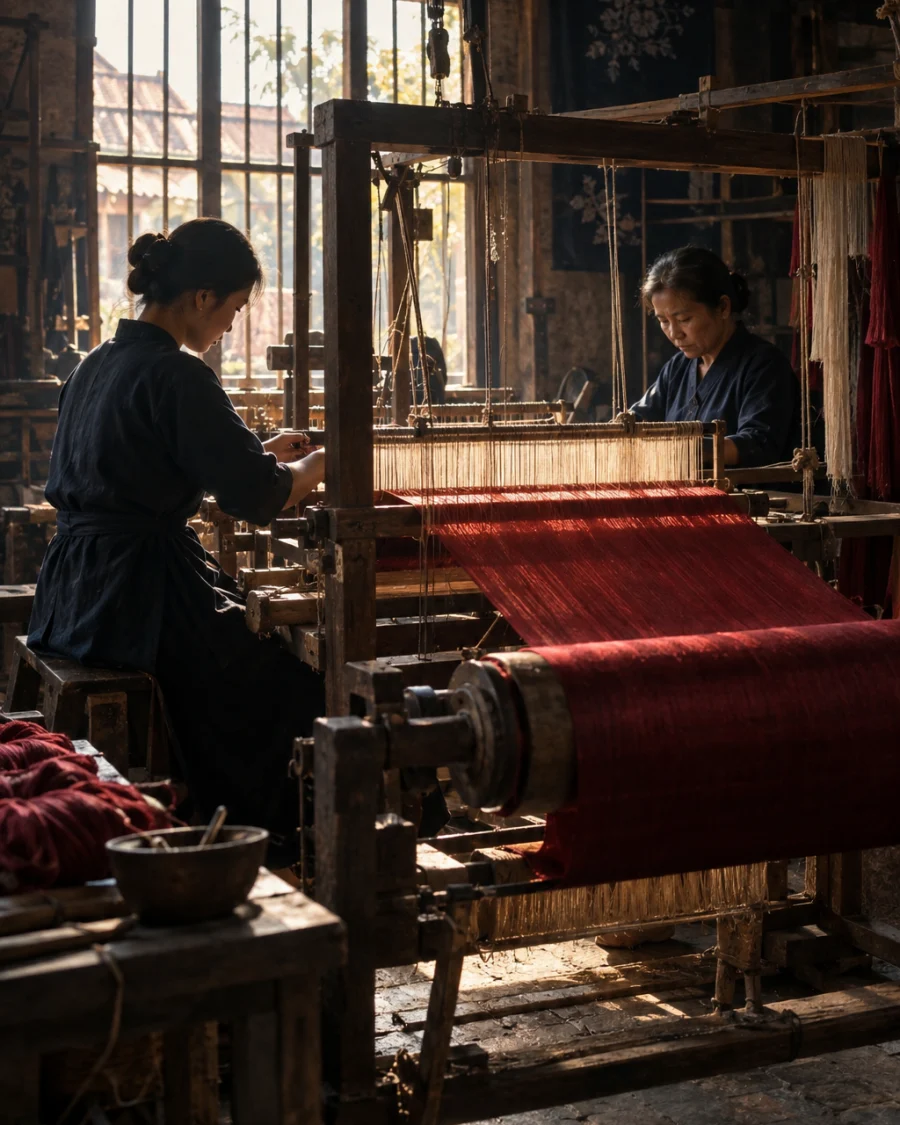
The main street is lined with shops and powered looms. Behind it, a few families still weave by hand on wooden looms, in patterns their grandparents cut — and it is that cloth, loomed slowly and dyed in the village, that Quất Động’s embroiderers ask for and that we carry.
02 — The technique
What makes Vạn Phúc silk
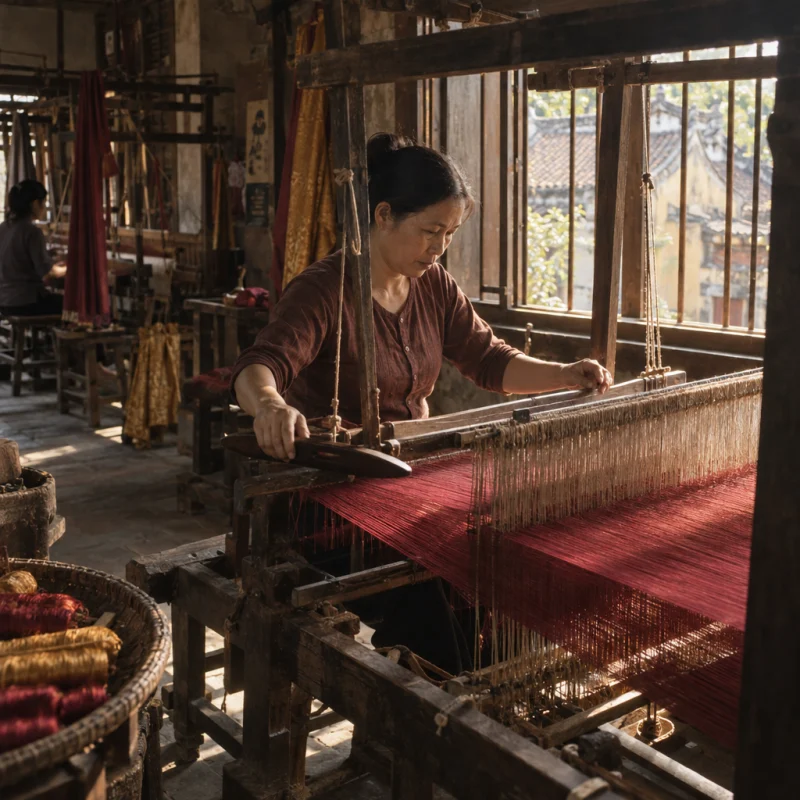
The hand loom gives the cloth a weight and a drape the powered looms cannot.
I
Hand-reeled thread
Silk is reeled from the cocoon in the village and twisted by hand.
II
The wooden loom
Slow, loud and even: a metre a day of the finest cloth.
III
Patterns cut in the village
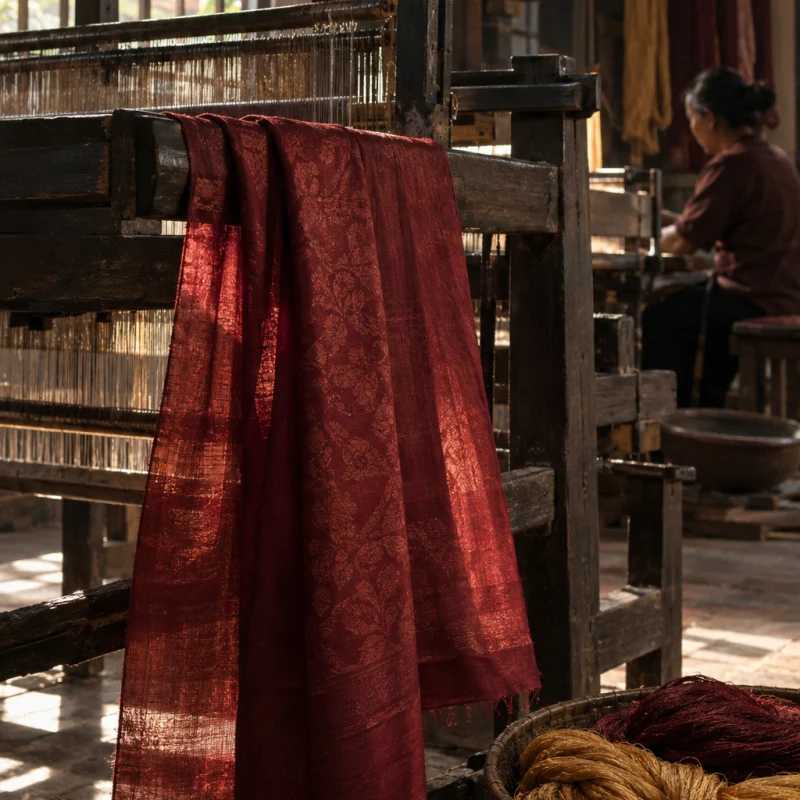
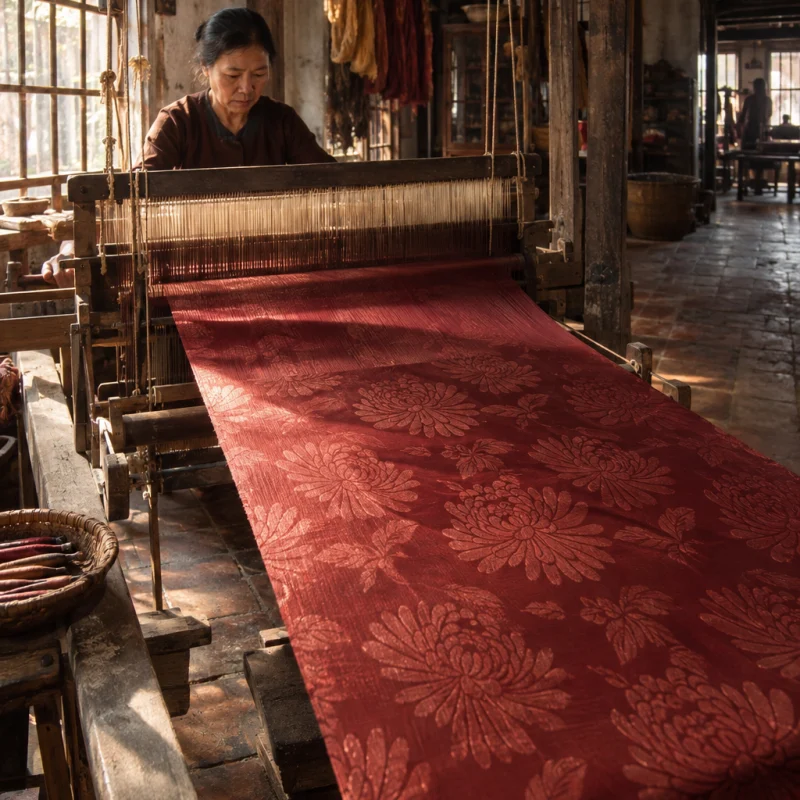
The damask patterns — chrysanthemum, cloud, the character for longevity — are the village's own.
IV
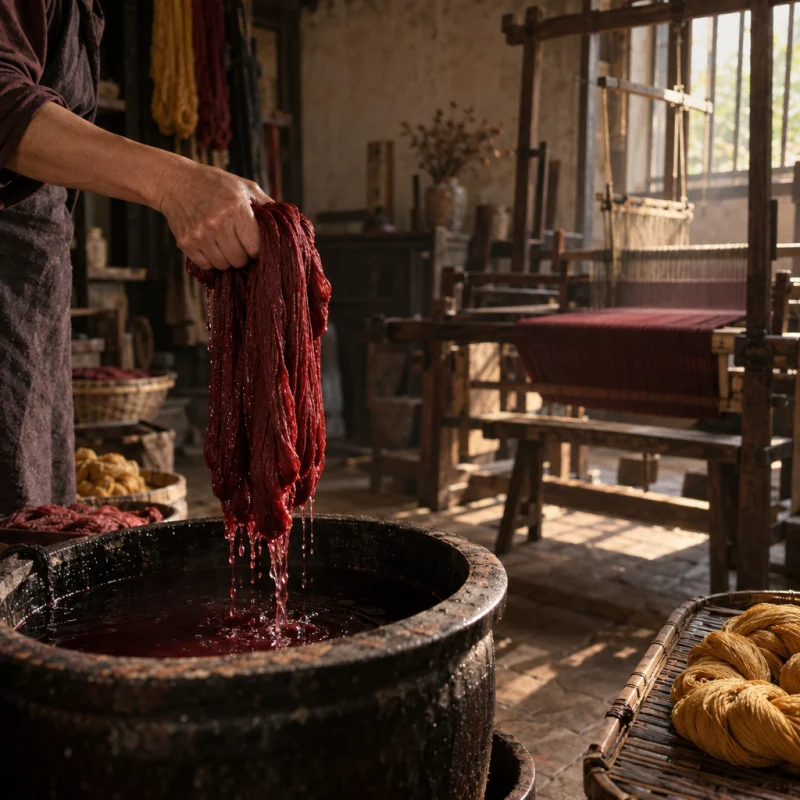
Dyed in small vats
Colour is laid in small batches, so a bolt is never quite the same twice.
Words you will meet
Lụa
Silk.
Lụa Hà Đông
The silk of Hà Đông: Vạn Phúc's cloth, and a phrase for elegance.
Vân
The damask figure woven into the cloth.
03 — The artisans of Vạn Phúc
One workshop we return to
04 — Works from Vạn Phúc
Two works from the village
05 — Visiting
Come and hear a loom
Vạn Phúc is close enough for an afternoon: a hand-loom household, the dye house, and tea. Collectors who have acquired a work from the village visit as our guests.
- From Hà Nội
- About 30 minutes by car
- Best season
- All year
- Group size
- Six people at most
The other villages
The full atlas





