Craft village · Mây tre cói đan · Rattan, bamboo & sedge
Phú Vinh
Làng mây tre đan Phú Vinh — the weaving village west of the city
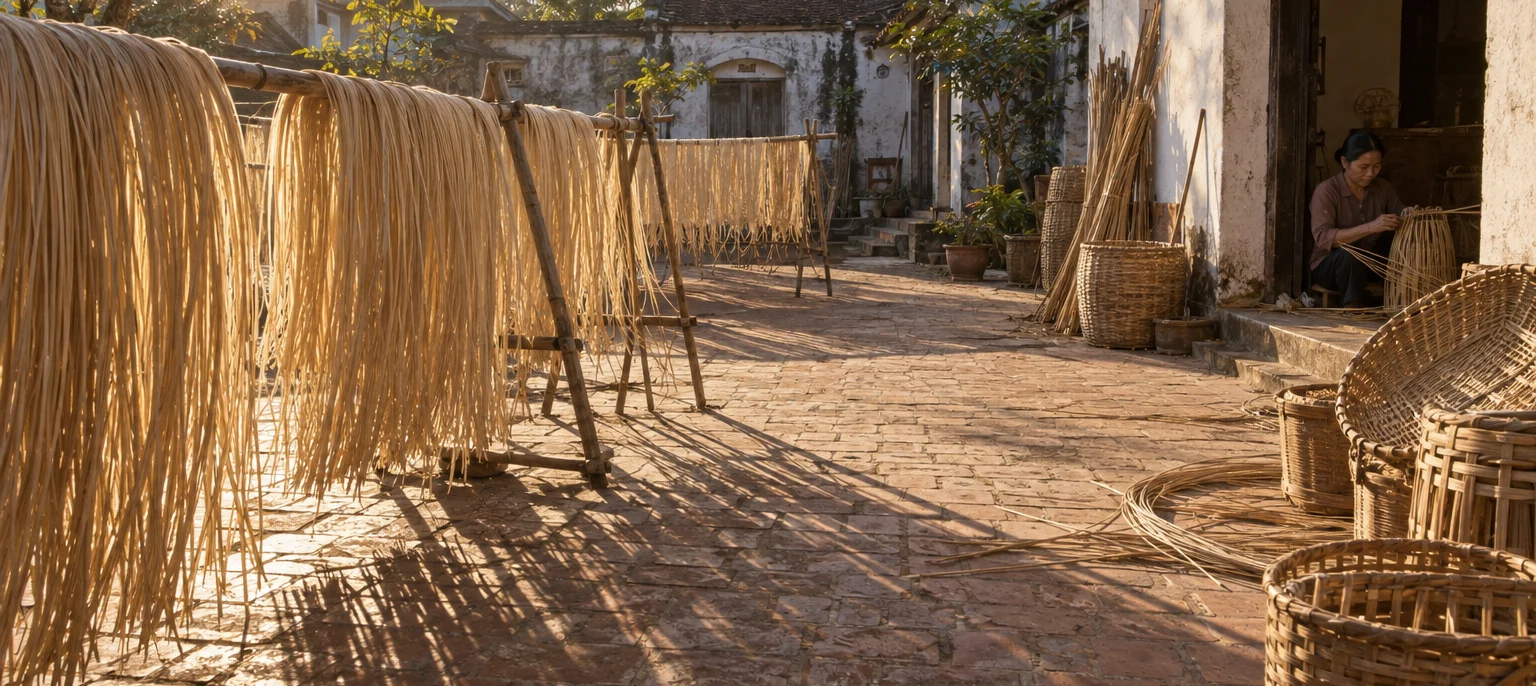
“The pattern is in my hands long before it is in my head.”
- Craft
- Rattan & bamboo weavingMây tre đan
- Where
- Chương Mỹ, Hà Nội30 km from Hà Nội
- Practised since
- c. 400 yearsEvery household weaves
- Material
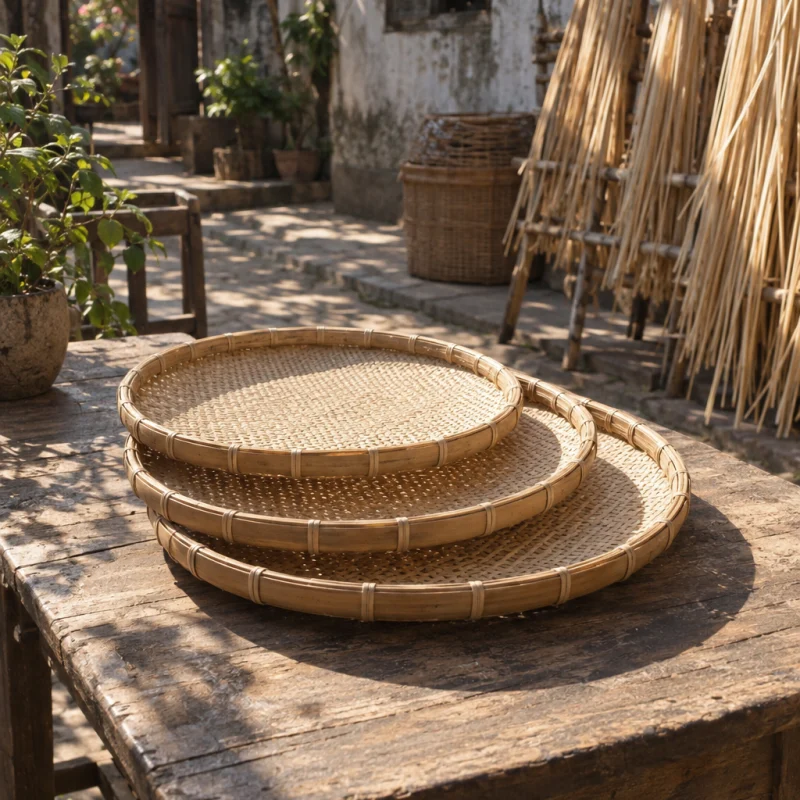
- Rattan & bambooSplit by hand, dried in the sun
- On LangSoul
- 2 artisans5 works
01 — The story
Four hundred years, and the pattern of the roofs
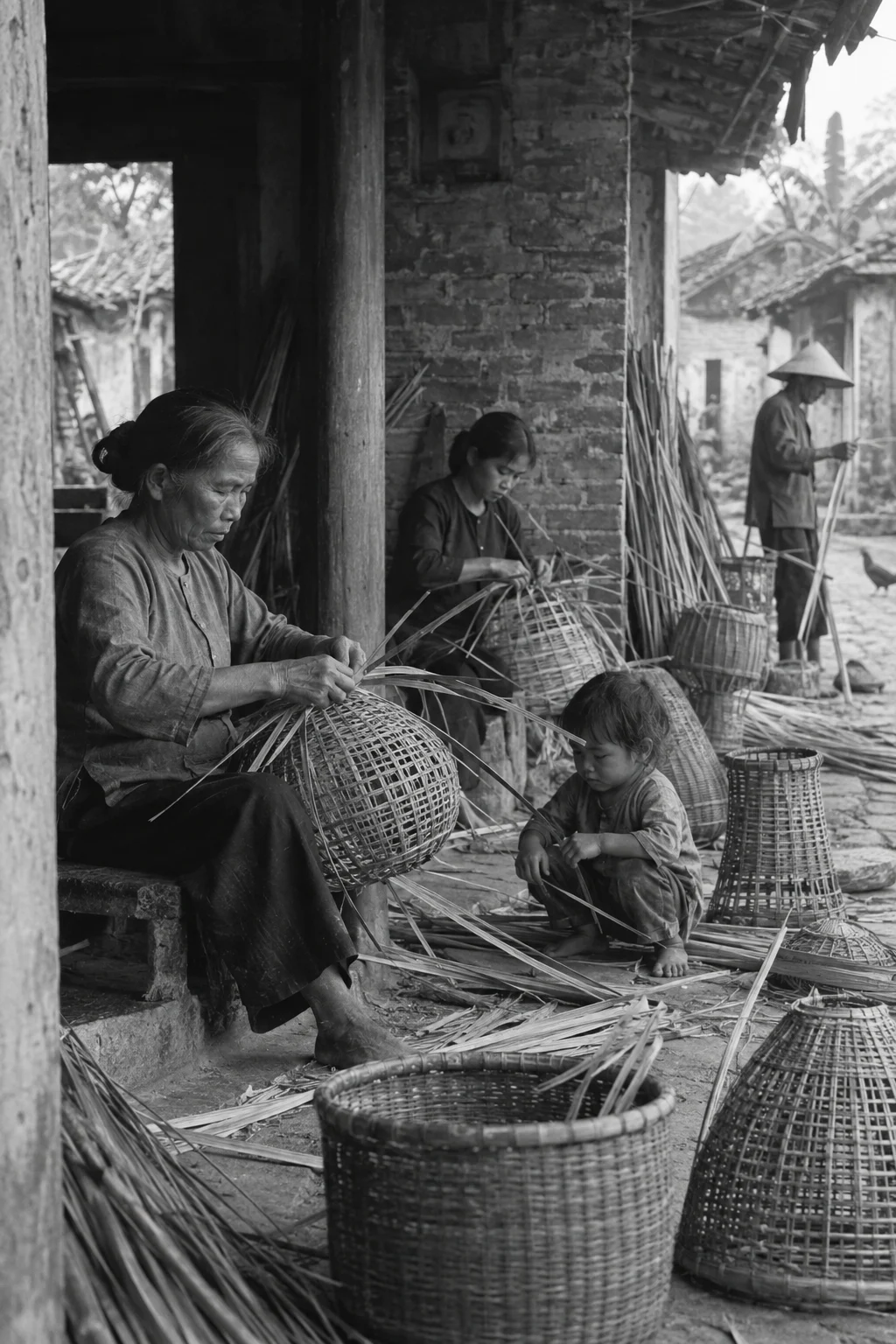
The village sits where rattan once grew wild along the streams that run down from the limestone hills. The first weavers made baskets and fish traps for the markets of Hà Đông; by the eighteenth century their fine, tight work was travelling to the court, and the name of the village was enough to sell a piece.
What the court bought, and what we carry now, is a particular lightness. Phú Vinh cane is split finer than anywhere else in the delta, soaked, scraped and dried until it bends without memory. The patterns — rain, fish-scale, mat — are old, and each family holds a few of its own. Today the village also makes for export in quantity, but a handful of households still split by hand and weave the fine work. These are the makers we return to.
02 — The technique
What makes Phú Vinh weaving
The quality is decided long before the weaving starts, in how the cane is split and dried.
I
Split by hand
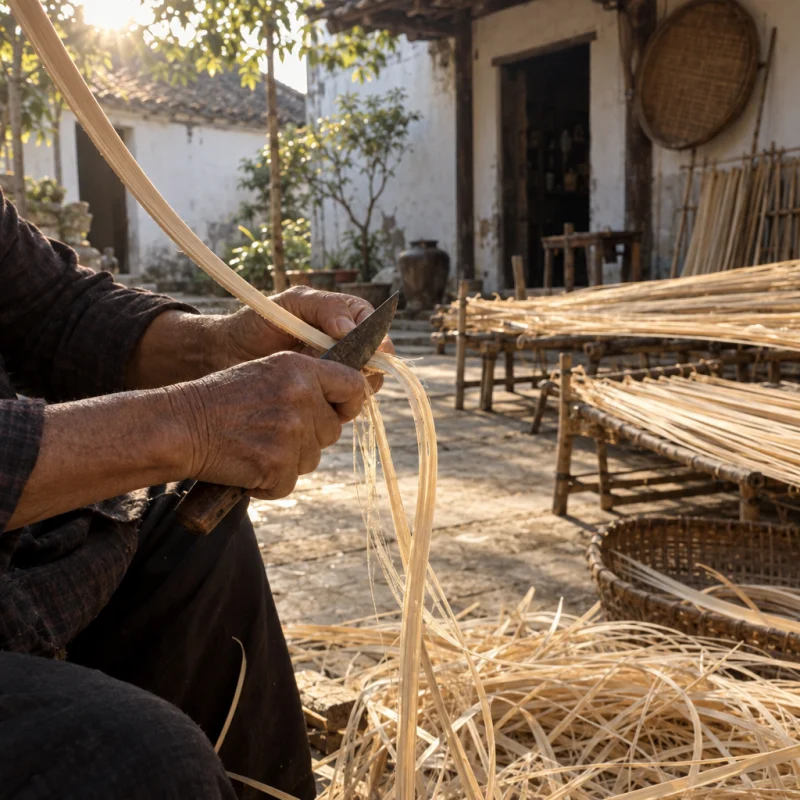
Rattan is split along its length with a knife, not a machine, into strands a millimetre wide. The hand follows the fibre; a machine cuts across it.
II
Dried, not bleached
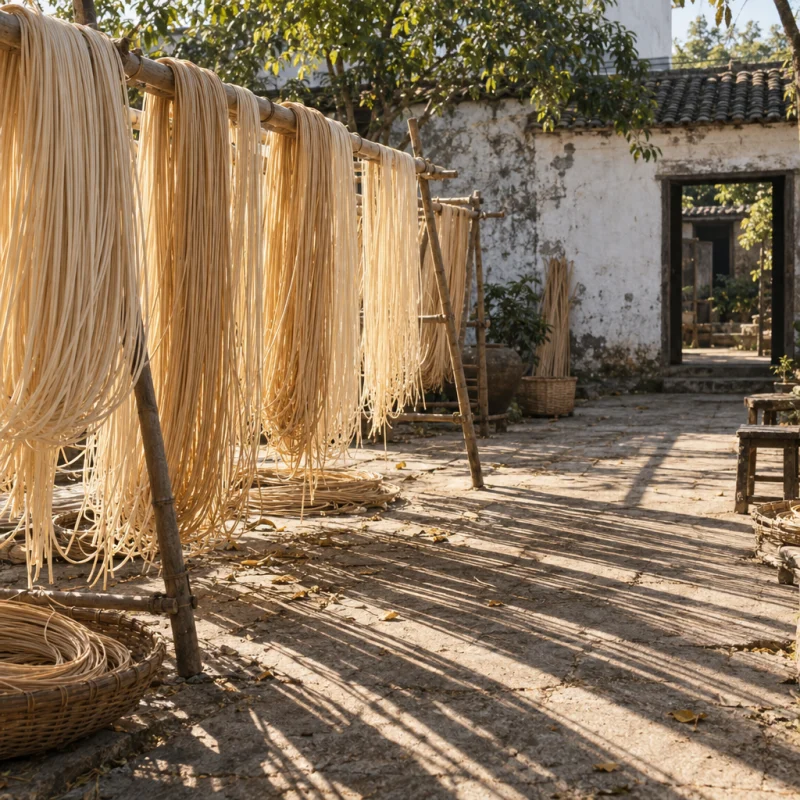
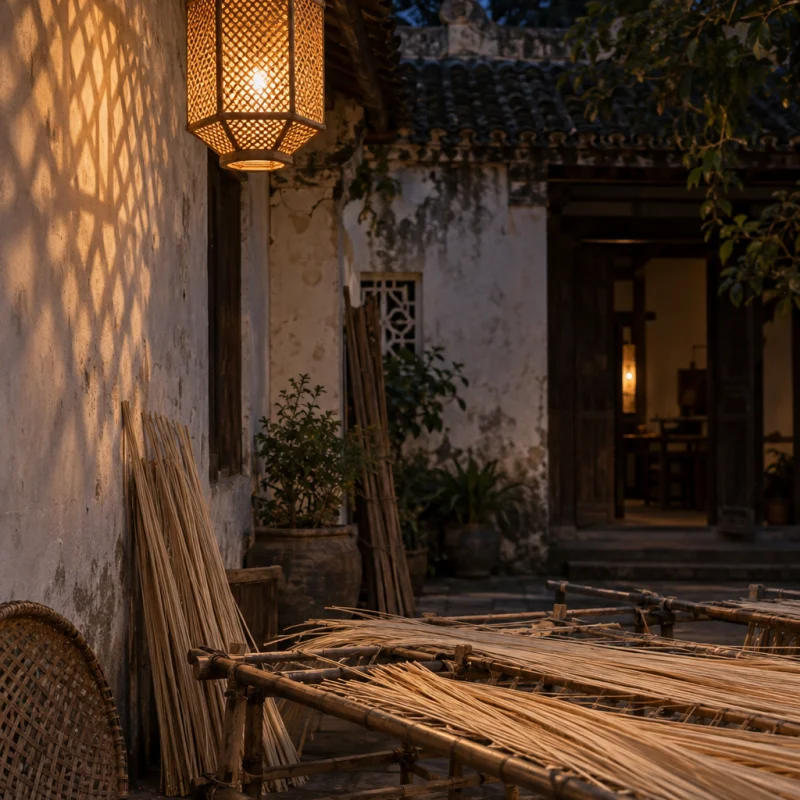
Cane is dried in the courtyard sun for days and left its natural honey colour. The pale bleached cane of the export trade is not what we carry.
III
Patterns with names
Rain, fish-scale, mat, lotus: each pattern has a name, a rhythm and a family that is known for it.
IV
Tight enough to hold water
The finest Phú Vinh baskets were made to carry rice from the field; the weave is so close that a new basket will hold water for a minute.
Words you will meet
Mây
Rattan, the climbing palm whose cane is split for weaving.
Tre
Bamboo, used for the frame and the heavier weaves.
Cói
Sedge, the marsh grass woven into mats further south in the delta.
Đan
To weave, to plait — the verb the village lives by.
03 — The artisans of Phú Vinh
Two workshops we return to
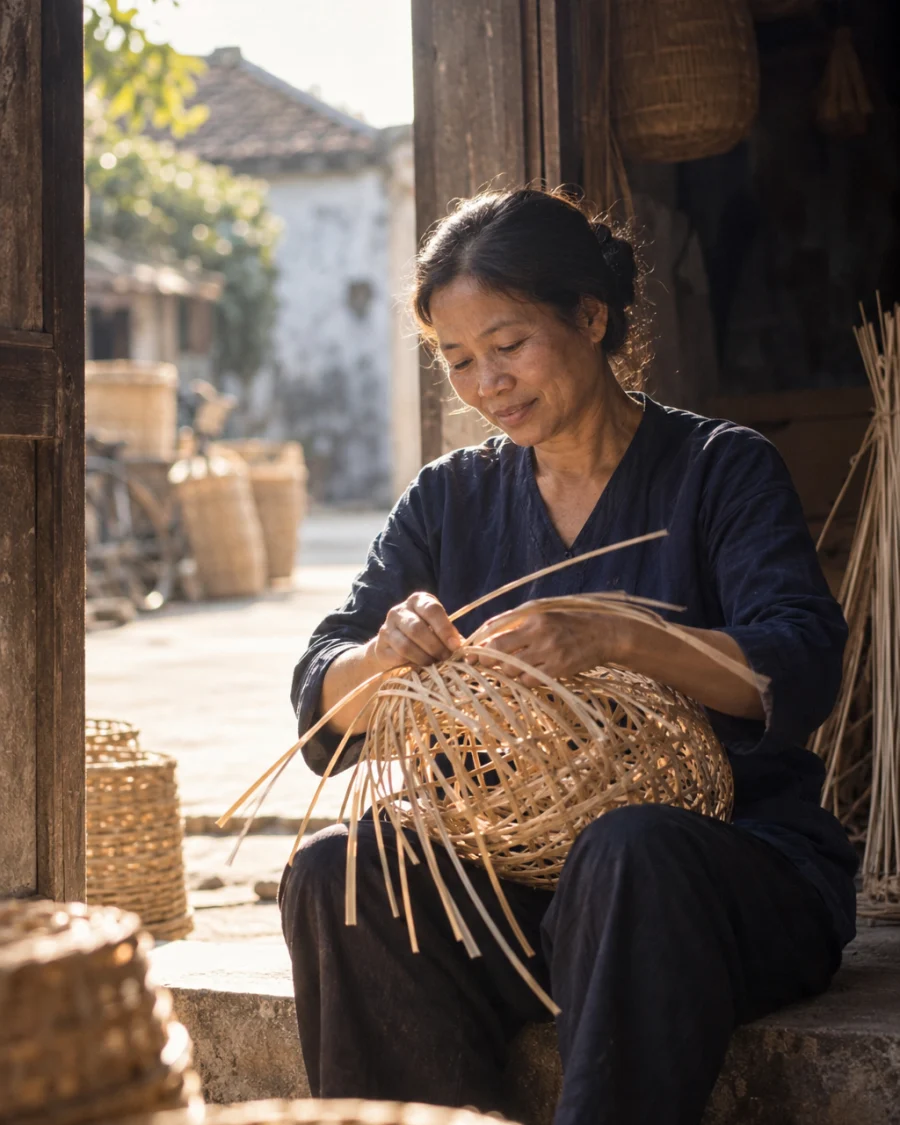
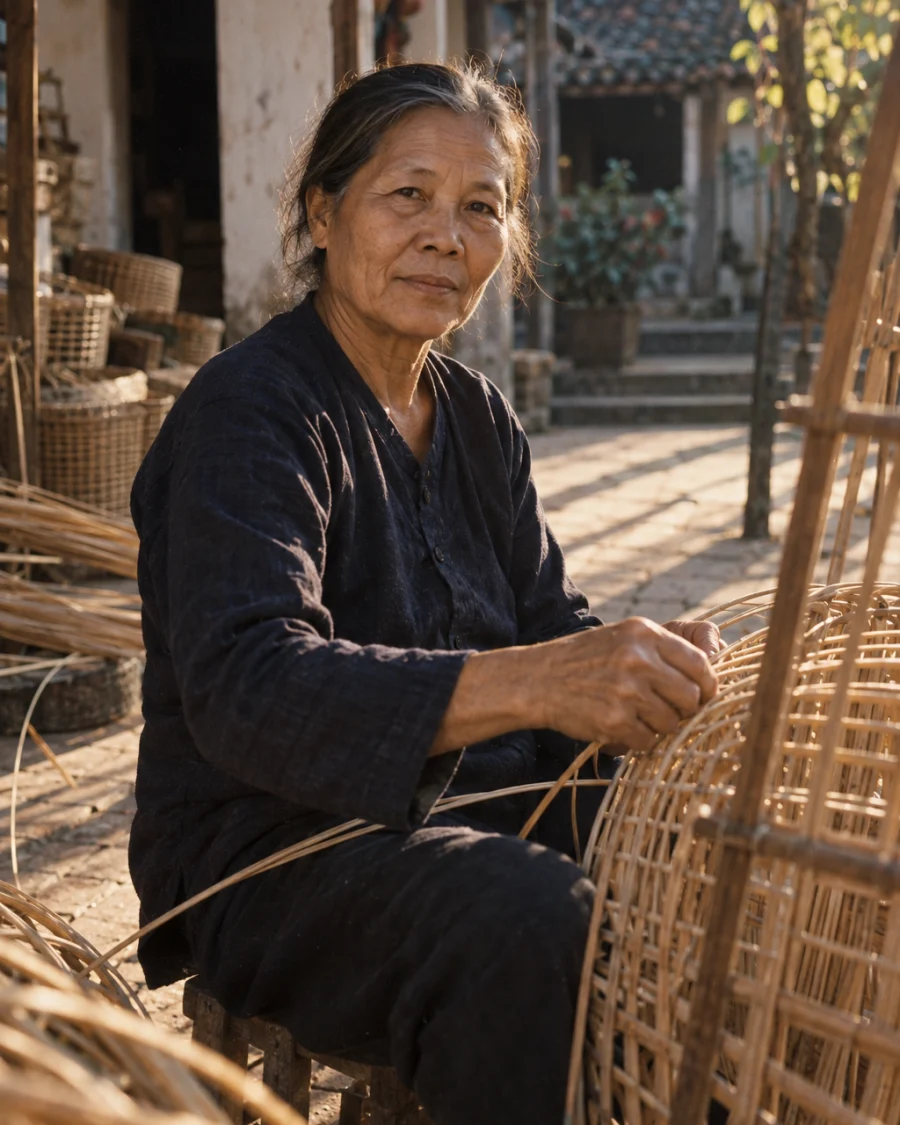
04 — Works from Phú Vinh
Five works from the village
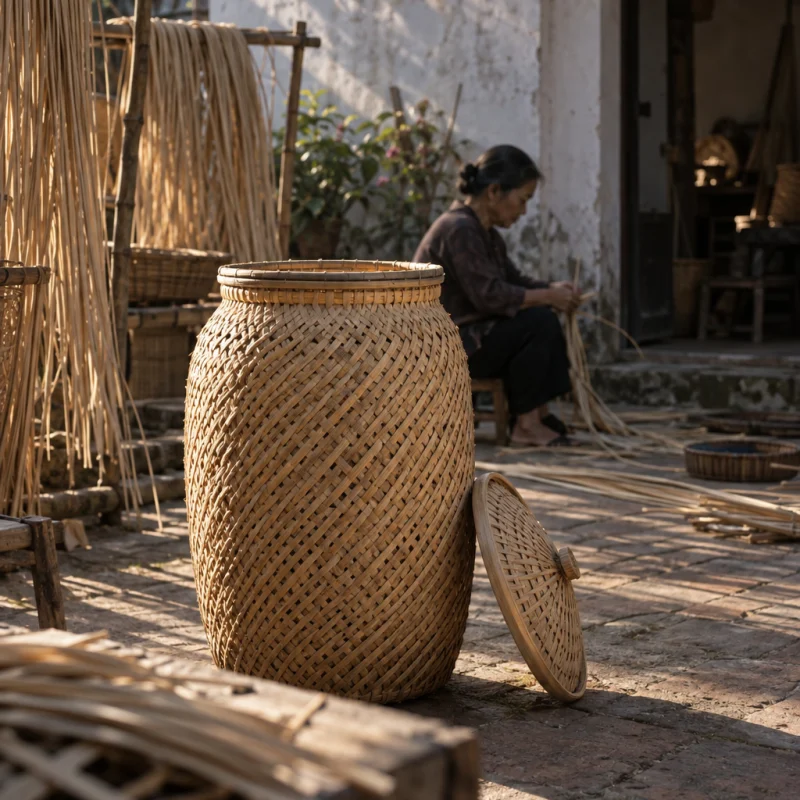
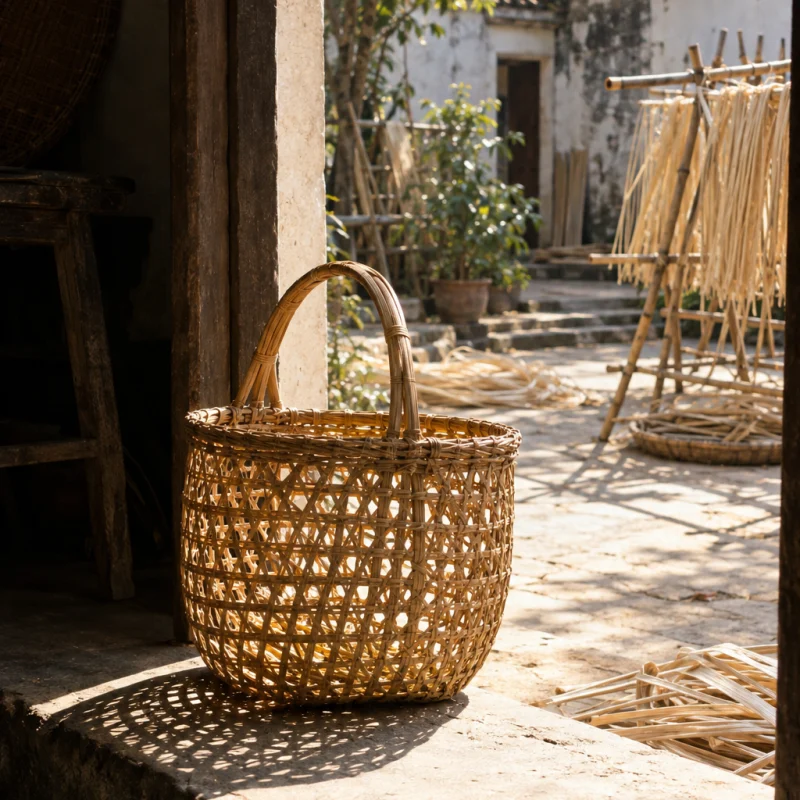
05 — Visiting
Come and sit at a frame
We take small groups to Phú Vinh most months: a morning in two weaving households, lunch in the courtyard, and an afternoon with a frame of your own. Collectors who have acquired a work from the village visit as our guests.
- From Hà Nội
- About an hour by car
- Best season
- November to April, when the cane is drying
- Group size
- Six people at most
The other villages
The full atlas





