Craft village · Đồ gỗ mỹ nghệ · Fine woodwork
Đồng Kỵ
Làng gỗ Đồng Kỵ — the carvers' village on the road to Bắc Ninh
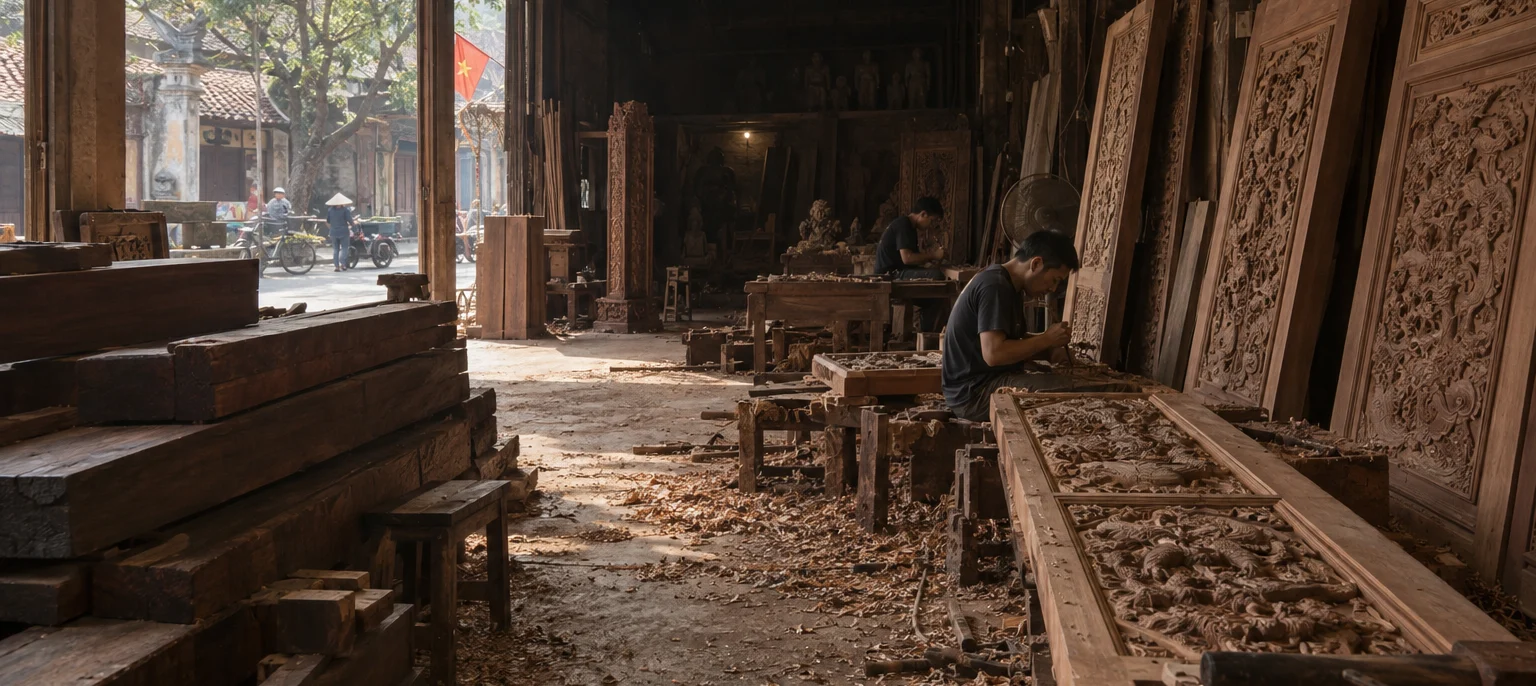
“A joint should fit so well the wood forgets it was two pieces.”
- Craft
- Carved hardwoodGỗ mỹ nghệ
- Where
- Từ Sơn, Bắc Ninh20 km from Hà Nội
- Practised since
- c. 18th centuryFrom temple carving to furniture
- Material
- Ironwood & rosewoodJoined without nails
- On LangSoul
- 1 artisan5 works
01 — The story
Two centuries of the chisel
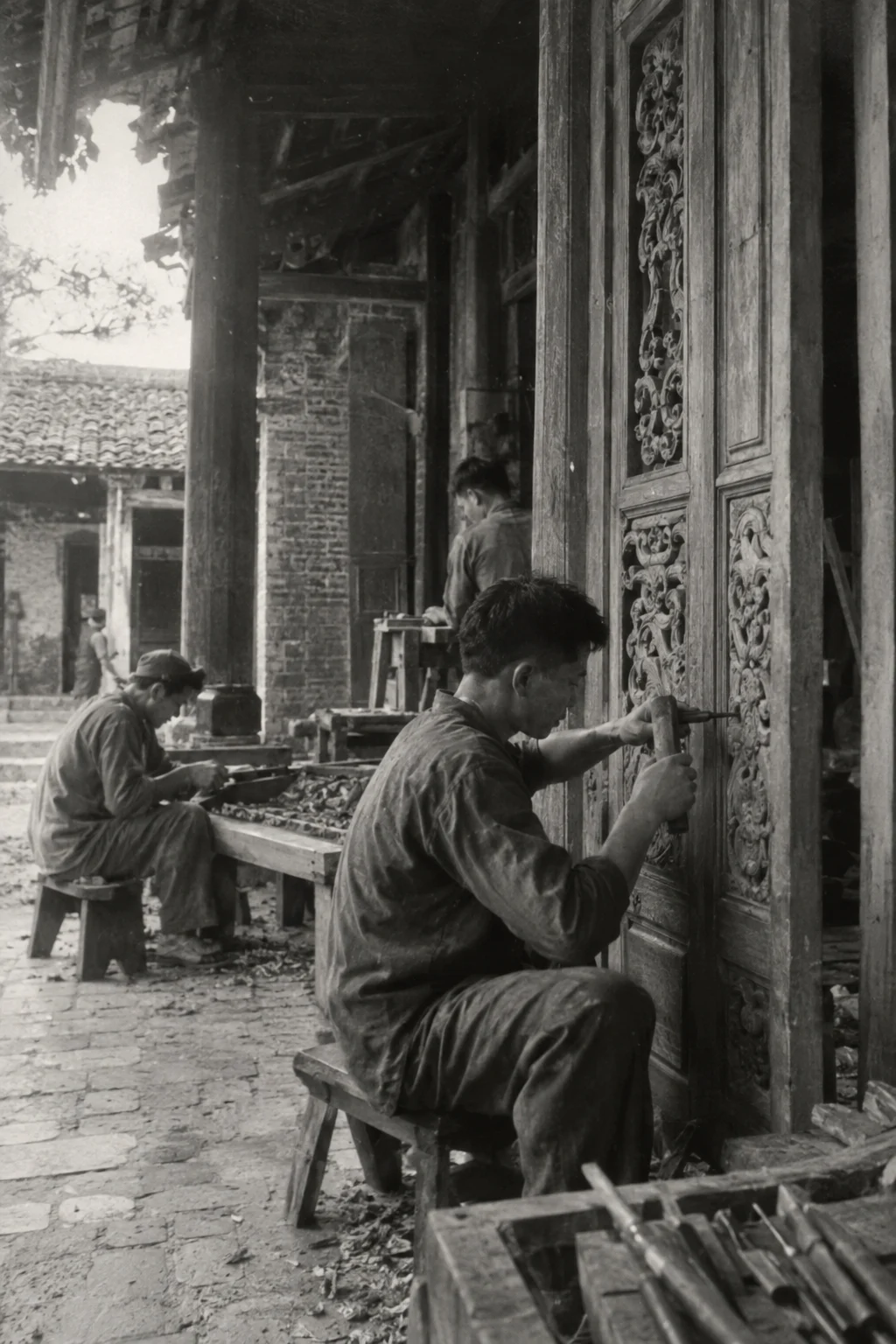
The craft came with the communal houses — the great timber halls of the northern villages, whose beams and doors were carved by itinerant masters. Đồng Kỵ’s families settled and kept the trade; when the halls stopped being built, they turned to furniture.
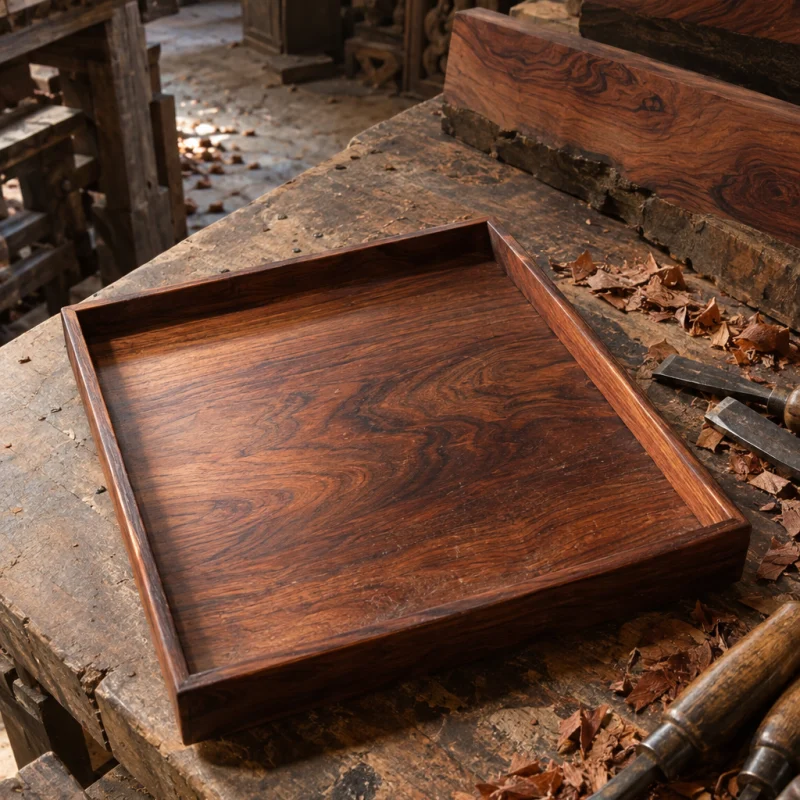
Much of the village now works at scale for the Chinese market. A few workshops keep to the slow way: timber dried for years, joints cut to fit without glue or nails, carving that follows the grain. We carry pieces from those workshops.
02 — The technique
What makes Đồng Kỵ woodwork
Time in the timber yard, and joints that will outlast the house.
I
Timber dried for years
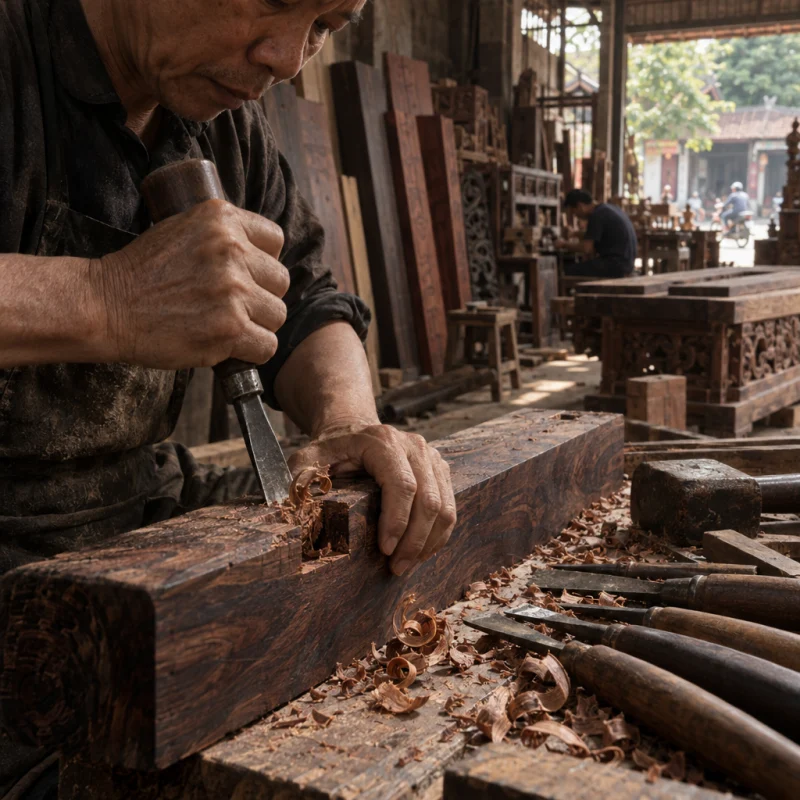
Ironwood and rosewood are stacked under cover for two or three years before a chisel touches them.
II
Joined without nails
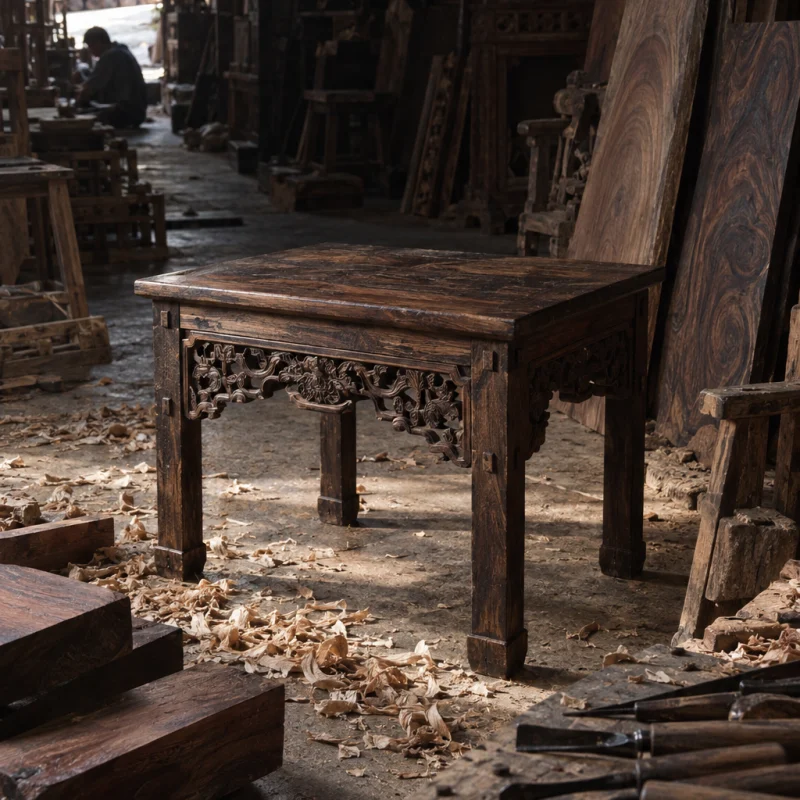
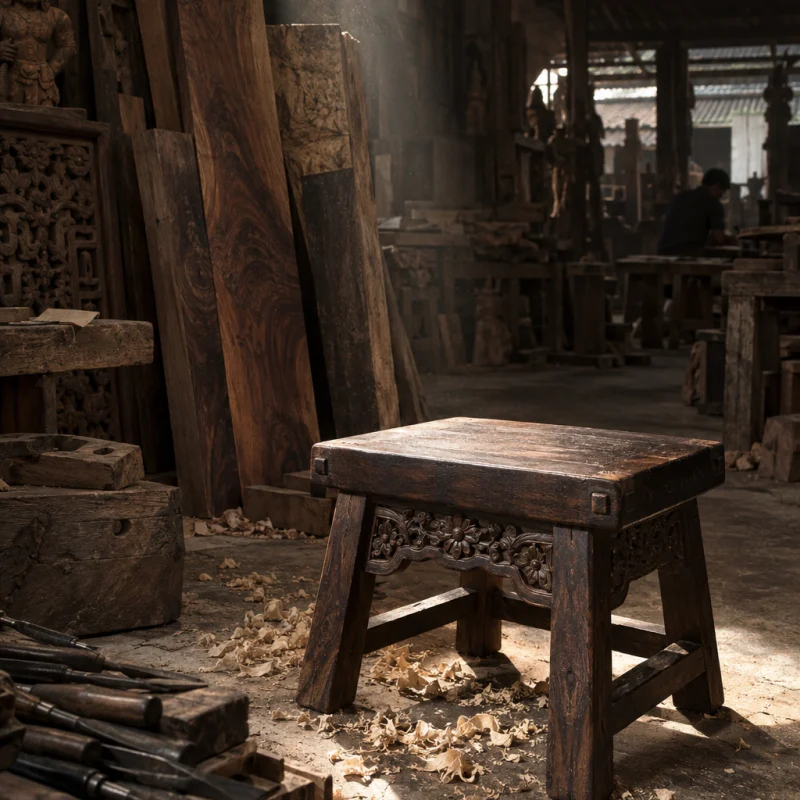
Mortise, tenon and wedge. A Đồng Kỵ table can be knocked apart and rebuilt by its grandchildren.
III
Carved with the grain
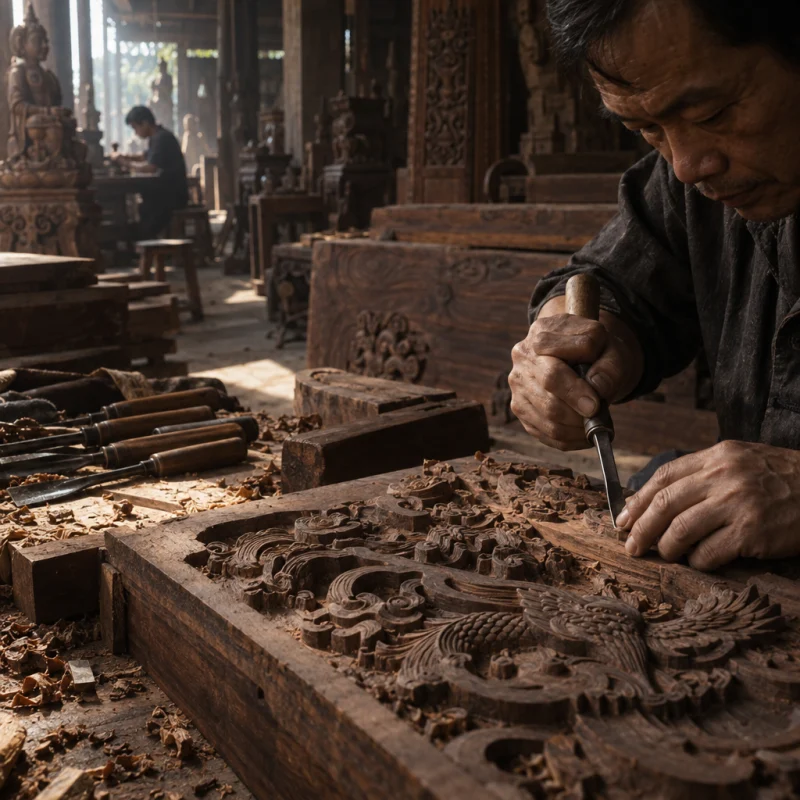
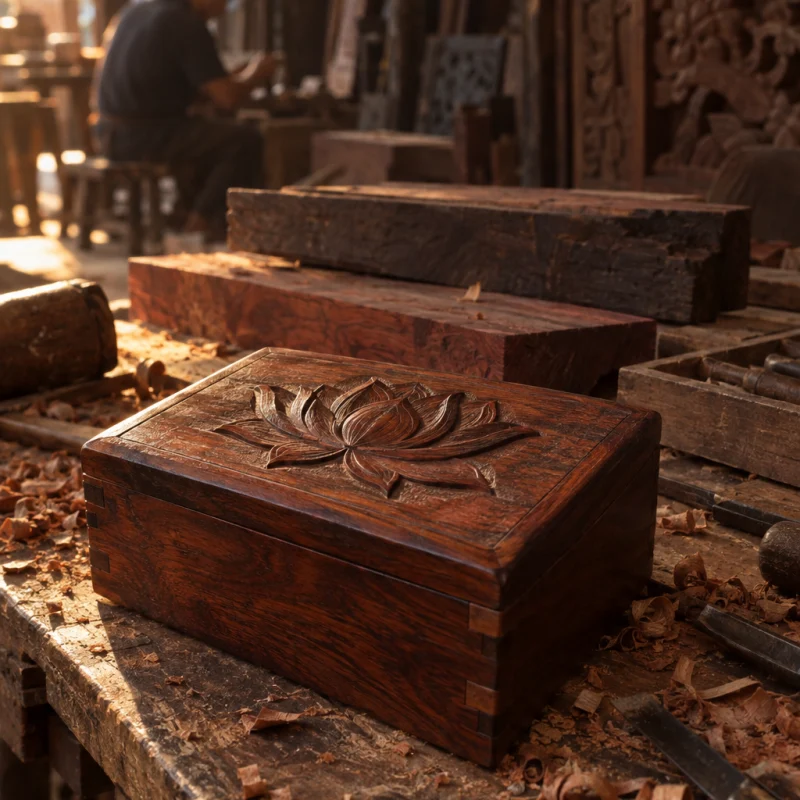
Relief carving follows the figure of the wood rather than fighting it.
IV
Oiled, not lacquered
The surface is finished with oil and wax so the wood can keep moving with the seasons.
Words you will meet
Gỗ
Wood.
Gỗ lim
Ironwood, the dense dark timber of temple pillars.
Gỗ trắc
Rosewood.
Mộng
The joint — mortise and tenon.
03 — The artisans of Đồng Kỵ
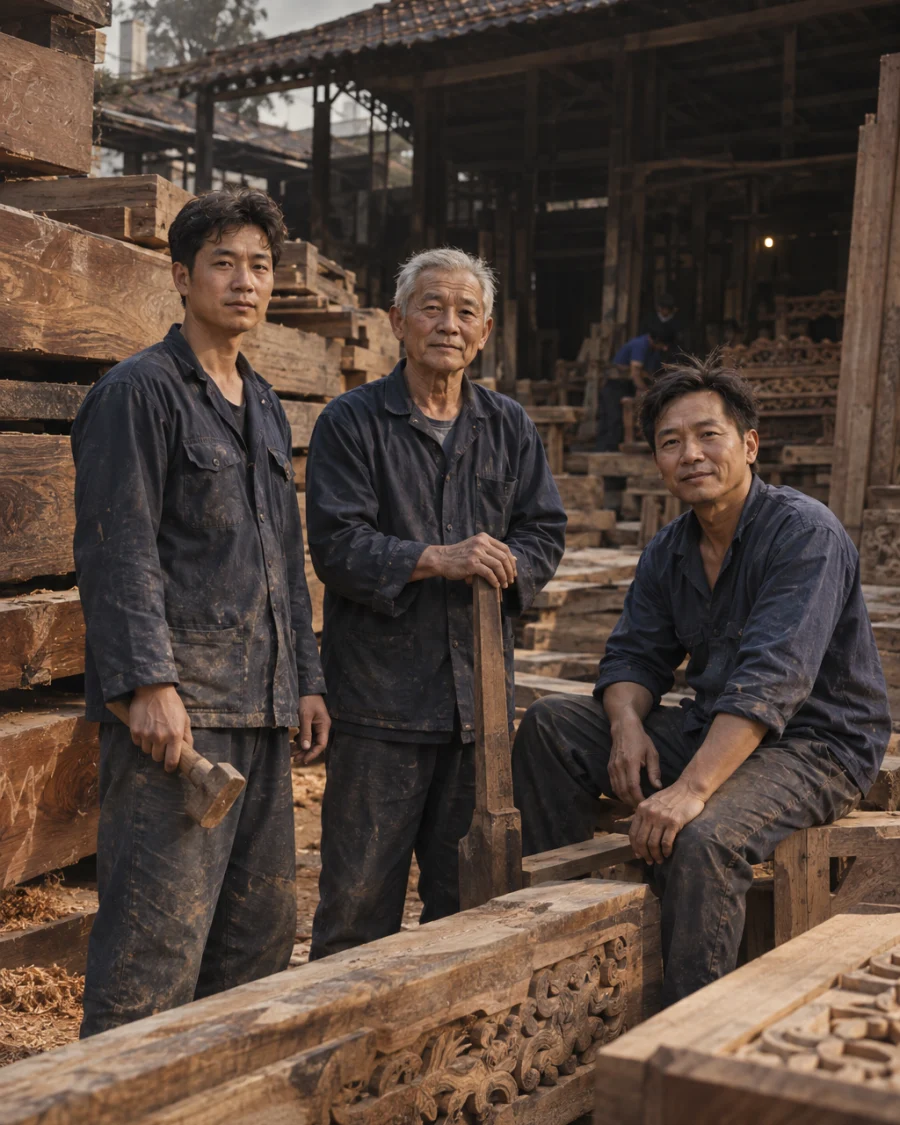
One workshop we return to
04 — Works from Đồng Kỵ
Five works from the village
05 — Visiting
Come and see a joint cut
We take small groups to Đồng Kỵ a few times a season: a morning in a carving workshop, lunch in the village, and a walk through the timber yards. Collectors who have acquired a work from the village visit as our guests.
- From Hà Nội
- About 40 minutes by car
- Best season
- October to April
- Group size
- Six people at most
The other villages
The full atlas





